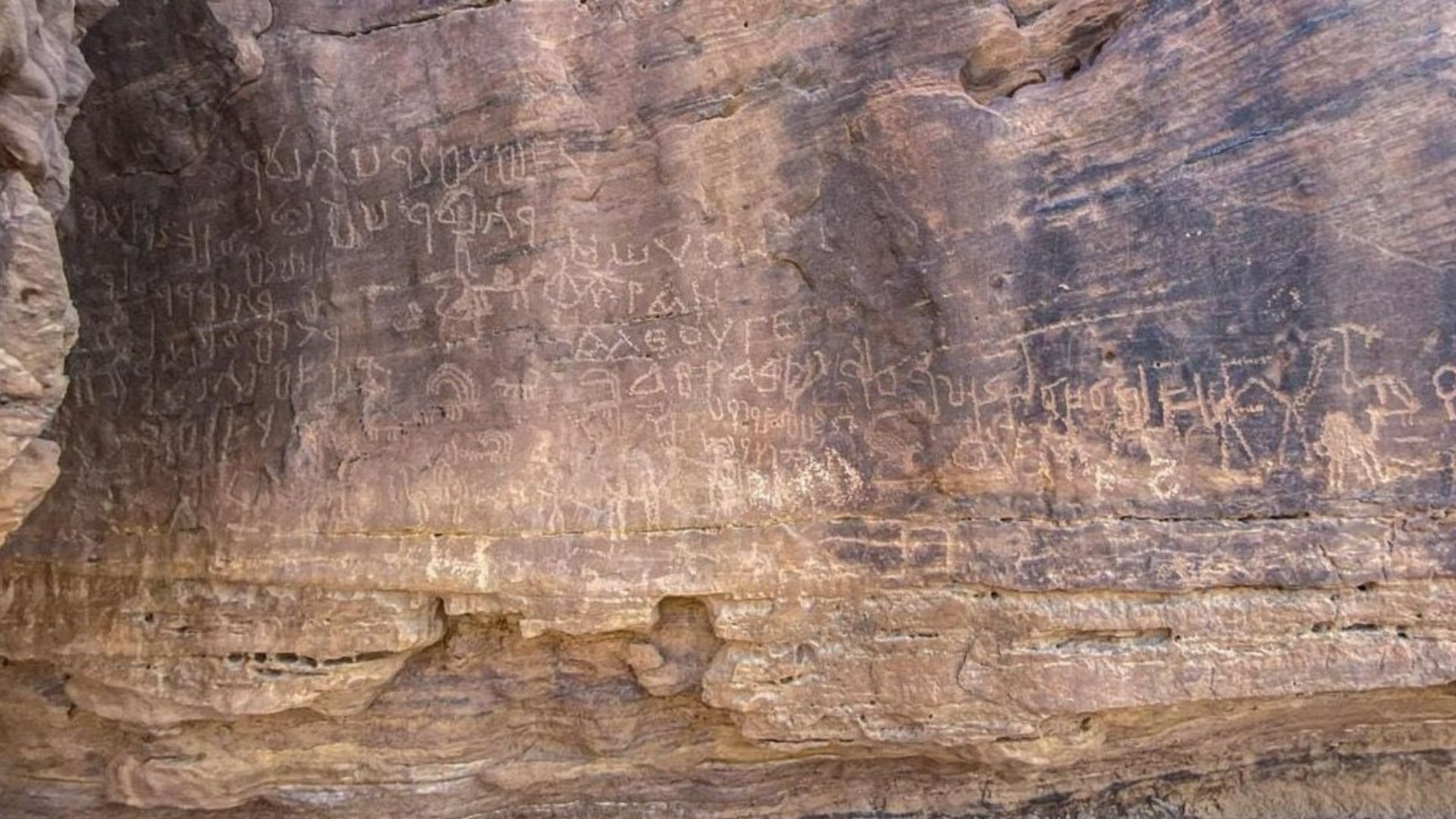
Archaeologists in Egypt have uncovered a rock shelter in the southern Sinai Desert containing art and inscriptions stretching back 10,000 years. The discovery provides a rare, continuous record of human activity in the region, predating even the earliest pharaohs.
A Timeline Etched in Stone
The site, located on the Umm Arak Plateau, was found during a recent archaeological survey aided by local resident Sheikh Rabie Barakat. The shelter itself is approximately 100 meters long, 3 meters deep, and up to 1.5 meters high, creating a natural canvas for millennia of artistic expression.
The oldest art, dating from roughly 10,000 to 5,500 B.C., depicts early hunting scenes — including a hunter with dogs — found near the shelter’s entrance. Later periods show humans on horseback, armed figures, and a variety of geometric designs: X’s, squares, ovals, crescents, and more intricate forms. Inscriptions from ancient and medieval times further enrich the site’s historical record.
Strategic Location and Resource Extraction
The rock shelter is situated near ancient copper and turquoise mines, suggesting it served as a critical point for miners and travelers. Experts believe the site functioned as both an observation post and a gathering place throughout its long history.
“The Sinai was an important region for ancient Egypt, a source of mineral wealth and a symbolically important region, the home of the goddess Hathor, ‘Mistress of Turquoise,’” explains John Darnell, an Egyptology professor at Yale University. This discovery will “certainly help us better understand the interactions of the ancient [Egyptians] with the desert environment, and with those people living in and moving through the region.”
From Antiquity to Medieval Times
Later artwork includes depictions of camels, humans, and Nabataean inscriptions, pointing to continued use of the site well into the late antique and medieval periods (roughly A.D. 500 to 1500). The Nabataeans, known for building the city of Petra, likely left their mark on the shelter as well.
Researchers are still analyzing the designs, but the continuous timeline of art and inscriptions makes this discovery a unique window into the region’s past.
The Sinai’s mineral wealth and symbolic significance ensured its importance for ancient Egypt, and this rock shelter offers an unprecedented view into how people interacted with this landscape for over 10,000 years.
The discovery underscores the Sinai’s long-term value as a resource-rich and strategically important territory, revealing a history far deeper than previously understood.