


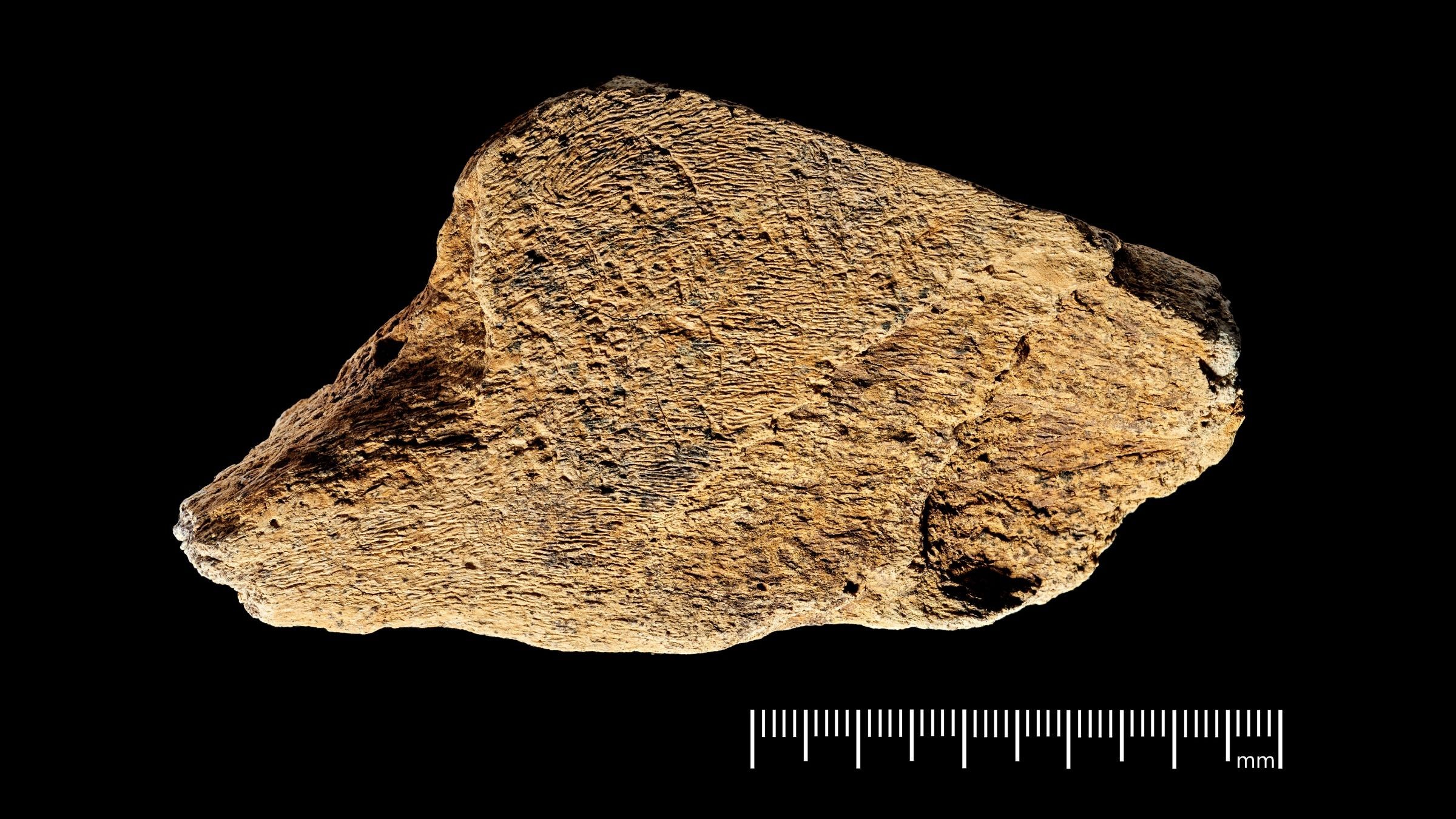
A newly analyzed artifact from Boxgrove, England, reveals that archaic human relatives were using elephant bone to sharpen hand axes nearly half a million years ago. This triangular tool, measuring just over 4 inches across, is the oldest known example of its kind ever found in Europe – and one of the oldest globally. The discovery demonstrates the ingenuity of early hominins as they adapted to harsher northern climates.
Why This Matters: Resourcefulness in a Harsh World
The rarity of preserved organic materials like bone makes this find exceptionally significant. Most early tools are stone because it lasts far longer. The fact that humans used – and valued – bone suggests they weren’t just surviving, but innovating with whatever resources were available. The tool itself wasn’t just made from an unusual material, it was used for a very specialized purpose: maintaining other tools. This highlights a level of forethought and planning in early human behavior.
The Tool Itself: A Retoucher from the Past
The artifact wasn’t initially recognized for its function. Recent analysis led by Silvia Bello and Simon Parfitt confirmed it was deliberately shaped into a “retoucher” – a tool used to refine and resharpen stone hand axes. The fresh bone would have been ideal for this purpose, suggesting the toolmakers understood its material properties.
“The elephant bone tool shows signs of being shaped and used to knap and re-sharpen lithic tools while the bone was still fresh, suggesting that these humans knew that elephant bone was a great material for this,” Bello stated.
Who Made It? Neanderthals or Homo heidelbergensis?
Researchers aren’t certain which hominin group created the tool, but given its age (480,000 years) and location, the most likely candidates are either early Neanderthals or Homo heidelbergensis. Both groups inhabited Europe during this period. This discovery provides a rare look into their toolkit and demonstrates a higher level of technological sophistication than previously assumed.
Boxgrove: A Window into the Paleolithic
The tool was originally excavated in the 1990s at Boxgrove, a site renowned for its wealth of Paleolithic finds. The site has yielded butchered animal remains, early human bones, and other stone tools, but the elephant bone retoucher stands out. Elephant bones are exceptionally rare at Boxgrove, suggesting the toolmakers encountered this material infrequently – yet recognized its value.
This discovery underscores how much early humans were able to adapt and thrive using the resources available to them, even in challenging environments.
The find reinforces the idea that prehistoric humans weren’t simply reacting to their surroundings but actively problem-solving and innovating with the materials at hand.


