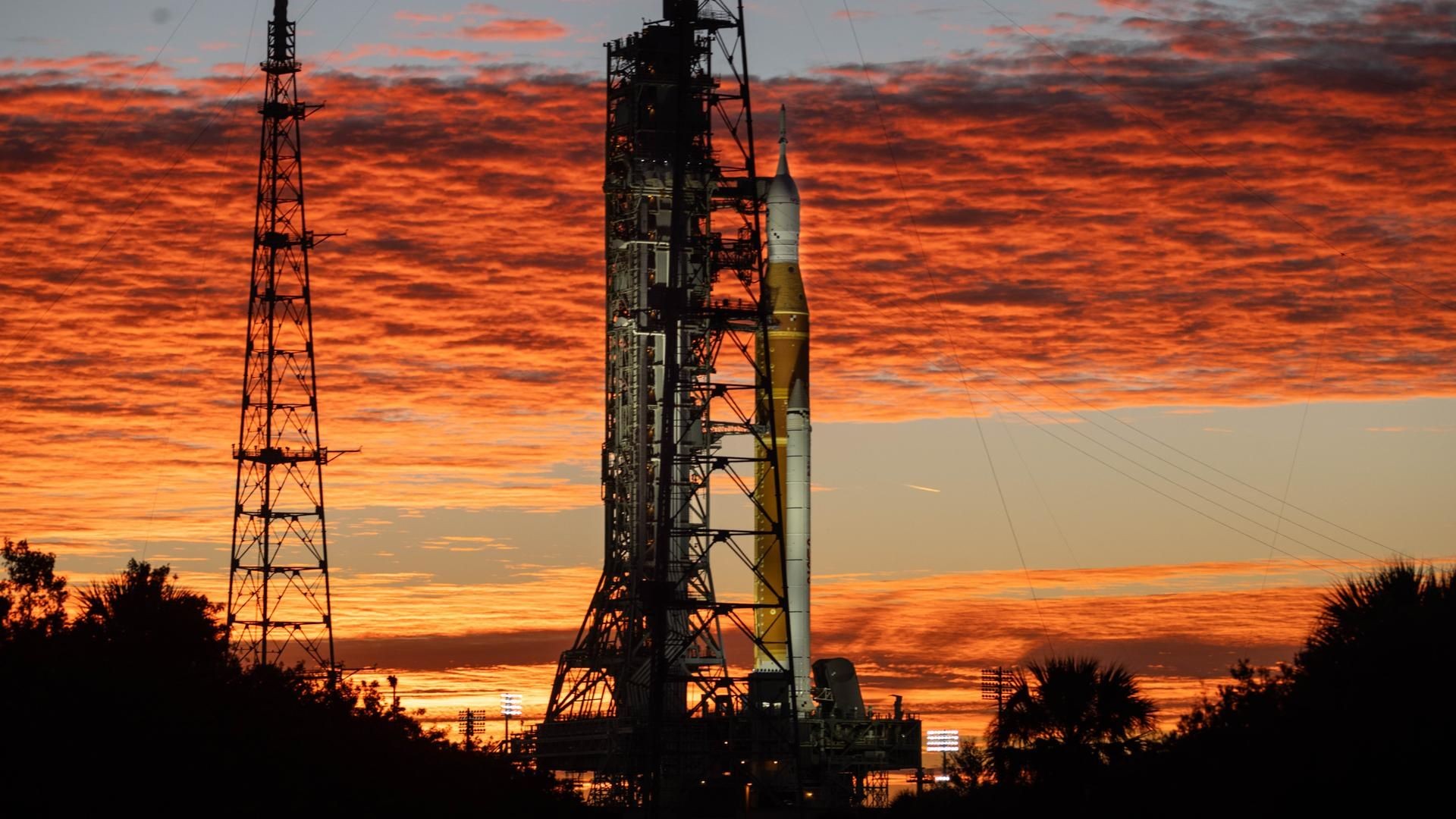
NASA’s upcoming Artemis 2 mission, scheduled to launch April 1, will send four astronauts on a ten-day lunar flyby. While all human spaceflight carries inherent dangers, the agency is notably hesitant to quantify the risks associated with this particular mission—the first crewed flight of the Artemis program. The lack of firm data, given this is only the second launch of the Space Launch System (SLS) rocket, contributes to the uncertainty.
Historical Context and Risk Assessment
NASA officials, during a recent press briefing, were pressed repeatedly for specific risk percentages. John Honeycutt, chair of the Artemis 2 mission management team, pointed out that first-time launches of new rockets historically have around a 50% success rate. While established human spaceflight programs like the Commercial Crew Program (SpaceX and Boeing flights to the ISS) operate with an estimated 1 in 200 failure rate, the Artemis program’s irregular launch cadence complicates direct comparison.
“We’re probably not 1 in 50 on the mission going exactly like we want to, but we’re probably not 1 in 2 like we were on the first flight.” – John Honeycutt, Artemis 2 Mission Management Team Chair
A recent report from the NASA Office of Inspector General (OIG) further illustrates the challenges. The OIG estimates a 1-in-30 chance of overall mission failure for crewed lunar landings and a 1-in-40 risk specifically during lunar operations. For comparison, the Apollo program faced a frightening 1-in-10 risk of crew loss, while the Space Shuttle program initially believed its risk was 1 in 100 but later determined it was closer to 1 in 10.
The Challenges of Probabilistic Estimates
Honeycutt’s reluctance to assign precise numbers is logical. Historical data suggests that initial risk assessments in spaceflight are often imprecise and require revision as more data becomes available. The small sample size and diverse set of potential hazards make accurate prediction difficult.
One significant concern highlighted by NASA’s modeling is micrometeoroids and orbital debris (MMOD), which represent a substantial threat. However, the agency acknowledges that catastrophic failures often occur during high-energy phases like launch or reentry—as demonstrated by the Challenger and Columbia disasters—leading to skepticism about whether MMOD truly poses the greatest risk.
The agency’s cautious approach is understandable, given the inherent uncertainty in early-stage programs. NASA prefers to avoid premature, potentially misleading statistics, especially when dealing with human lives. The transparency surrounding this risk—even if it’s the admission of not knowing exact numbers—is a pragmatic approach to managing expectations and ensuring responsible mission execution.
Ultimately, Artemis 2 represents a calculated risk. NASA is proceeding with caution, recognizing that while the mission is designed for success, the possibility of failure remains real.