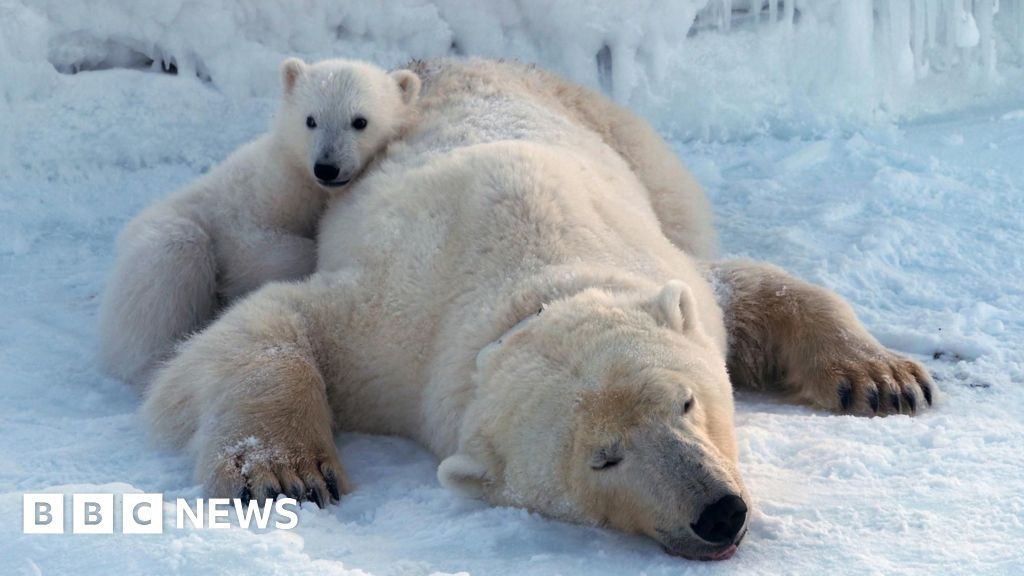
Polar bear populations in the Norwegian archipelago of Svalbard are unexpectedly gaining weight despite accelerating sea ice decline, according to new research published in Scientific Reports. This finding challenges conventional assumptions about the impact of climate change on the species, highlighting a complex interplay of factors at play in the Arctic.
The Unexpected Trend
Scientists weighed and measured 770 adult polar bears in Svalbard between 1992 and 2019, observing a significant increase in body mass during a period when sea ice diminished by roughly 100 ice-free days annually. This trend contradicts expectations, as polar bears traditionally rely on sea ice as hunting grounds for seals, their primary food source.
The researchers attribute this anomaly to a dietary shift: the bears are increasingly feeding on land-based prey, particularly reindeer and walruses, which have seen population increases due to conservation efforts (walruses) and broader environmental shifts. The improved condition of these bears is a temporary boon, but unsustainable.
Why It Matters
This situation underscores that climate change’s effects aren’t uniform across the Arctic. While some populations (such as in Canada’s Western Hudson Bay) are clearly declining due to ice loss, others can adapt—at least for a time—by exploiting alternative food sources.
However, Svalbard’s polar bears are not immune to long-term consequences. Continued ice loss will force bears to travel further for hunting, depleting crucial fat reserves and eventually undermining their survival. The research suggests that the current trend is likely a result of multiple factors, including a rebounding population after decades of overhunting, and the increased availability of alternative prey.
Looking Ahead
The Svalbard study emphasizes the need for a nuanced understanding of polar bear populations. The species’ fate isn’t predetermined by climate change alone, but by a confluence of factors, including hunting pressure, prey availability, and regional variations in ice loss.
“Body condition is only one piece of the puzzle,” explains Dr. John Whiteman of Polar Bears International. “Other research shows that prolonged ice-free periods still reduce cub and adult female survival.”
Ultimately, the Svalbard paradox serves as a reminder that even seemingly thriving populations remain vulnerable in a rapidly warming Arctic. The current success is temporary; long-term survival depends on mitigating climate change and preserving the remaining sea ice habitat.