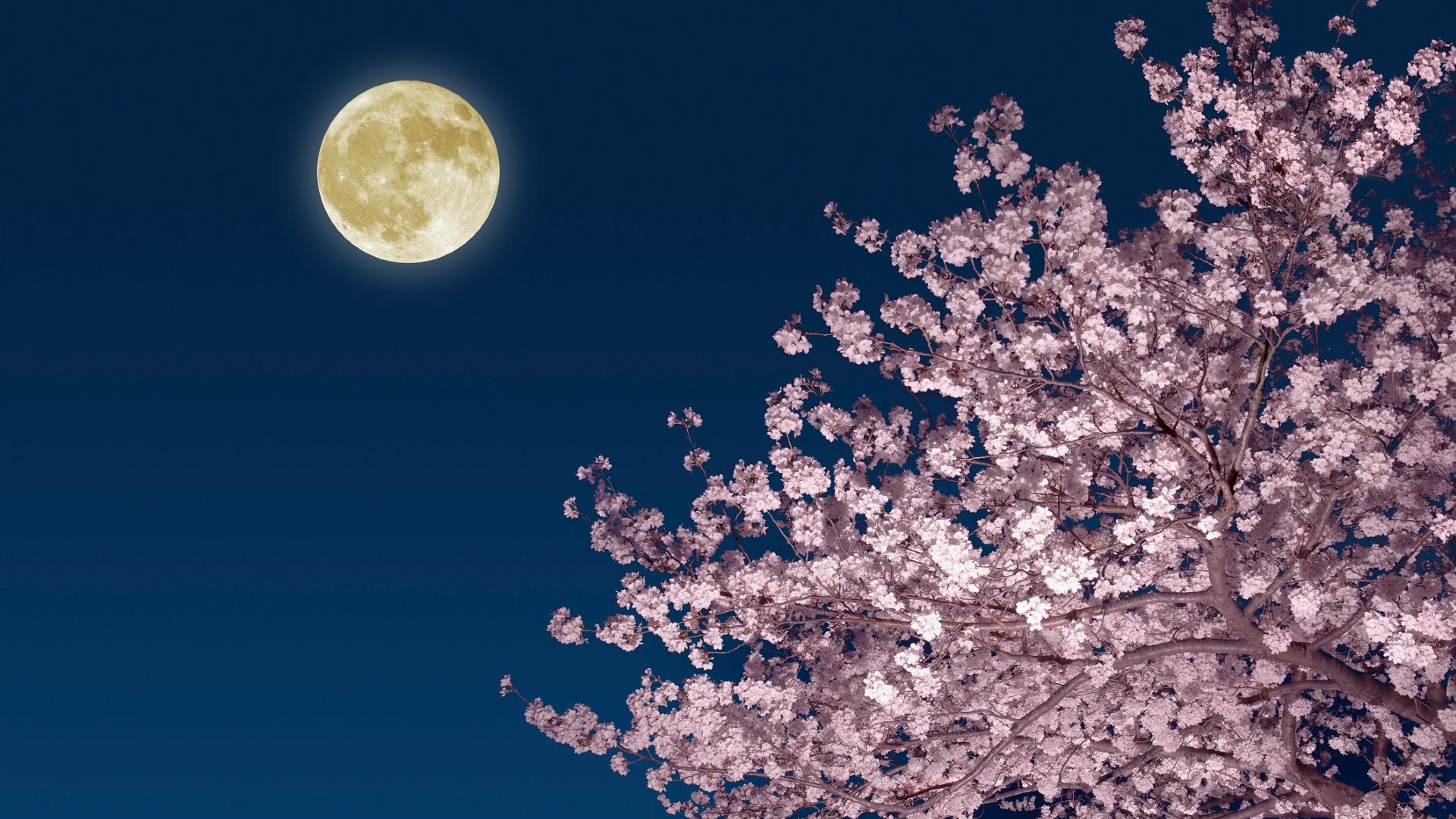
April brings a vibrant celestial event: the “Pink Moon,” the first full moon of spring in the Northern Hemisphere. While the name evokes a rosy hue, the moon itself won’t actually appear pink. The moniker comes from the pink phlox wildflowers that traditionally bloom around this time in North America, as noted by The Old Farmer’s Almanac.
Observing the Pink Moon
The Pink Moon will be at its fullest on Wednesday, April 1st, but will also appear bright and full on the evenings of Tuesday, March 31st, and Thursday, April 2nd. Skywatchers get a bonus on Wednesday: the moon will appear near the bright star Spica, creating a striking double feature.
To maximize viewing, check local moonrise times for your area and find an unobstructed eastern horizon. The moon will rise as the sun sets, offering a clear view across North America. On Thursday, the waning moon will be just 1.8 degrees from Spica—a close encounter worth noting.
Cultural Significance
The Pink Moon isn’t just an astronomical event; it carries cultural weight. Indigenous peoples have long tracked its arrival under different names: the Algonquin called it the “Breaking Ice Moon,” while the Dakota knew it as the “Moon When the Streams Are Again Navigable.” The Anishinaabeg (Ojibwe) of the Great Lakes region even call it the “Broken Snowshoe Moon.”
The Pink Moon also aligns with religious observances. In Judaism, it marks the start of Passover, a lunisolar calendar event beginning at sunset on April 1st. For Christians, the first spring full moon determines the date of Easter Sunday—this year falling on April 5th. The Eastern Orthodox tradition celebrates Easter a week later, on April 12th.
Looking Ahead: A Rare Blue Moon in May
After April’s spectacle, May brings another full moon: the “Flower Moon” (also called the “Corn Planting Moon” or “Milk Moon”) on May 1st. More remarkably, May will feature two full moons, culminating in a “Blue Moon” on May 31st—the second full moon within a single calendar month.
The occurrence of a Blue Moon isn’t tied to the moon’s color, but rather to its frequency. A second full moon in a month is rare and is why the term “once in a Blue Moon” exists. This makes May a particularly special time for skywatchers.
The Pink Moon and the impending Blue Moon remind us of the interconnectedness between astronomy, culture, and the natural world. These events are not just scientific occurrences; they are markers of time, tradition, and the ongoing cycles of nature.