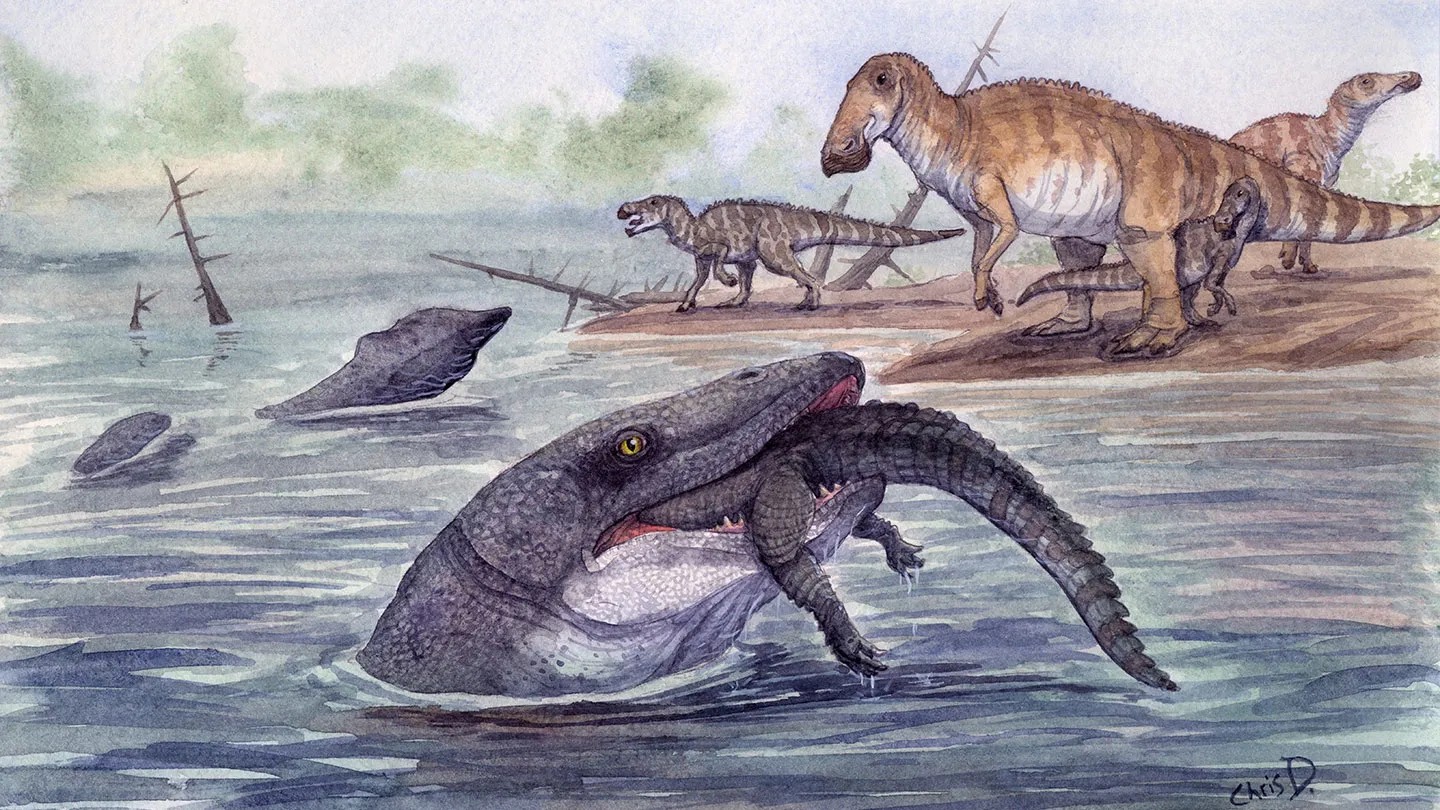
For decades, mosasaurs—massive, prehistoric marine reptiles—have been imagined as exclusively ocean-dwelling predators. But recent discoveries suggest these “sea monsters” weren’t confined to saltwater. Fossil evidence now confirms mosasaurs also thrived in ancient river systems, challenging long-held assumptions about their habitat. This shift in understanding highlights the complex ecosystems of the Cretaceous period and raises new questions about how these apex predators adapted to diverse environments.
The Myth of the Exclusive Marine Predator
Mosasaurs lived during the late Cretaceous period (145 to 66 million years ago), alongside dinosaurs, and were among the largest predators of their time. Paleontologists previously believed they were purely marine animals, dominating shallow seas like the Western Interior Seaway that once divided North America. The fossil record, however, now indicates mosasaurs actively hunted in freshwater rivers, suggesting a broader ecological range than previously thought.
This discovery isn’t just about location. It changes how we understand mosasaur evolution. Species adaptability is key : if these reptiles could survive in both saltwater and freshwater, it means they were more versatile than scientists assumed. This raises questions about their physiology – how did they manage salinity changes, and what prey did they target in these river systems?
Ecosystems of the Cretaceous: A Dynamic World
The Cretaceous period was a time of significant environmental change. Forests grew near both poles, massive volcanic eruptions altered ocean chemistry, and some dinosaurs even developed feathers to adapt to cooling climates. This period ended abruptly with a catastrophic asteroid impact 66 million years ago, wiping out the dinosaurs (except for their bird descendants) and half of all plant and animal life.
Mosasaurs shared this era with giants like Tyrannosaurus rex and various other dinosaurs. The food web of the time was incredibly complex, with predators and prey evolving rapidly to survive. Now, the discovery of mosasaurs in freshwater adds another layer to this picture. A healthy ecosystem depends on diversity: if mosasaurs were capable of thriving in both marine and freshwater environments, it means the Cretaceous food web was even more interconnected than previously understood.
Why This Matters
The fact that mosasaurs colonized rivers matters for several reasons:
- It rewrites paleobiological textbooks : Scientists must now reconsider how they interpret fossil distributions.
- It challenges assumptions about evolutionary constraints : If mosasaurs could adapt to both saltwater and freshwater, it suggests other marine reptiles may have done the same.
- It deepens our understanding of ancient ecosystems : The presence of apex predators in freshwater rivers indicates a more complex and interconnected food web than previously imagined.
The findings underscore the importance of continuous scientific inquiry. By re-examining old data and considering new possibilities, paleontologists can refine our understanding of prehistoric life. The story of the mosasaurs reminds us that nature is rarely as simple as we initially believe.
In conclusion, the revelation that mosasaurs inhabited both seas and rivers fundamentally shifts our understanding of these ancient predators. This discovery underscores the adaptability of Cretaceous ecosystems, highlighting the need for ongoing research and revised interpretations of the fossil record.