Christmas is often seen as a time for joy, tradition, and maybe a little indulgence – but it can also be an unexpected opportunity to engage with science. Experts share how to introduce simple, fascinating experiments into your holiday festivities, turning carols and custard into learning moments.
The Illusion of Flavor: A Sensory Trick
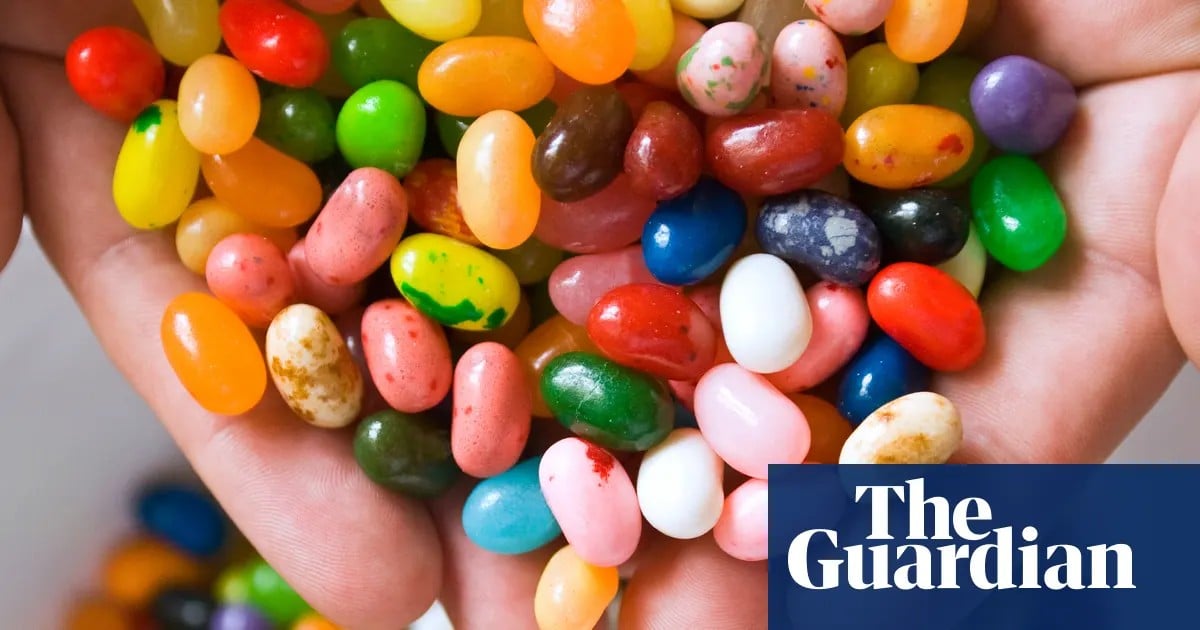
Our perception of taste is far more complex than we realize. Flavor is predominantly smell, not taste itself. As Professor Matthew Cobb from the University of Manchester demonstrates, chewing a jellybean while pinching your nose will initially register only sweetness. However, releasing your nostrils after a few seconds delivers a sudden, accurate burst of flavor. The same applies to grating an onion and an apple; blindfolded and nose-plugged, they taste almost identical until smell re-enters the equation. This highlights how volatile odor molecules traveling from the mouth to the olfactory neurons create the full sensory experience.
The experiment is especially relevant because taste and smell are closely linked —a fact many discovered during the Covid-19 pandemic when loss of smell drastically diminished flavor perception.
The Social Science of Laughter: Cracker Jokes and Shared Joy
Christmas crackers are infamous for their terrible jokes, but cognitive neuroscientist Sophie Scott from University College London suggests using them to explore a deeper phenomenon: laughter is primarily social, not humor-driven. Reading a joke alone yields little amusement, but sharing it with others increases laughter by up to 30 times. The presence of others amplifies enjoyment, and stronger social bonds further enhance the response. This illustrates that laughter serves as a bonding mechanism rather than simply a reaction to wit.
Unwrapping Anatomy: The Biology of a Festive Bird
If your holiday includes a turkey or roast chicken, paleontologist Steve Brusatte from the University of Edinburgh recommends dissecting the carcass. By examining the bones, one can understand how wings move, how the wishbone stores energy, and appreciate the biomechanics of flight. Forensic anthropologist Sue Black from the University of Oxford suggests boiling the bones to create a 3D anatomical puzzle. This hands-on approach provides a more visceral understanding than any textbook.
The Chemistry of Ice Cream: A Kitchen Experiment
Chemistry isn’t confined to the lab; it can be demonstrated with a simple homemade ice cream experiment. Professor Andrea Sella from UCL explains how dissolving salt in crushed ice lowers the freezing point, allowing the ice to absorb heat from a custard mixture, creating instant ice cream. The salt prevents water molecules from refreezing, accelerating the cooling process. This demonstrates practical thermodynamics in action.
The Probability of Pi: Pine Needles and Randomness
Mathematics can be found in unexpected places, even under the Christmas tree. Professor Kit Yates from the University of Bath suggests approximating pi using pine needles scattered randomly on ruled paper. By counting the needles that cross lines, one can calculate pi using a simple formula. This illustrates how mathematical constants emerge from probability in everyday objects.
These experiments underscore that science isn’t just a subject for textbooks; it’s a fundamental part of our experience, waiting to be uncovered in the most unexpected places – even during the holidays.