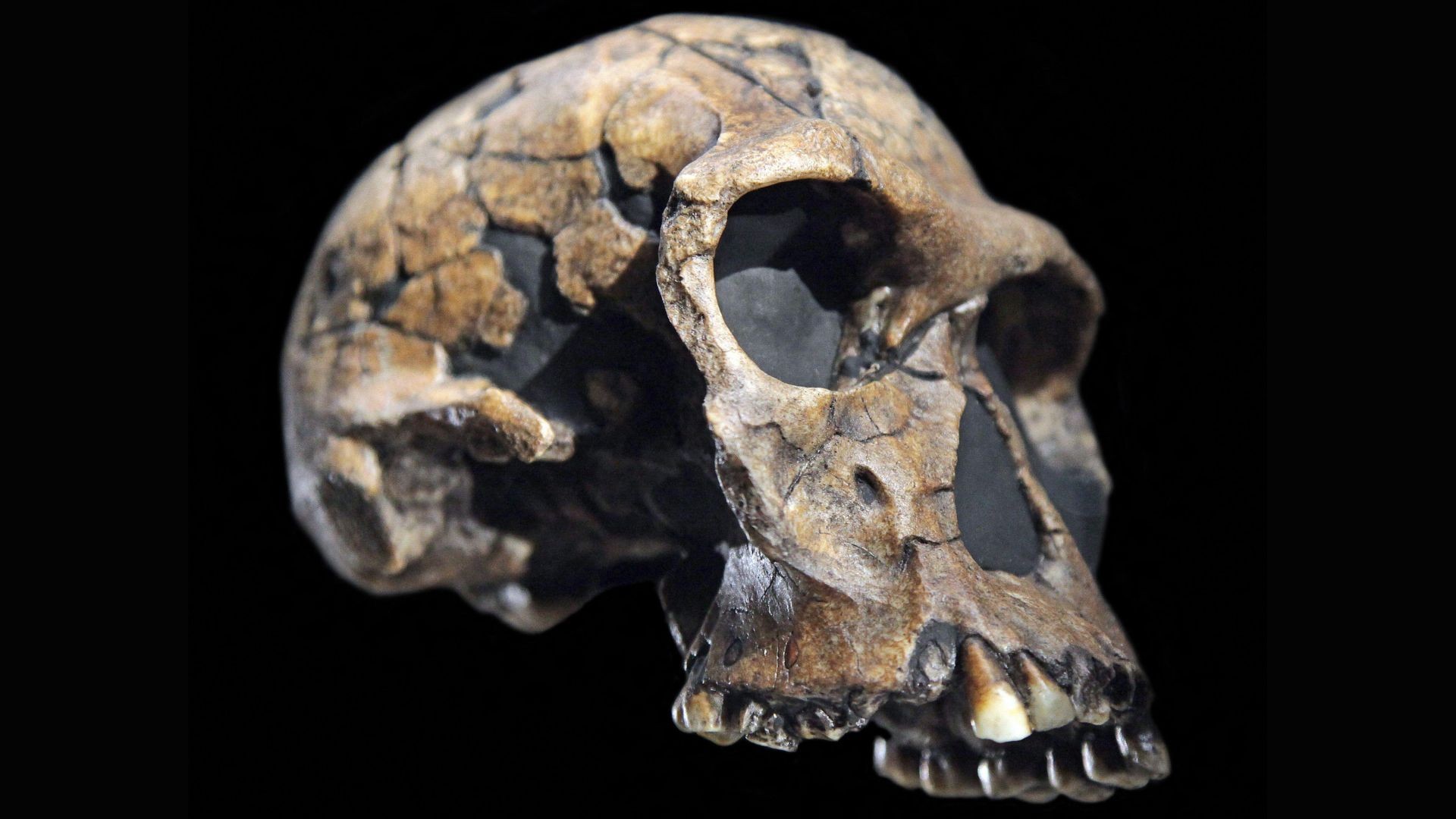
For six decades, Homo habilis has occupied a peculiar position in our understanding of human evolution – often hailed as the earliest known member of the Homo genus. However, recent fossil discoveries are fueling debate among paleoanthropologists: is this ancient species genuinely human, or has our definition of “human” been stretched too far?
The Mystery of Incomplete Fossils
Until recently, our knowledge of H. habilis, which lived between 2.4 and 1.65 million years ago, rested on three incomplete skeletons. This scarcity made it difficult to definitively assess its anatomy and place within the human family tree. In January, the description of a fourth, more complete skeleton changed the discussion. This new find revealed an anatomy strikingly different from modern humans – specifically, unusually long, ape-like arms.
This discovery has led some scientists to question whether H. habilis belongs in the Homo genus at all. Bernard Wood, a paleoanthropologist at George Washington University, suggests that the definition of Homo may have been overextended. The distinction between species is often blurry in the fossil record, and evolutionary lines aren’t always neat.
Defining “Human”
The debate highlights a fundamental challenge in paleoanthropology: where do we draw the line between Homo and its predecessors? Our species, Homo sapiens, clearly belongs in the Homo genus. However, our closest relatives, chimpanzees and bonobos, do not. The human genus emerged after the evolutionary split from the chimpanzee lineage over 5 million years ago.
Early hominins like Australopithecus afarensis (including the famous “Lucy” skeleton) possessed ape-like features, such as long arms and small brains. Most researchers do not classify Lucy as human, despite her place near the root of the human family tree.
The Case Against Homo habilis
The first H. habilis skeleton, discovered in the 1960s, showed a brain roughly 45% the size of modern humans – larger than earlier australopithecines, but still significantly smaller than ours. This led to its initial classification as Homo. The latest skeleton, found in Kenya, confirms the species’ ape-like limb proportions.
Ian Tattersall of the American Museum of Natural History argues that these arms are clear evidence against H. habilis being truly human. Some propose reclassifying it as Australopithecus habilis, while others suggest placing it in a new genus altogether.
A Gradual Transition
Not all scientists agree. Carol Ward of the University of Missouri suggests that long arms may not be decisive, as early hominins likely retained traits useful for climbing trees even as they adapted to walking upright. Evolutionary pressures don’t always demand immediate change. If long arms weren’t detrimental, they might have persisted in early Homo species.
This perspective supports the idea of a more gradual transition from australopithecines to Homo rather than a sudden, definitive shift. The real issue may be that we struggle to define what constitutes a genus, as evolutionary boundaries are rarely sharp.
The Bigger Picture
The H. habilis debate underscores a broader problem in evolutionary science. Defining species and genera is inherently complex, with no universally accepted standards. The lack of clear criteria means that arguments over classification can be subjective and ongoing.
Ultimately, the question of whether Homo habilis is truly human may remain unresolved, not because of a lack of evidence, but because the very framework for categorizing life is itself uncertain. The debate is a reminder that the evolutionary story is messy, and clear-cut answers are rare.