Northern Ireland’s government has approved an updated five-year climate adaptation plan, NICCAP3, outlining 280 actions designed to bolster the region’s resilience to the escalating effects of climate change. The plan, effective from 2024-2029, targets sectors including agriculture, infrastructure, communities, and business, and is driven by obligations under the UK’s 2008 Climate Change Act—a landmark piece of legislation requiring national adaptation strategies.
The Rising Stakes of Climate Adaptation
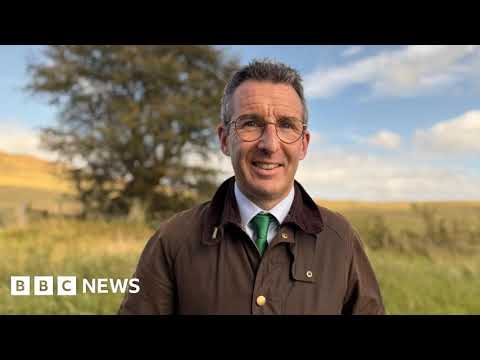
Climate change adaptation differs from mitigation; instead of reducing emissions, adaptation focuses on preparing for impacts already underway. Northern Ireland is experiencing these impacts firsthand. Minister for Agriculture, Environment and Rural Affairs, Andrew Muir, cites “frequent and severe storms” and “extreme flooding” as evidence. The region is also facing new animal diseases and intensified wildfires, directly affecting communities, businesses, and the environment.
Real-World Impacts on Farmers
The plan’s urgency is underscored by the experiences of Northern Irish farmers already grappling with unpredictable weather patterns. Stephen Murdoch, a vegetable grower in County Down, reports erratic conditions. “Weather in 10-week periods now… either unseasonably wet or unseasonably dry.” This unpredictability has cut his cauliflower harvests by half, forcing labor-intensive hand-picking due to muddy conditions. Unlike cattle farmers who receive compensation for livestock losses from diseases like TB, vegetable growers have no such safety net.
Peter Gallagher, a farmer in County Fermanagh, describes a shift in weather reliability. “You can’t depend on the weather behaving as you would normally have expected it to be… a lot wetter nearly all of the time and also a lot milder.” He has adopted a regenerative grazing approach, allowing grass to rest longer, even if it means lower quality feed, to mitigate the effects of increasingly wet ground. The timing of hay harvests is also becoming unreliable, jeopardizing this vital crop for both farmers and pollinators.
A Call for Adaptation and Efficiency
Despite these challenges, Gallagher remains optimistic. “Farmers remain optimistic… there is a real boom time ahead for agriculture and for farming.” The plan includes a new Peatlands Strategy, city drainage plans for Londonderry and Belfast, a Sustainable Agriculture Programme, and a Food Strategy Framework—all aimed at increasing Northern Ireland’s ability to thrive under changing climate conditions.
Ultimately, the NICCAP3 plan acknowledges that climate change is no longer a distant threat, but a present reality demanding proactive adaptation across all sectors. The success of this plan will depend on effective collaboration between government, businesses, and communities in the face of growing environmental pressures.