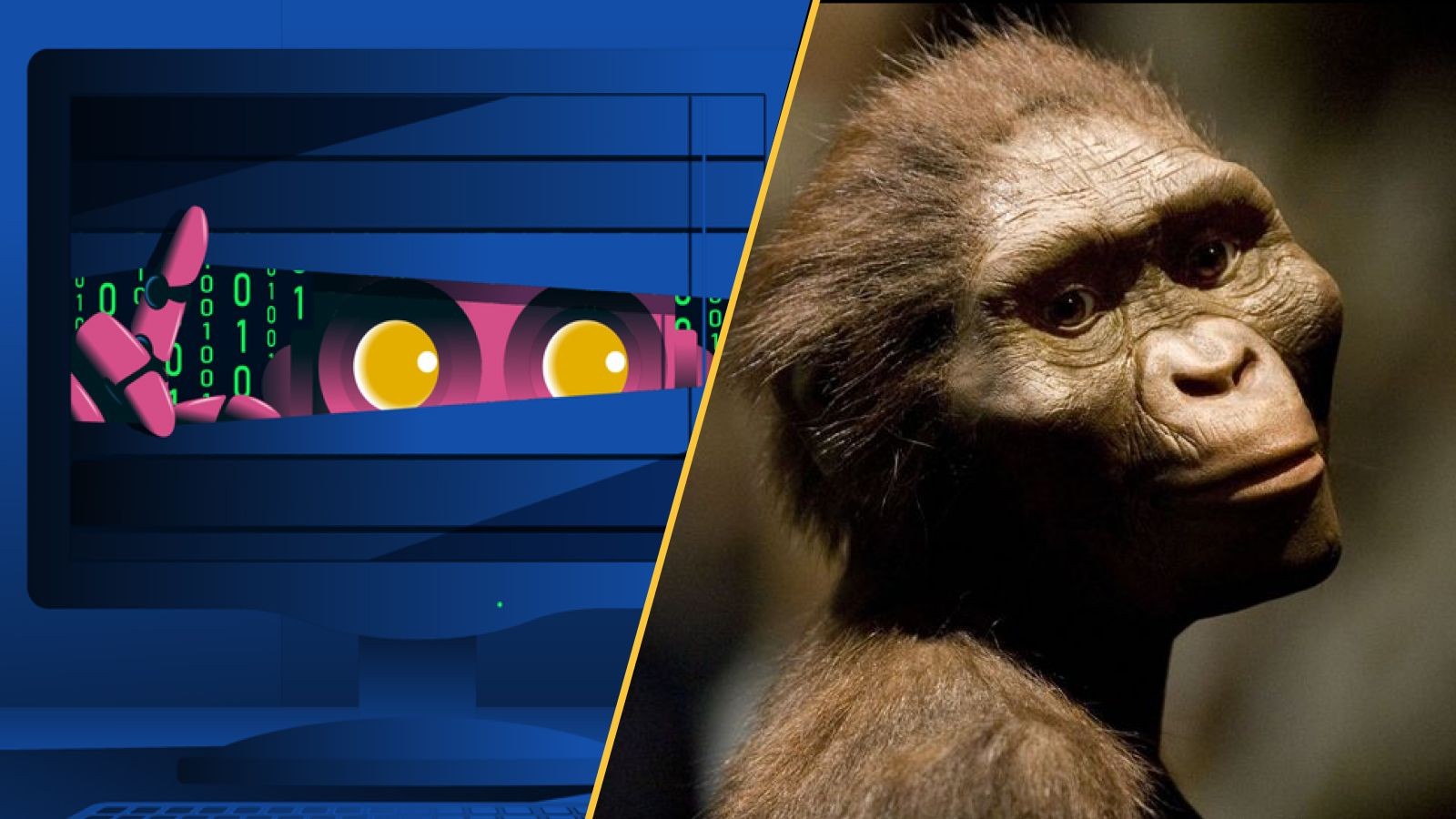
This week in science brought discoveries ranging from the earliest hominids to unexplained phenomena in the skies. Researchers continue to rewrite our understanding of human origins, while physicists hunt for the universe’s hidden matter. Meanwhile, a decades-old mystery involving UFO sightings and nuclear tests is being re-examined.
Human Ancestry: New Clues to Our Origins
A 3.4-million-year-old foot fossil from Ethiopia, dubbed the “Burtele foot,” may belong to a previously unknown human relative that lived alongside the famed “Lucy.” This suggests early hominids were more diverse than previously assumed, with some species adapted for tree-dwelling while others walked upright. The discovery underscores how fragmented the human family tree was, and highlights the need to re-evaluate our assumptions about ancient relatives.
Further back in time, evidence of Neanderthal cannibalism and interbreeding with archaic humans like “hobbits” continues to paint a brutal picture of prehistoric life. Meanwhile, 6,000-year-old rock art near the U.S.-Mexico border reveals Indigenous Americans’ detailed cosmological beliefs, including depictions of stretched, elongated figures. In Egypt, archaeologists found evidence of tomb raiding and body theft by pharaohs, while a medieval Spanish knight’s elongated skull likely resulted from a genetic disorder known as Crouzon syndrome.
The Hunt for Dark Matter
Astronomers are cautiously optimistic about a potential breakthrough in the search for dark matter. New data suggests that gamma-ray flashes observed by a NASA telescope could be a signature of weakly interacting massive particles (WIMPs), hypothetical candidates for this elusive substance. While further investigation is needed to rule out other explanations, the findings could revolutionize our understanding of the universe, which is 27% dark matter and only 5% ordinary matter.
Unexplained Phenomena: UFOs and Nuclear Tests
A decades-old mystery involving unexplained flashes in the sky captured before the launch of the first satellite is gaining new attention. Researchers are re-examining photographic plates that correlate these flashes with Cold War nuclear weapons tests and reported UFO sightings. The connection remains unclear, but the investigation may shed light on previously unexplained anomalies.
Tech and Space: AI, Shipwrecks, and Volcanic Eruptions
The rise of artificial intelligence is also raising concerns. Experts are divided over claims that Chinese hackers used an AI-powered cyberattack, but the potential for AI to accelerate widespread hacking attempts remains a serious threat. Meanwhile, scientists are recovering treasures from a 1708 shipwreck off the coast of Colombia, and a Chinese particle detector is yielding promising results in the search for physics beyond the Standard Model.
In other news, a 100,000 mph comet fragment exploded in a green fireball over the Great Lakes, and an Ethiopian volcano erupted for the first time in 12,000 years.
These diverse discoveries—from ancient bones to cutting-edge physics—underscore the relentless pace of scientific progress. New insights into human history, dark matter, and unexplained phenomena are constantly challenging our understanding of the universe and our place within it.