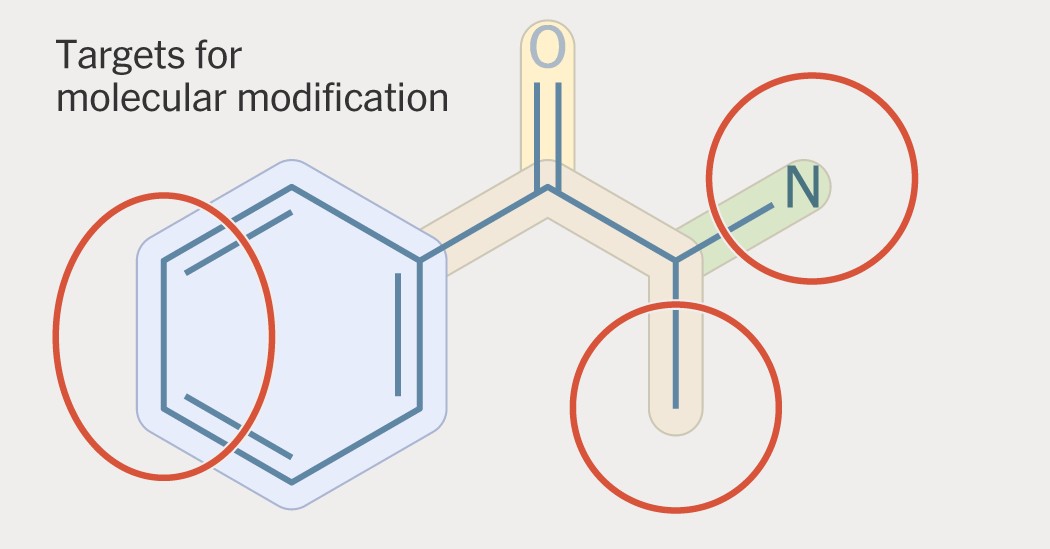
The landscape of illicit drug use is undergoing a rapid and dangerous transformation. Driven by a cycle of regulation and evasion, underground chemists are utilizing sophisticated molecular engineering to create “designer drugs” that are more potent, more addictive, and more difficult for health authorities to track than ever before.
The Alchemy of Evasion: One Atom at a Time
The core strategy used by illicit laboratories is deceptively simple: molecular tweaking. By making minor adjustments to the chemical structure of a known substance, chemists can fundamentally change its physiological effects and, crucially, its legal status.
A prime example is the evolution of MDMA (Ecstasy). While MDMA has been illegal since 1985, chemists discovered that adding a single oxygen atom to its structure creates methylone. This slight modification resulted in a drug that provided similar euphoric effects but remained technically legal under existing laws.
This phenomenon has created a “vicious cycle”:
1. Innovation: Chemists develop a new compound.
2. Market Entry: The drug enters the market (often under innocuous labels like “bath salts”).
3. Regulation: Health agencies identify the danger and ban the specific molecule.
4. Modification: Chemists tweak the molecule again to create a new, unscheduled variant.
The Rise of Synthetic Cathinones
This cycle was most visible during the rise of synthetic cathinones. Around 2010, emergency rooms began reporting a surge in patients experiencing extreme paranoia, violence, and psychosis linked to substances sold as “bath salts.”
The scale of the crisis was staggering. In 2010, poison control centers handled a few hundred calls regarding these substances; by 2011, that number had skyrocketed to 6,000. Despite bans on specific molecules, the Drug Enforcement Administration (DEA) noted in 2019 that as soon as one cathinone is controlled, a new, unregulated version inevitably emerges.
These drugs are specifically designed to be high-impact. By hijacking the brain’s dopamine system —the primary mechanism for reward and salience—these chemists are creating substances that are inherently more addictive and more potent than their predecessors.
“Frankenstein Opioids”: The Nitazene Threat
As authorities began to crack down on synthetic cathinones and fentanyl, illicit chemists pivoted to even more complex structures. They have recently “rediscovered” nitazenes, a class of opioids originally developed in the 1950s as potential morphine alternatives but never approved for human use.
Unlike the relatively simple cathinones, nitazenes are complex molecules that require significant expertise to manipulate. This shift marks a transition from amateur production to high-level chemical engineering.
Key characteristics of the nitazene trend:
- High Potency: They are often significantly more lethal than fentanyl.
- Low Cost: They are inexpensive to produce in large volumes.
- Legal Ambiguity: Their complex structures allow chemists to stay ahead of specific drug schedules.
By the end of 2024, at least 22 different nitazene molecules had been identified. While China moved to ban nitazenes in July 2025, experts warn that this will likely not stop production, but merely shift the manufacturing hubs to other unregulated regions.
A Globalized Chemical Industry
The production of these substances is no longer confined to small-scale operations. It is a globalized industry operating on two distinct levels:
– Industrial Scale: Large-scale enterprises in countries like China and India produce massive volumes of precursor chemicals and finished products.
– Localized Distribution: Small domestic labs and single-person operations focus on cutting, packaging, and retailing these drugs to local markets.
“These are not rudimentary chemists… They’re actually ahead of us.”
— Dr. Michael Baumann, National Institute on Drug Abuse
Conclusion
The battle against illicit drugs has evolved into a high-stakes game of chemical cat-and-mouse. As long as chemists can use patents and research papers to find new molecules to modify, the emergence of increasingly potent and unpredictable “designer” substances remains a constant threat to public health.