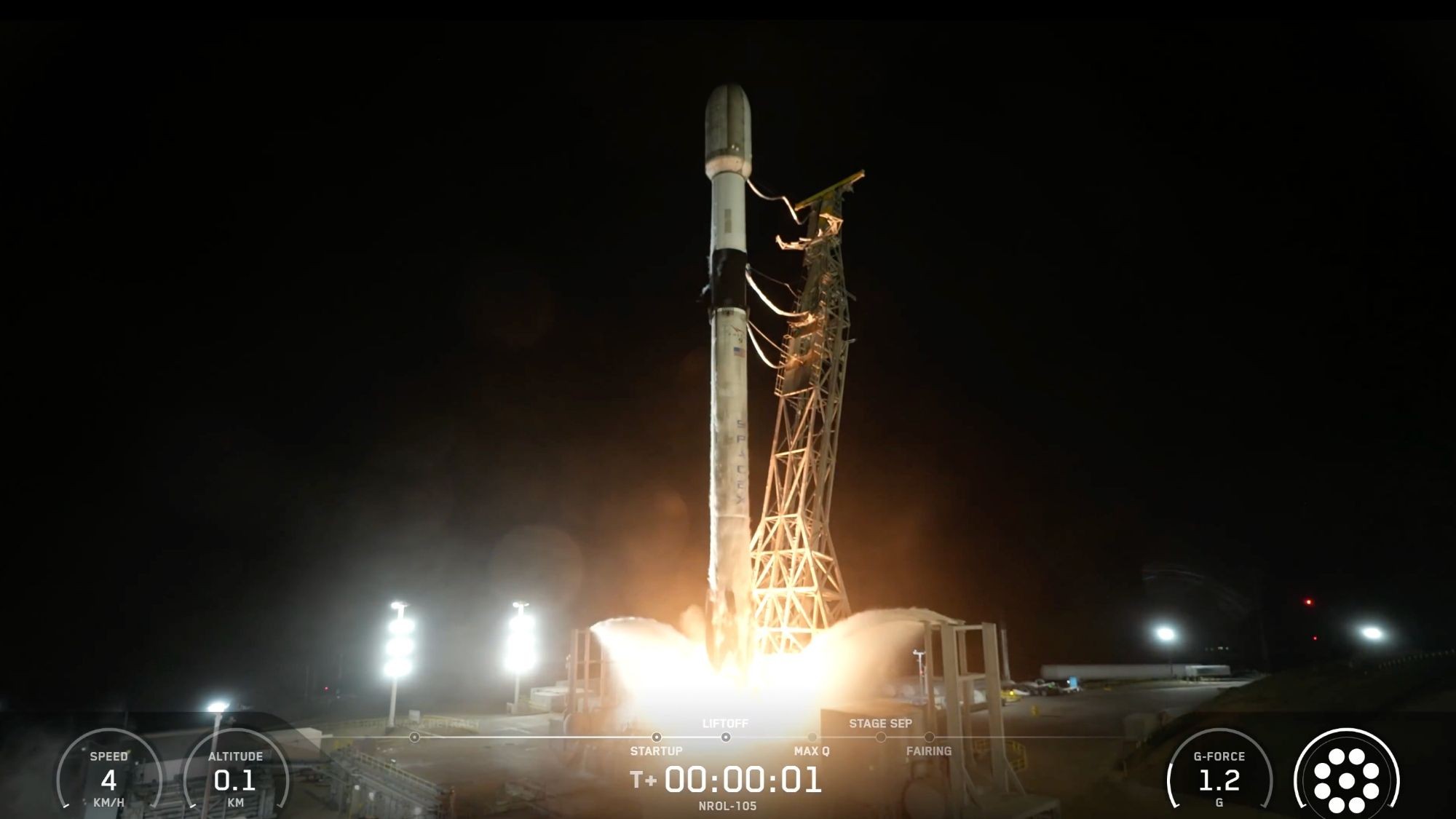
SpaceX successfully launched a classified payload of U.S. spy satellites into orbit late Friday, marking the first national security mission for the company this year. The Falcon 9 rocket lifted off from Vandenberg Space Force Base in California at 11:39 p.m. EST, carrying the NROL-105 payload for the National Reconnaissance Office (NRO).
Shift to Smaller, More Resilient Satellites
This mission highlights a key strategic shift in U.S. space reconnaissance: the deployment of a large number of smaller satellites instead of relying on fewer, larger, more vulnerable assets. The NRO’s “proliferated architecture” is designed for faster deployment, lower costs, and increased resilience against potential attacks. According to NRO Director Chris Scolese, these smaller satellites will provide more frequent data updates, broader coverage, and quicker delivery of intelligence to decision-makers.
SpaceX as Key Partner
SpaceX, alongside Northrop Grumman, is the primary contractor for building these next-generation reconnaissance satellites. All launches to date have been conducted using Falcon 9 rockets from Vandenberg. The first such mission, NROL-146, took place in May 2024. This reliance on SpaceX demonstrates the company’s growing importance in national security space operations.
Booster Reuse and Mission Secrecy
The Falcon 9’s first stage completed a successful landing at Vandenberg roughly 7.5 minutes after launch, representing its second flight. However, SpaceX ended its livestream immediately following the landing, likely at the NRO’s request, maintaining the classified nature of the mission. Details about the exact number of satellites deployed and their intended orbits remain undisclosed.
Broader Launch Activity
NROL-105 was SpaceX’s seventh mission of 2026. The company has also dedicated significant launch capacity to expanding its Starlink broadband constellation, signaling the dual role it plays in both commercial and national security space sectors.
The shift towards proliferated satellite architectures is a clear response to the increasing threats in space, including anti-satellite weapons and cyberattacks. By deploying hundreds of smaller, cheaper satellites, the U.S. aims to maintain its intelligence advantage while mitigating the risk of losing critical capabilities in a conflict.