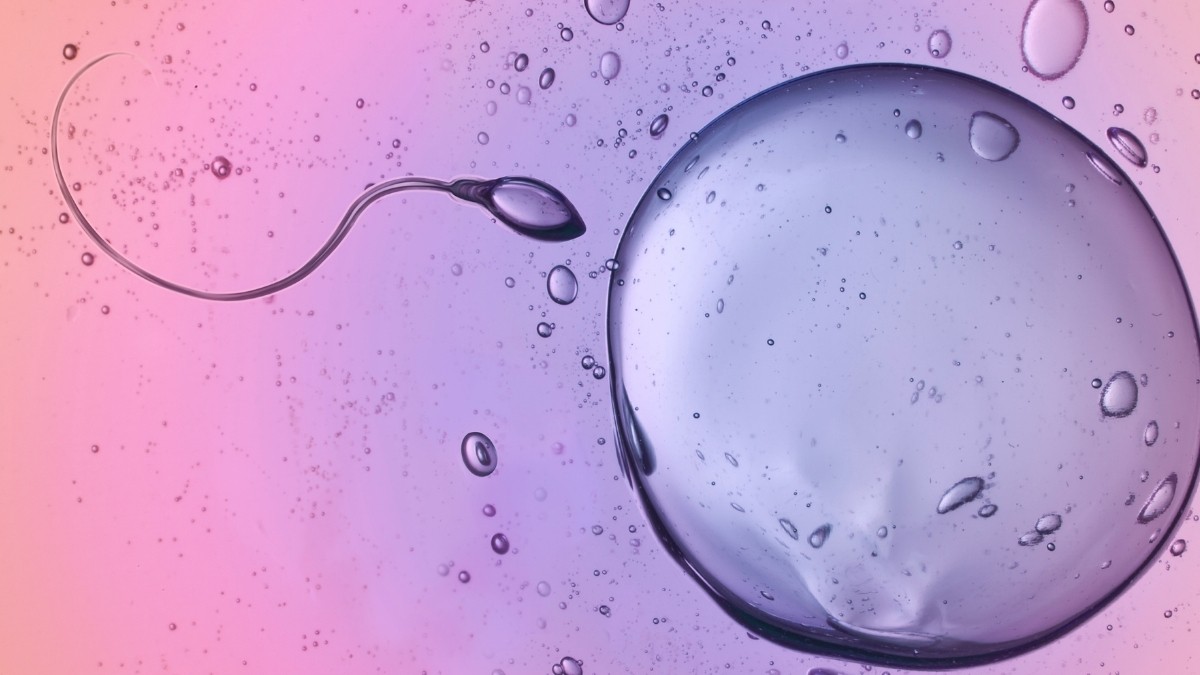
Human sperm cells can swim through thick fluids with surprising ease, seemingly breaking a fundamental law of physics: Newton’s third law of motion. This discovery highlights how microscopic biological systems operate outside the rigid rules governing larger, everyday objects.
The Challenge to Newtonian Physics
Sir Isaac Newton’s laws of motion, formulated in 1686, assume a symmetry in nature – for every action, there is an equal and opposite reaction. This principle explains why colliding marbles rebound predictably. However, this symmetry doesn’t hold true for chaotic systems like flocks of birds, particles in fluids, or, as recent research shows, swimming sperm.
These motile agents generate their own energy, creating asymmetric interactions with their surroundings. This allows them to bypass the constraints of Newton’s third law. The key is that these systems aren’t at equilibrium; the continuous energy input alters the rules.
How Sperm Cells Do It
Researchers led by Kenta Ishimoto at Kyoto University investigated sperm and algae movement. Both use flexible flagella to propel themselves forward. In theory, viscous fluids should dissipate the flagella’s energy, preventing movement. Yet, sperm and algae thrive in these environments.
The team found that sperm tails and algal flagella possess an “odd elasticity.” This property allows them to move without significant energy loss to the surrounding fluid. Further modeling revealed a new concept: an “odd elastic modulus,” describing the internal mechanics of the flagella.
“From solvable simple models to biological flagellar waveforms for Chlamydomonas and sperm cells, we studied the odd-bending modulus to decipher the nonlocal, nonreciprocal inner interactions within the material,” the researchers concluded.
Implications and Future Applications
This research published in PRX Life in October 2023, has broader implications. Understanding how sperm cells defy Newtonian physics could inspire the design of small, self-assembling robots that mimic living materials. The modeling techniques used in this study could also improve our understanding of collective behavior in complex systems.
This study underscores how nature doesn’t always adhere to classical physical laws at the microscopic level. The findings may prompt a reevaluation of how we model and understand biological movement, opening doors for bio-inspired engineering and a deeper comprehension of life’s fundamental processes.