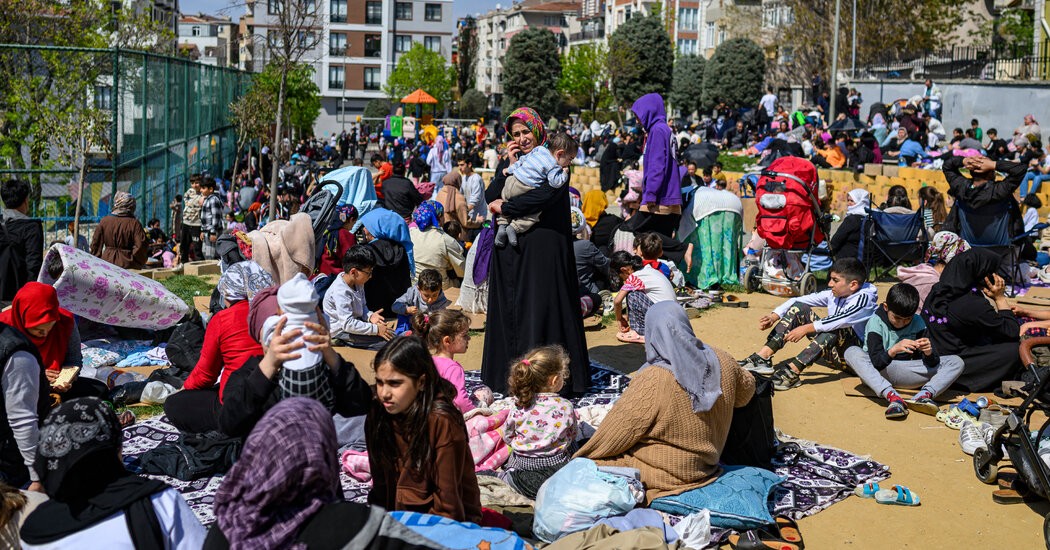
Istanbul, Turkey’s most populous city, is increasingly vulnerable to a major earthquake, according to new research and seismic observations. A critical fault line beneath the Sea of Marmara—a waterway connecting the Black Sea and the Aegean—is showing signs of escalating stress, raising concerns among geologists about a potentially catastrophic event.
The Rising Threat Beneath the Sea
Over the past two decades, earthquakes in the region have been steadily increasing in frequency and magnitude, shifting eastward along the fault line. The most recent tremor, a 6.2 magnitude quake in April, is part of a pattern that scientists say could culminate in a significantly larger event.
The Main Marmara Fault, a roughly 9-13 mile segment of the fault line, is now under intense scrutiny. This section has become “locked-up,” meaning stress is building up without release, and a rupture could result in a magnitude 7.0 or greater earthquake—a disaster that would directly threaten Istanbul’s 16 million residents.
Why This Matters: A History of Devastation
Turkey sits in one of the world’s most seismically active zones. The country experienced devastating earthquakes in February 2023, which killed at least 55,000 people in Turkey and Syria. This recent tragedy underscores the region’s vulnerability and the urgency of understanding—and preparing for—future events.
“Earthquakes cannot be predicted,” notes Patricia Martínez-Garzón, a seismologist at the GFZ Helmholtz Centre for Geosciences. “But understanding how this event might be initiated is of vital importance.”
The key now is not to predict, but to improve early detection systems and strengthen mitigation efforts. This includes bolstering building codes, emergency response plans, and public awareness campaigns.
Uncertain Timing, Certain Risk
While the exact timing of a major earthquake remains unknown, the escalating seismic activity is a clear warning sign. Stephen Hicks, a seismologist at University College London, puts it bluntly: “Istanbul’s in the cross hairs.” The potential for a catastrophic quake is real, and the city must prepare for the inevitable.
The research published in Science emphasizes that a major rupture is possible. This isn’t just a matter of geological curiosity; it’s a life-or-death scenario for millions of people in one of the world’s largest and most economically important cities.