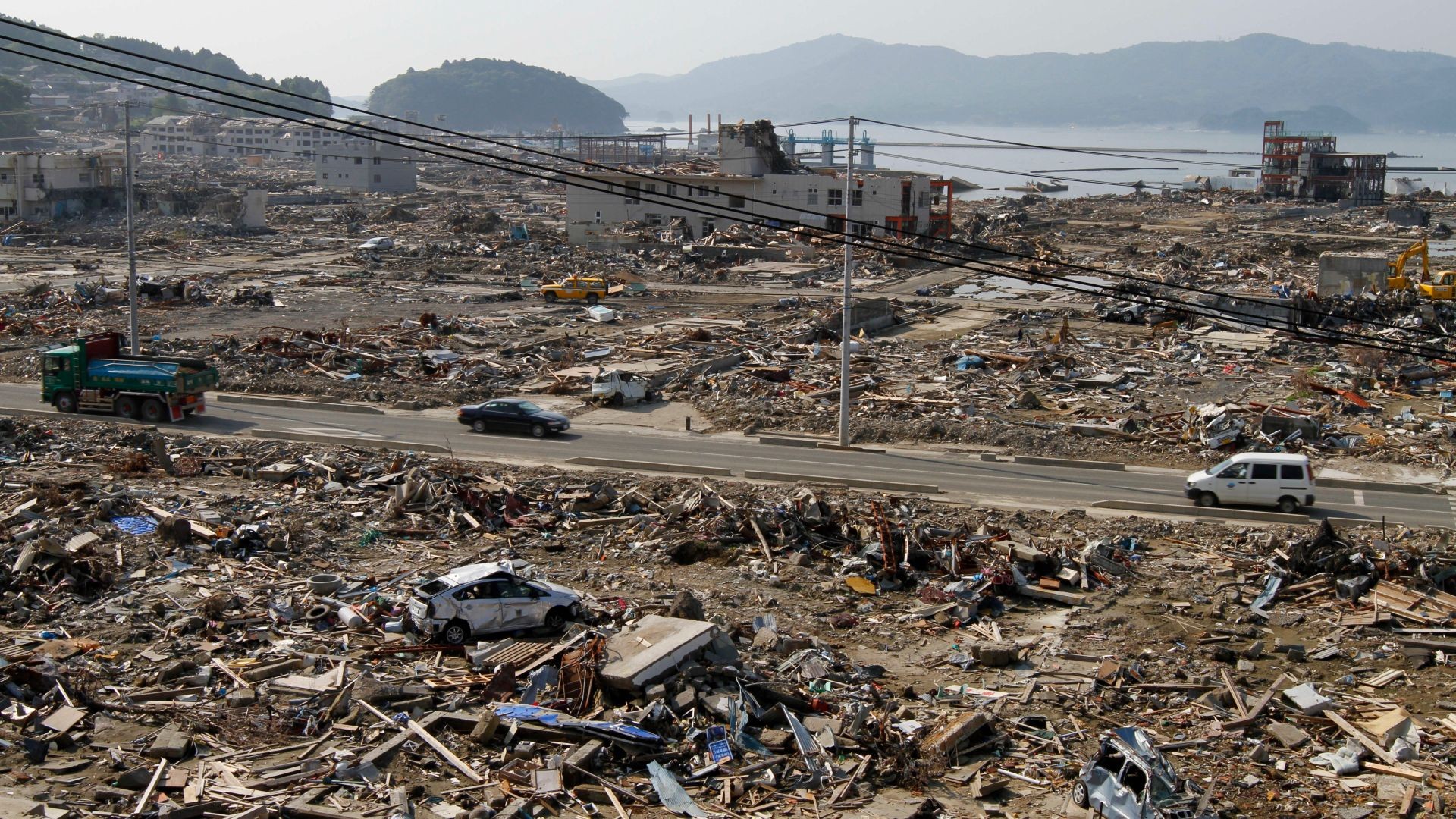
New research reveals that a thick layer of slippery clay on the seafloor played a critical role in worsening the devastating 2011 Tohoku earthquake and subsequent tsunami in Japan. The findings, published in December 2025 in Science, offer insights into why the tsunami was larger and more concentrated than previously understood — and could help refine future earthquake warnings.
The Role of Subsurface Clay
The 2011 quake, a magnitude 9.1 event, was triggered by the movement of the Pacific Plate sliding under Japan at a subduction zone. Researchers now believe that a layer of clay, up to 30 meters (98 feet) thick, acted as a weak point in the fault line. This “low-friction” clay, as described by Ron Hackney, a geophysicist at the Australia National University, allowed the earthquake’s energy to focus upward rather than spreading horizontally.
“It can slip very easily,” Hackney explained, highlighting how the clay’s properties concentrated the seafloor’s upward thrust.
This concentrated motion lifted the seafloor by 50 to 70 meters (164 to 230 feet) across a 500-kilometer (310-mile) stretch, driving the massive tsunami that inundated 561 square kilometers (217 square miles) of Japan. The breakage of the fault was also less extensive than expected, further intensifying the vertical displacement.
Drilling to the Source
The discovery wasn’t theoretical: in 2024, a team led by Hackney drilled directly into the fault zone aboard the research vessel Chikyu. After penetrating over 8,000 meters (26,000 feet) below the ocean surface, they extracted sediment cores from both the fault and the Pacific Plate.
Analysis of these cores confirmed the presence of a thick, goopy clay layer that has been accumulating for roughly 130 million years. This clay compresses as the Pacific Plate subducts under Japan, creating a mechanical weak spot in the rock structure. The result is a zone prone to breaking under stress.
Implications for Future Risk Assessment
The findings suggest that similar clay layers may exist at other subduction zones, potentially influencing the behavior of future earthquakes. Some evidence indicates their presence near Sumatra, Indonesia, site of the 2004 Indian Ocean tsunami. However, the composition of fault zones in regions like the Kamchatka Peninsula remains less understood.
The research underscores the importance of detailed subsurface studies for improving earthquake hazard assessments and refining early warning systems. A better understanding of these weak points can help authorities provide more accurate predictions and more effective disaster preparedness strategies.
The presence of this clay layer is a critical piece of the puzzle in understanding the scale of the 2011 tsunami, and may be a key factor in assessing the potential for future large-scale events in subduction zones worldwide.