


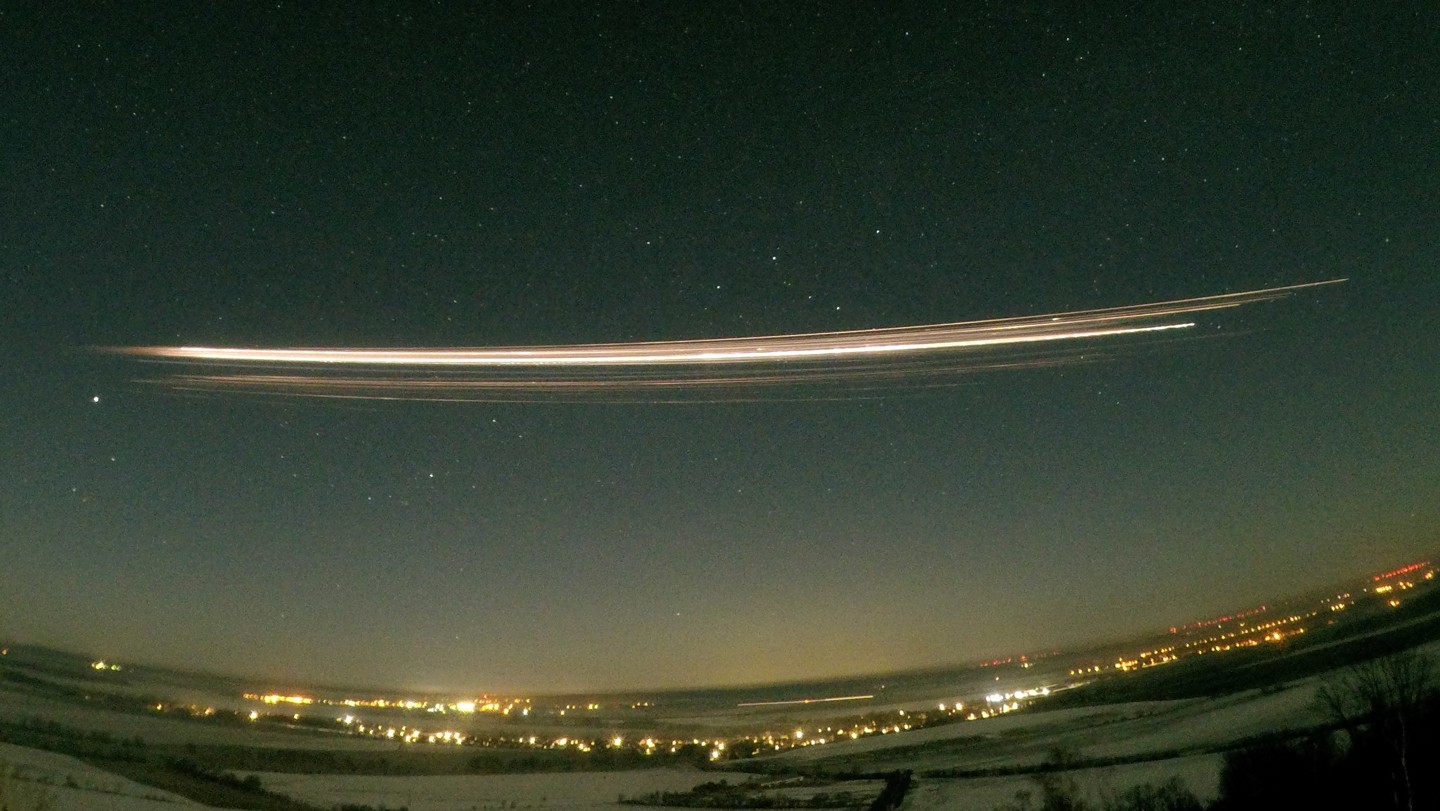
For the first time, scientists have definitively linked metal pollutants released during rocket reentry to atmospheric contamination. A recent study published in Communications Earth and Environment on February 19th details how debris from a SpaceX Falcon 9 rocket released a surge of lithium into the upper atmosphere as it burned up over Ireland and the United Kingdom.
The Rising Threat of Orbital Pollution
The increasing frequency of launches, particularly by private companies like SpaceX, is drastically elevating the amount of metal entering the atmosphere. SpaceX’s Starlink constellation alone plans to deploy over 40,000 satellites, with nearly 10,000 already in orbit. These satellites, with planned lifespans of roughly five years, will eventually burn up on reentry, releasing materials like lithium, aluminum, and copper.
Why this matters: These metals aren’t inert; they can act as catalysts in chemical reactions that deplete the ozone layer and cause other atmospheric disruptions. A 2023 study already estimated that 10% of stratospheric particles originate from burnt-up space hardware.
Direct Detection of Lithium Plume
The research team used lidar technology—shooting laser pulses to detect specific materials—to track a lithium plume forming over Germany hours after the Falcon 9 upper stage reentered the atmosphere. The concentration of lithium was ten times higher than normal, and atmospheric simulations confirmed the plume’s trajectory from the reentry point in the North Atlantic.
How it Works: Lidar and Atmospheric Tracking
Lidar works by analyzing how laser light scatters off atmospheric particles. Different wavelengths reveal the presence of specific metals. Combining this with weather models lets scientists trace pollutants back to their source.
Future Pollution Levels
The study estimates that reentering space debris could increase atmospheric metal pollution by as much as 40%. While natural metal influx from meteorites exists, the scale of planned launches suggests this pollution could become significant.
“All of them will burn up sooner or later,” says Claudia Stolle, a meteorologist at the Leibniz Institute of Atmospheric Physics.
This poses a growing challenge: As more nations and corporations enter the space race, tracking and mitigating these contaminants will become critical for protecting the atmosphere. The long-term effects on ozone levels and climate remain uncertain, but this direct detection marks a crucial step in understanding the problem.


