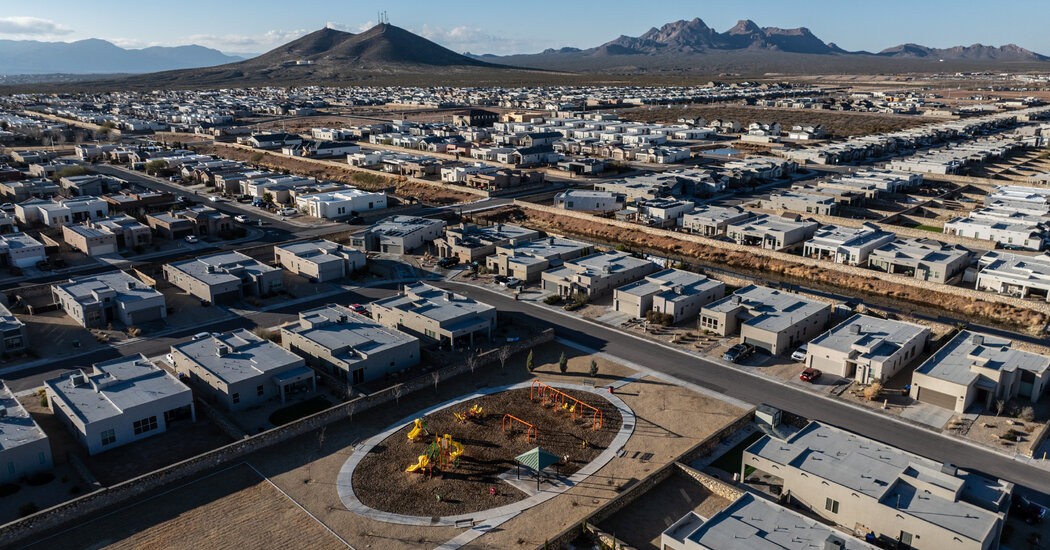
A New Mexico developer, John Moscato, has made a surprising business decision: eliminating natural gas connections from his new housing projects. This isn’t an environmental push; it’s a cost-cutting strategy that’s proving profitable.
The Shift Away from Gas
Moscato’s company, operating in Las Cruces, New Mexico, stopped installing gas lines in 2020 for new construction at the 2,200-acre Metro Verde development. While existing homes in the area still use gas, the remaining 4,000 lots will be entirely electric. This means no gas hookups for heating, hot water, or cooking.
Why the Change?
The decision wasn’t driven by environmental concerns, though it aligns with growing trends in sustainable building. Moscato stated that removing gas infrastructure saves his company roughly $3,000 per lot, and accelerates construction. The faster build times lead to quicker investment returns.
One resident, Storm Bear Williams, recently moved into an all-electric home in Metro Verde. He already uses an induction stove, electric cars, and plans to install solar panels. The absence of gas lines isn’t a drawback; it’s a feature he appreciates.
Business Reality in a Gas State
New Mexico is a major oil and gas producer, with roughly 60% of households relying on natural gas for heating. Despite this, Moscato sees the all-electric approach as a financial win. He’s so confident in the model that his company is breaking ground on another all-electric community in Las Cruces later this year.
“If we had done this sooner, it would have been better,” Moscato said. “But now that we’re developing this way, we’re very pleased.”
The move demonstrates that even in energy-producing states, market forces and cost efficiency can drive developers away from traditional fossil fuel infrastructure. The trend raises questions about the future of gas in new construction, even in regions where it remains dominant.
The decision highlights a pragmatic approach to development, where profit margins often outweigh established industry practices. It suggests that reducing costs and streamlining construction may be more effective incentives than environmental mandates for shifting away from natural gas.