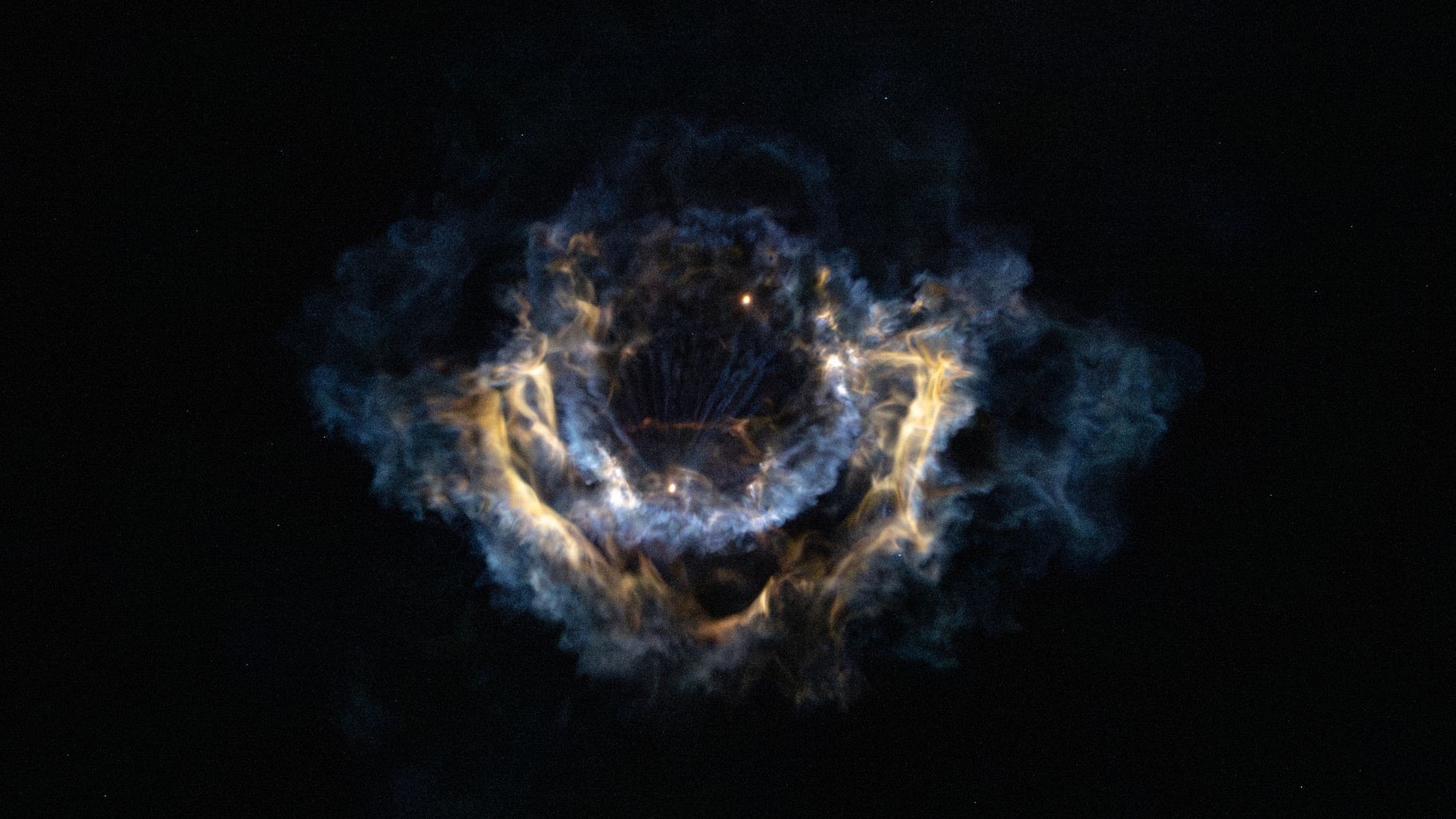
A recent SpaceX Falcon 9 launch from Cape Canaveral, Florida, produced a spectacular exhaust plume resembling a blooming nebula, as captured in a striking photograph released by NASA. The image, taken by photographer John Kraus on February 13, 2026, shows the rocket’s exhaust expanding rapidly into the atmosphere, creating complex patterns similar to those seen in deep-space supernova remnants.
The Science Behind the Spectacle
Falcon 9 rockets generate these dramatic “jellyfish” plumes due to the combustion of liquid oxygen and kerosene in their nine Merlin engines. This process creates intense thrust to overcome Earth’s gravity, but also results in a visible, expanding exhaust trail. The rapid expansion and interaction with the surrounding atmosphere result in the unique patterns observed in the photograph.
Crew-12 Mission to the ISS
The launch supported NASA’s Crew-12 mission, sending astronauts Jessica Meir and Jack Hathaway (NASA) alongside Sochie Adenot (ESA) and Andrey Fedyaev (Roscosmos) to the International Space Station (ISS). The Crew Dragon spacecraft successfully docked on February 14, beginning an eight-month stay as part of Expedition 74.
Context: A Reduced ISS Crew
The arrival of Crew-12 came after a period of reduced staffing on the ISS. A previous crew (Crew-11) was medically evacuated on January 8 due to an undisclosed health issue, leaving the station temporarily operated by a skeleton crew of three astronauts. This highlights the importance of continued crew rotations to maintain the ISS’s operational capacity.
The photograph serves as a vivid reminder of the power and beauty of space exploration, demonstrating how even exhaust plumes can create stunning visual phenomena. The successful delivery of Crew-12 underscores the ongoing commitment to human spaceflight and international collaboration on the ISS.