


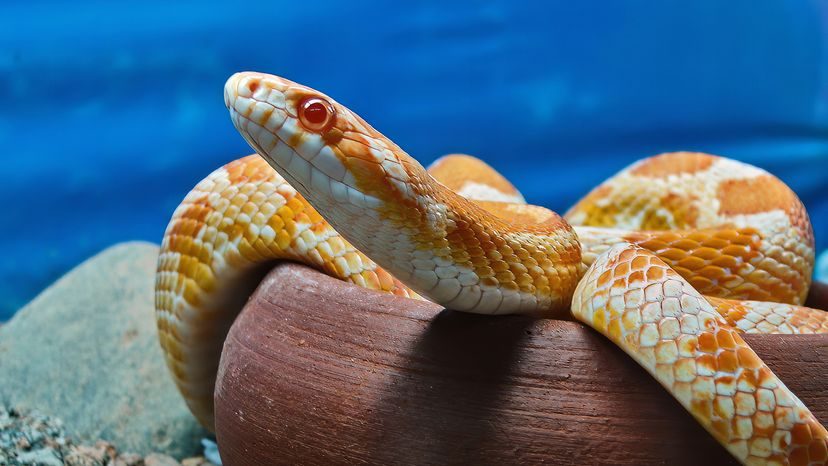
For just $1,500 you can buy a used car, a new laptop, or a “palmetto morph” corn snake.
Among reptile lovers, the Corn Snake (Pantherophis guttatus ) is considered the best snake for beginners, making it an ideal pet for first time snake owners. Easy-care reptiles come in a rainbow of colors and patterns.
Breeding “corns” can be lucrative because some rare varieties, such as the Palmetto morph, a white snake adorned with tiny red spots, are expensive. (Fortunately, there are more affordable options for snake enthusiasts on a budget.)
Corn snakes may be more valuable to the U.S. agricultural industry. In the wild, they are excellent hunters of rodents. By controlling rats, snakes help make farmland safe for seedlings and grain storage.
The Lowdown on Corn Snakes
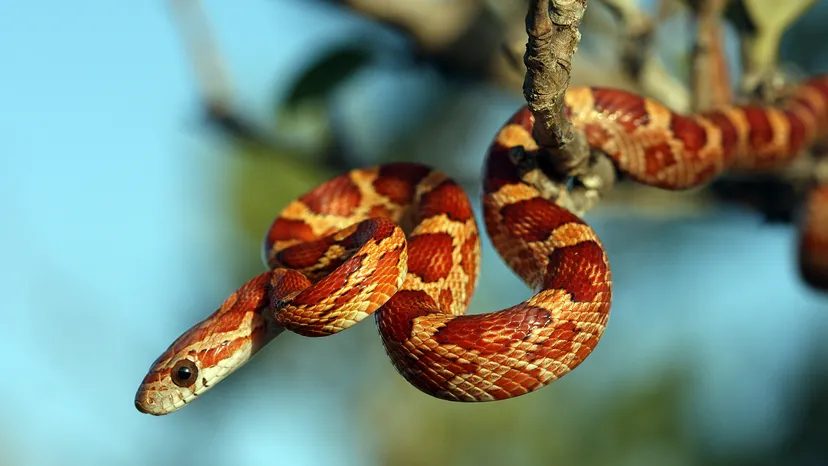

They are everywhere you don’t want them, yet nowhere you wouldn’t want them. That’s the thing about corn snakes (Pantherophis guttatus ). Highly adaptable, these serpents thrive in a staggering range of habitats. Their natural territory stretches from southern New Jersey all the way down to the Florida Keys, swallowing up large chunks of Tennessee, Kentucky, the Carolinas, and the Gulf Coast.
In the continental U.S., they aren’t alone. They belong to a massive group called New World rat snakes. These are nonvenomous predators that specialize in eating rodents and other small critters.
Take the eastern rat snake, for instance. You can find those hardy animals as far north as Vermont. They can grow to over 7 feet (2.1 meters). Corn snakes? They’re the dinky cousins of the family. Full-grown ones rarely exceed 5.5 feet (1.67 meters).
Visually, they’re distinctive. In the wild, they usually sport a tannish-orange base with black-bordered patches of dark red scales. Flip one over, and you’ll see a checkered, black-and-white pattern on the belly.
This brings us to the name. Some say early settlers were reminded of multicolored corn kernels when they saw those bellies. Others argue the name came from their habit of hanging out near cornfields to hunt. Either way, the name stuck.
Mimicry and Defense
Here’s a twist: their ancestors were venomous. Anatomical evidence points to prehistoric relatives that packed a toxic punch. Somewhere along the evolutionary line, the lineage leading to modern corn snakes lost the ability to produce venom.
Now, they rely on constriction. They squeeze the life out of their prey.
But when danger approaches, corn snakes get creative. They mimic venomous species. It’s a classic case of imitation being the highest form of flattery.
They live alongside rattlesnakes like the eastern diamondback. Corn snakes don’t have rattles, obviously. But they know how to make noise. They vibrate their tails against dead leaves or dry grass tufts to create a loud buzzing sound.
Does it work? Often, yes. It frightens off potential predators. It’s a popular trick across North America. Bull snakes and southern black racers use the same strategy.
Copperheads vs. Corn Snakes
People make mistakes. They see a snake with dark blotches in the Southeast and panic. They assume it’s a copperhead.
Copperheads are pit vipers. They have heat-sensing pits behind their nostrils to track warm-blooded prey. Corn snakes? No pits. No venom. Just a lot of misunderstanding.
Both snakes are abundant in the Southeast. Both have dark markings on their backs. But they are easy to tell apart if you know what to look for.
Skull Shape and Eyes
Let’s get anatomical. Copperheads have triangular skulls. Their pupils are vertical slits, like a cat’s.
Corn snakes have rounded head edges. Their pupils are round. That’s the first giveaway.
Color and Pattern
Coloration helps, too. Copperheads tend to be browner. Their backside blotches are hourglass-shaped.
Corn snakes are more orange-tan. Their blotches are more rectangular or saddle-shaped. They’re distinct if you look closely.
The Rodent Connection
Both snakes love rodents. It’s a shared preference.
Young corn snakes start small. They eat tree frogs and lizards. As they age, their diet expands. Birds. Eggs. Rodents.
Voles, marsh rats, and white-footed mice become staples for full-grown corn snakes.
This makes them valuable. They control rodent populations. This benefits natural ecosystems and agricultural areas.
Wild rodents damage crops. They spread disease. Corn snakes eat the pests. They protect farmland, especially where rodents are abundant.
Rats that eat harvested corn can cause significant losses. Corn snakes help prevent that.
Allowing corn snakes, copperheads, and other predators to do their job benefits farmers. It benefits us too.
Where to Find Them
Farms are hotspots. Corn snakes love barns, old houses, and abandoned buildings. Why? Rodents and small birds hide there.
Wild corns also take shelter under logs or discarded boards.
You’re likely to find one in a field or meadow bordering a forest. They like the edge habitat.
Hunting Tactics
Most hunting happens at ground level. But corn snakes are versatile.
They pursue prey into burrows. Their slender bodies and flexibility let them navigate tight underground spaces with ease.
They’re also climbers.
When hunting birds or eggs, they climb trees. They show remarkable agility on branches.
They wedge into bark crevices. This lets them climb vertical or nearly vertical surfaces.
They’re effective hunters in trees and on the ground.
Mating and Reproduction
After eating, they mate. This happens in warmer months.
They use pheromones to find mates. That starts the breeding season.
In the south, corn snakes are active year-round.
Northern populations are seasonal. Adults hibernate in empty burrows during winter.
Breeding usually happens in spring.
Gestation lasts 30 to 45 days. Females lay 10 to 30 eggs.
The young are independent immediately. They hatch and go.
Corn snakes aren’t shy about mating in captivity. This is why you see them everywhere.
Pet stores have them. Reptile conventions feature them.
They’re widely available.
Housing requirements
Most corn snakes probably live in glass terrariums with mesh covers. An adult needs a tank of at least 20 gallons (75.7 liters). Dimensions also play a role. Aim for 30 x 12 inches (76 x 30.5 centimeters). For this species, more floor space is better than vertical height.
If you have the space, go bigger. Babies can start in smaller containers. However, they will outgrow them quickly. As they grow, upgrade to the adult setup.
Terrarium Setup
Line the floor with aspen shavings. Dry newspaper will work if you don’t care about appearance. Place a sturdy bowl of water inside. Clean it every day. Dirty water causes health problems.
Snakes need privacy. The hiding place is non-negotiable. A simple shoebox works. Commercially available reptile hides are also great. Without a safe hiding place, the snake remains stressed.
Temperature control
Create a thermal gradient. warm one side with a heat lamp to 29°C. Keep the cool side at around 21°C. This is how the snake can regulate its body temperature. Corn snakes do not require UV light. This requirement applies to many lizards and turtles. Not them.
Feeding schedule
Feed every five to seven days. Older snakes can go seven to ten days between meals. The prey item must fit the widest area of the snake. Do not use live prey. It is dangerous for both parties. Frozen mice are standard. Thaw them well before serving.
Longevity
Proper care guarantees a long life. The record holder reached 32 years in captivity. Most live 10-20 years. This is a significant commitment. It requires constant attention.
This guide has been updated with AI support. A editor verified the facts.
The “Snake in the Airplane” myth.
Hollywood got it wrong. The 2006 film “Snakes on a Plane” starred Samuel L. Jackson. Many of the snakes described as “venomous” in the film were actually corn snakes. They are not poisonous. They are harmless to humans. The movie used them for drama. They are popular pets for a reason.


