


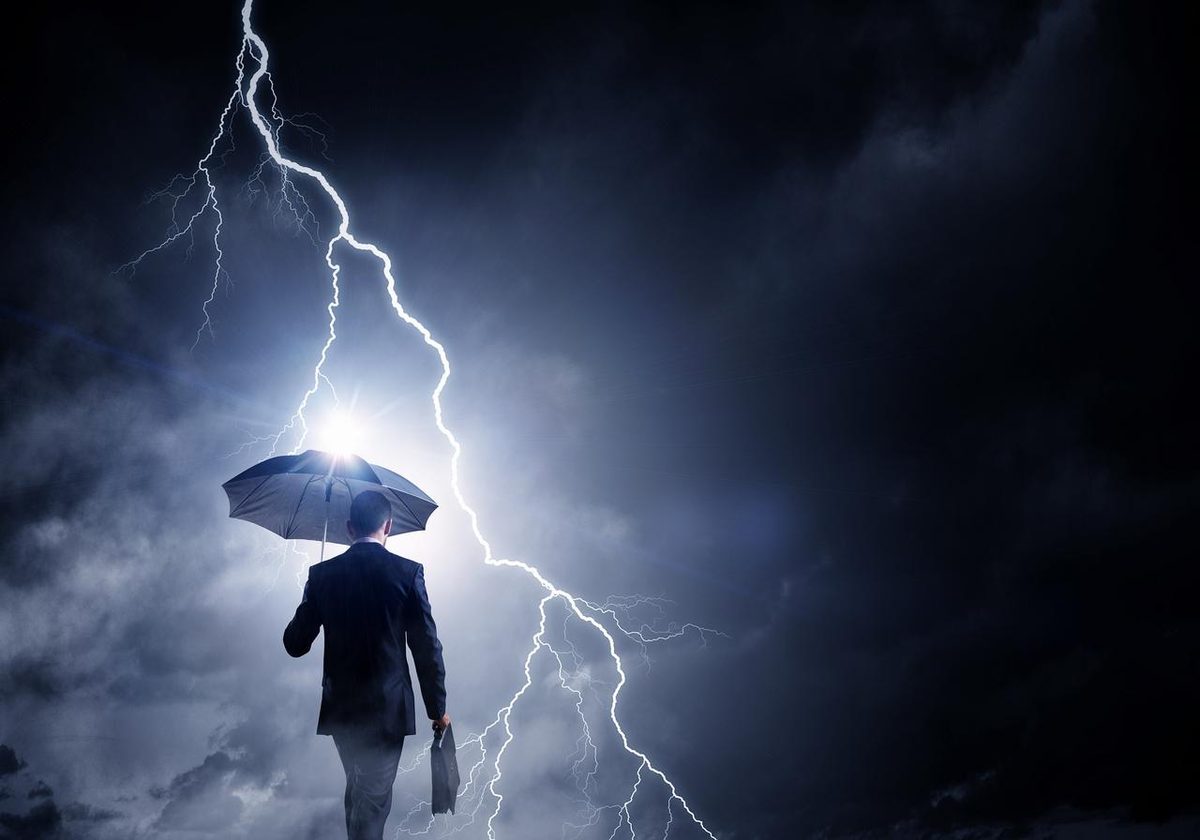
Lightning doesn’t just strike. It finds you. It seeks the path of least resistance and, when that path is your nervous system, the result is often fatal.
Most people think of lightning as a single, dramatic event. A bolt of blue-white fire slamming into the earth. But the physics are messier. More insidious. The electrical discharge interacts with the human body in five distinct ways. Some are obvious. Others are invisible until it is too late.
Survival is possible. But the margin for error is razor-thin.
Direct Strike: The Brute Force Impact
This is the scenario everyone imagines. The bolt hits you. Head on. Chest exposed.
It happens in open spaces. Fields. Beaches. Mountain peaks. It is the least common form of lightning injury, yet it carries the highest mortality rate.
When the current hits, it does not just pass through. It splits. A portion travels along the skin, causing burns that can range from mild to severe. The rest? It goes deep. Through the nerves. Through the veins. It fries the organs. Survival depends entirely on the volume of electricity coursing through your torso.
If the heart stops. If the lungs paralyze. You are gone.
Side Flash: The Jump Shot
You think you are safe standing next to a tree? You are not.
Side flash occurs when lightning strikes a larger object—a tree, a pole, a building—and then “jumps” to you. The discharge arcs across the gap. It typically happens when you are standing between 30 and 60 centimeters from the struck object.
This is the primary reason you never shelter under a tree during a storm. The risk is variable. Sometimes you walk away with minor burns you don’t notice for hours. Sometimes the arc is powerful enough to cause instantaneous death.
The gap doesn’t matter much to lightning. It jumps.
Ground Current: The Invisible Web
This is the most common cause of lightning injuries. And it is terrifyingly unpredictable.
When lightning strikes the ground, the electricity radiates outward in a horizontal wave. It travels through the soil. If you are standing nearby, the current enters your body at one foot and exits at the other. This is called “tension of step.”
It affects humans. It affects animals. Farmers often lose entire herds to this phenomenon because the ground becomes a live wire.
Here is the kicker: You can be struck at home. In your garage. The current travels through the earth beneath your foundation. It doesn’t care about your walls.
However, distance is your only ally. The further you are from the strike point, the more the electricity dissipates. The less current flows through you. The higher your chance of survival. But predicting where the strike will hit the ground? Impossible.
Conduction: The Wire Trap
Metal doesn’t attract lightning. That is a myth. But metal conducts it. Perfectly.
If lightning strikes a power line, a water pipe, or a telephone cord miles away, the electricity travels through that network. It waits for a connection. You are the connection.
This is why you shouldn’t use a corded phone during a storm. Or take a shower. Or touch a window frame. The surge travels through the infrastructure of your house. It doesn’t need to hit your roof. It just needs a path.
Even outdoors, metal surfaces pose a risk. Holding a metal railing? Risky. The conductive path is everywhere.
Streamer Lightning: The Phantom Bolt
This is the weirdest one. The one that defies logic.
Sometimes, lightning doesn’t strike the ground near you. It strikes miles away. But a secondary discharge, called a “streamer,” detaches from the main cloud. It drifts downward. It looks like a ribbon of fire. Unconnected to the cloud. Unconnected to the ground.
If you are in its path, you get hit.
It is rare. But it is real. And it means you can be struck by lightning even if you are far from the immediate impact zone of a storm.
Why This Matters
We treat lightning as a spectacle. A photo opportunity. A close call.
But it is a biological hazard. A complex electrical interaction that exploits our anatomy.
Understanding the five modes of injury changes how you move in a storm. You stop standing under trees. You stop standing in fields. You unplug the electronics. You stay away from windows.
You don’t just wait for the storm to pass. You understand how it kills you.
The sky is not neutral. It is charged. And it is watching.


