


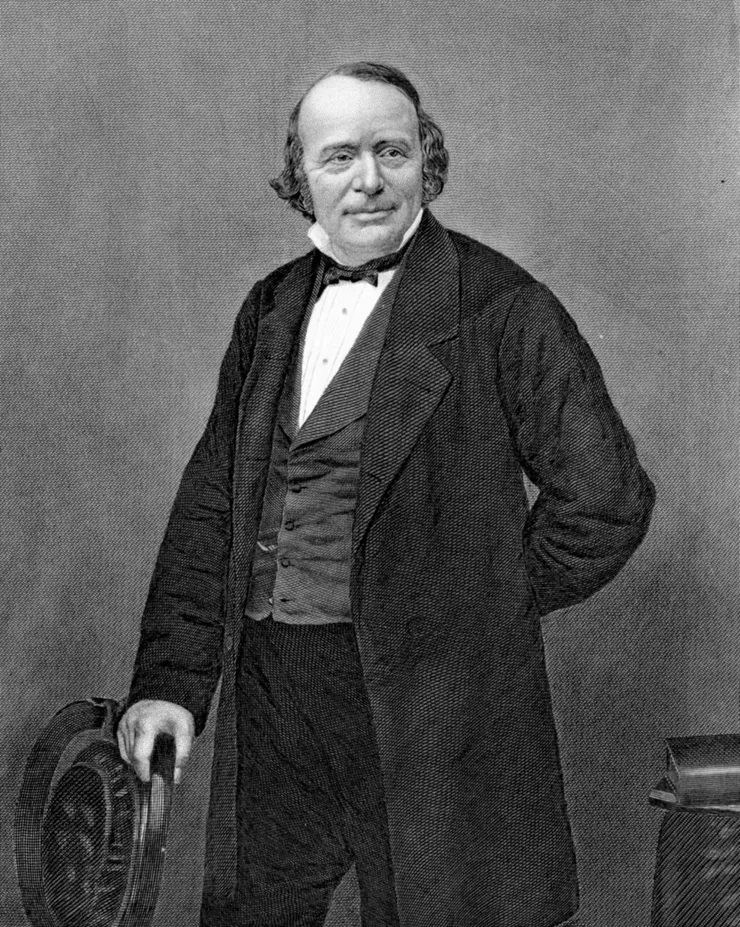

Louis Agassiz didn’t just teach natural history. He remade it. Born in Switzerland in 1807, he brought a European discipline to American science that shaped the field for decades. He died in Cambridge, Massachusetts in 1873, leaving behind a legacy that was as controversial as it was fundamental.
He immigrated to the United States in 1846. He previously studied in Switzerland and Germany. He was a naturalist, geologist and teacher in the true sense of the word. He didn’t just lecture. He demanded observation. He wanted his students to look at the ice and fossils and figure out what they saw. This was The Influence of Louis Agassiz on American Education. It was practical. It was intense. And it worked.
Glaciers, fish and a new way of learning
Agassiz became known early on for two things: glaciers and extinct fish. His work on glacial activity changed the way people understood Earth’s history. He showed that large ice sheets had once covered large parts of the continent. This wasn’t just geology. It was a change of perspective.
He also studied extinct fish. Detailed. Carefully. His methods promoted learning through direct observation of nature. The students didn’t just read about biology. They handled specimens. They drew them. They argued over them. This approach revolutionized the study of natural history in the United States.
The ripple effect was huge. Every major American teacher of natural history in the late 19th century was a student of Agassiz or one of his students. He created a school of thought. A lineage. He was a science administrator who knew how to raise funds and promote his institute. He was practical. He was powerful.
Conflict with Darwin
This is where things get complicated. Agassiz was a lifelong opponent of Charles Darwin’s theory of evolution. He believed in a special creation. He thought species were fixed. Darwin changed the conversation. Agassiz dug in.
This was no small disagreement. It was a fundamental division. Agassiz’s view of evolution created a rift that continued long after his death. He was a supporter of science, but also stubbornly stuck to old ideas. He did not consider evolution a discovery. He saw this as a threat to the order he believed in.
A family of naturalists
His personal life was closely related to the science he loved. His second wife, Elizabeth Agassiz, was a force in her own right. She cofounded and first president of Radcliffe College. She pushed for women’s education at a time when it was fiercely contested.
His son Alexander Agassiz was also a famous naturalist. He followed in his father’s footsteps, albeit perhaps with a milder approach to controversy. The name Agassiz was synonymous with scientific excellence. It was a dynasty of sorts.
Why is he important now
We often look back at figures like Agassiz and see only contradictions. He developed science through accurate observation. Nevertheless, he rejected one of the most important theories in biology. He was a teacher who inspired generations. But his ideological rigidity held back parts of the field.
How do we judge his legacy?