


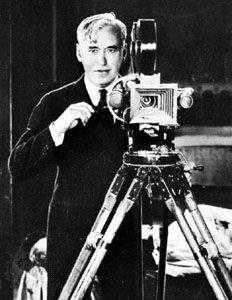
Mack Sennett didn’t just make jokes. He built a genre. Born in Richmond, Quebec, on January 17, 1880, he would eventually die in Woodland Hills, California, on November 5, 1960. But for those three decades in between, he was the architect of chaos. He gave us the Keystone Kops. He taught Americans how to laugh at motion pictures. Without him, the entire history of American slapstick comedy looks very different.
He wasn’t born behind a desk. He worked the circus. He survived burlesque. He struggled through vaudeville and legitimate theater. It was a brutal education in timing. When he finally joined Biograph studios in 1908 as an actor, he saw the machinery of film from the inside. He wasn’t just acting. He was watching. He learned how to cut. He watched D.W. Griffith, the director who was busy inventing cinematic art, and he absorbed the technique. Griffith cared about drama. Sennett cared about speed.
He couldn’t wait. Three years later, in 1911, he walked away. He left Biograph to form his own independent Keystone Company in Los Angeles. He didn’t want to follow rules. He wanted to break them. This was the moment before Hollywood had a style. Sennett decided what that style would be. He became the first director to carve out a distinct visual language for comedy. His editing was sharp. His comic timing was surgical. He didn’t just direct comedies. He engineered them.
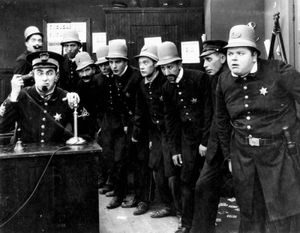

Sennett’s studio didn’t just churn out slapstick. In 1914, his company produced Tillie’s Punctured Romance, the first American feature-length comedy. It was a milestone. But he is really remembered for the more than 1,000 one- and two-reel shorts that flooded theaters. He started by directing and acting in them. Many scenes were improvised on the spot. Why? To catch real-world chaos like parades or fires. Staging those events would have been too expensive.
The Faces Behind the Chaos
His name is tied to two specific icons. First, the bathing beauties who posed in his films. Second, the Keystone Kops. These were uniquely talented actors who became international stars. They weren’t just goofballs. Their antics defined a generation of comedy.
Satire in the Age of Machines
Don’t mistake the slapstick for simple filler. Vintage Sennett films often carried a sharper edge. Look at His Bitter Pill from 1916. Or A Small Town Idol in 1921. Or The Shriek of Araby in 1923. These were biting parodies. They satirized the foibles of an increasingly mechanized society. The camera work used tricks. It relied on high-speed and slow-motion photography. This style mirrored the French “chase” comedies that gained popularity in the U.S. after 1907. It wasn’t just noise. It was a commentary on speed, on machines, on the new world.
The Kops might have been the most visible face, but the satire was the brain. Did anyone notice the difference then? Probably not. They just laughed.
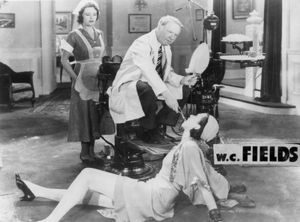

It wasn’t just luck that made Keystone the gold standard of early comedy. Mack Sennett built an entire factory of laughter, training a roster so stacked it reads like a who’s-who of silent film royalty. He took raw talent and polished it into stardom.
Take Mabel Normand, for instance. Or Marie Dressler. Gloria Swanson started here too. Then there is the big name: Roscoe “Fatty” Arbuckle. You can’t talk about Sennett without Arbuckle. Harry Langdon found his rhythm there. Ben Turpin’s crossed eyes became iconic. Charlie Chaplin cut his teeth in the mud. Harold Lloyd learned timing. W.C. Fields refined his act.
Sennett didn’t just produce stars; he produced filmmakers. Frank Capra got his start here. Malcolm St. Clair learned the business. George Stevens began his career under his wing. These weren’t just extras. They were the architects of modern cinema, honed in Sennett’s chaotic workshops.
But the world changed. Fast.
Sound arrived. It changed everything. Double features flooded theaters with cheap entertainment. Animated cartoons stole the kids’ attention. Then came 1929. The Wall Street crash hit. Sennett lost his massive personal fortune. The style that once defined him suddenly felt outdated. The slapstick didn’t translate to the new era.
He tried to adapt. He couldn’t.
In 1935, he retired. It wasn’t a graceful exit. It was a forced stop. The industry had moved on.
Yet, history remembered him. In 1937, the Academy of Motion Picture Arts and Sciences didn’t let him fade away quietly. They voted him a special award. The citation? “For his lasting contribution to the comedy technique of the screen.”
It was an acknowledgment that without him, the genre might not exist in the form we know. He built the engine. Others drove it further. But he kept the gears turning long enough to set the standard.
Does that recognition matter now? Maybe not in box office numbers. But in the DNA of every funny scene? Absolutely. The echoes of Keystone are still there. In every pratfall. Every chase. Every moment of controlled chaos.
Sennett’s name isn’t always in the spotlight today. But his fingerprint is on the art form. Permanently.


