


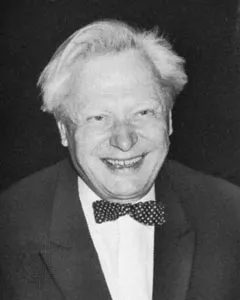
Sergey Vladimirovich Obraztsov didn’t just play with puppets. He built them into a legitimate cultural institution. Born in Moscow on June 22, 1901, under the old calendar, this man became the definitive figure in Soviet puppetry. He died there on May 8, 1992, leaving behind a legacy that cemented puppetry as a serious art form. Historians now rank him among the greatest puppeteers of the entire 20th century.
He came from ordinary stock. His father was a railroad engineer. His mother taught at a school. But Obraztsov headed for art. He studied painting at the Higher Art and Technical Studios. It was a detour that paid off later. Before he ever touched a marionette seriously, he was on stage. He acted at the Moscow Nemirovich-Danchenko Music Theatre from 1922 to 1930. Then he moved to the Moscow Art Theatre for a year.
While building his acting resume, he was secretly honing his craft. He performed independent vaudeville-style puppet shows on the side. The government noticed. In 1931, they handed him the keys to the State Central Puppet Theatre in Moscow. He was the first director. The rest is history.
Technical Precision Meets Folk Charm
Obraztsov wasn’t about messy, amateurish charm. His performances were defined by strict stylistic discipline and technical excellence. He took Russian puppetry global. He toured dozens of times outside the Soviet Union. The 1953 tour of Great Britain shocked audiences. The 1963 tour of the United States stunned them.
The secret was in the mechanics. Consider the dancing couple that performed a tango. It required seven puppeteers working in unison to make those movements look fluid. Or the female gypsy who sang in bass. How did she do it? Obraztsov figured it out. The technical difficulty was undeniable, yet the emotional result was pure magic.
His international success had a ripple effect. Rod-puppet theatres began popping up in other countries, largely inspired by his tours. He proved that puppetry could compete with live actors.
Iconic Shows and Global Reach
Several productions became worldwide classics. Volshebnaya lampa Aladina (Aladdin’s Magic Lamp) premiered in 1940. It traveled globally. Then came Neobyknovenny kontsert (An Unusual Concert) in 1946. It was a sharp satire of inept performers. People loved it.
He didn’t stop there. He produced Don Zhuan (Don Juan) in 1976. The timing was late in his career, but the impact remained. He also pioneered the use of ball puppets—those intricate finger puppets. He was famous for demonstrating puppeteering with his bare hands, showing the raw skill behind the illusion.
Preserving the Craft
Obraztsov wanted people to understand how it worked. He wrote Moya professiya (My Profession) in 1950. It described the intricacies of his craft. Translations spread the knowledge across languages.
He


