


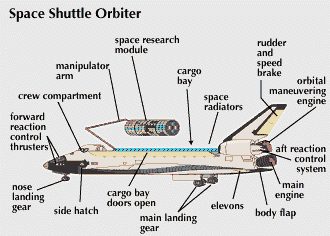
The space transportation system known as the Space Shuttle was a bold experiment in partially reusable aerospace engineering. This winged vehicle developed by NASA changed the way we think about getting into orbit. This is more than just a rocket. It’s a cargo hauler, a crew transporter, and ultimately a glider that can land on a runway on its own.
The space shuttle first broke the sound barrier and entered orbit in 1981. This mission validated the concept. However, the design was complex. This system relied on three main components. First, there was the orbiter. This is the winged section that carries astronauts and cargo. Second, expendable external tanks store liquid fuel and oxidizer for the orbiter’s main engines. The tank fell away during ascent. Third, two solid-propellant boosters provide initial lift. These boosters are reusable.
The orbiter took off vertically. For the first few minutes it behaved like a traditional expendable launch vehicle. But once it reached space, the story changes. The return shuttle had no engines to propel it. I slipped. It landed like a plane. This unpowered descent was risky. Each orbiter is designed to fly up to 100 times. That’s the goal.
Inside the cargo space, the astronauts had work to do. They use remote-controlled robotic arms to manipulate materials. Sometimes they have to go outside. They don spacesuits and exited the orbiter for repairs and installations. Some missions carried Spacelab. This is a pressurized research facility built by Europe. It was kept in the cargo bay while scientists conducted microgravity experiments.
The fleet started small. Between 1981 and 1985, NASA put four orbiters into service. Columbia led the way. This is the first to enter orbit. It was joined by Challenger, Discovery and Atlantis. Then tragedy struck. In 1986, the Challenger exploded during launch. All seven astronauts on board died. The program paused. When it resumed in 1992, the Challenger was replaced by the Endeavour.
The role of the shuttle evolved over time. Between 1995 and 1998, NASA flew missions to the Russian Mir space station. These flights were about preparation. They are testing what it would take to build a bigger station. That big space station is the International Space Station (ISS). Beginning in 1998, the space shuttle became the primary workhorse for of the International Space Station. It ferried components. It brought up supplies. It rotated crews. It kept the station built and stocked.
But the cost was high. In 2003, Columbia disintegrated while returning from a mission. Seven crew members lost their lives. The same tragedy that Challenger claimed Columbia. The program faced intense scrutiny. Questions about safety and costs are growing.
The last Space Shuttle flight was made in 2011. The space shuttle has been decommissioned. The winged rocket is gone. But they do what other systems haven’t been able to do at scale. They made regular orbits. They connect us to the International Space Station. They left us a position that still exists today


