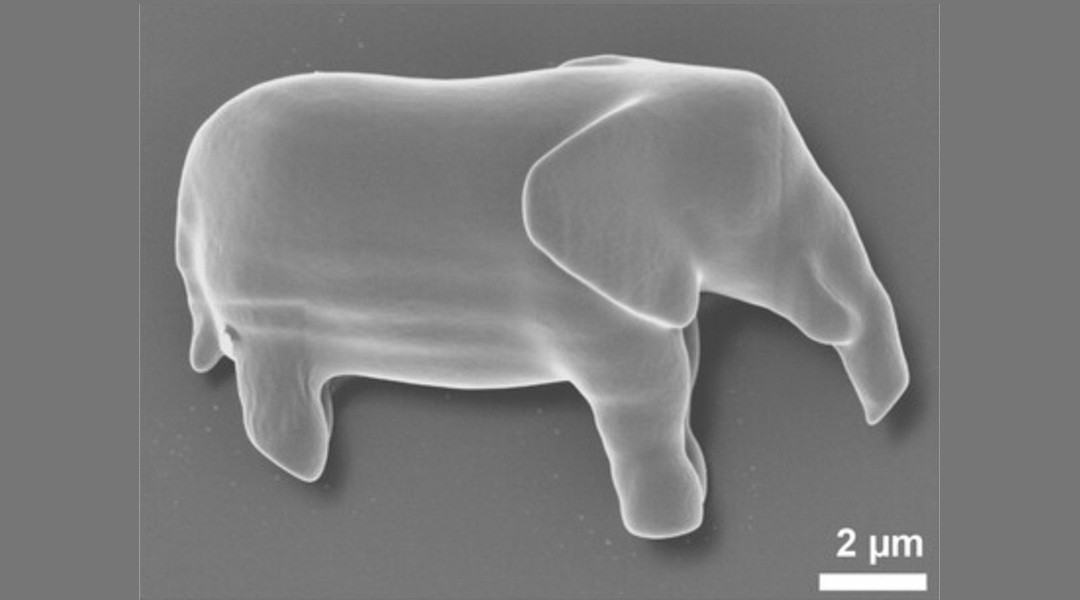
In a milestone for bioengineering, researchers have successfully demonstrated the ability to 3D-print complex objects directly inside living cells. This technique allows scientists to move beyond simply observing cells to actively “building” within them, offering a level of precision and control previously thought impossible.
The Technology: Two-Photon Polymerization
The team, led by Associate Professor Matjaž Humar at the University of Ljubljana, utilized a high-precision method known as two-photon polymerization.
Unlike traditional 3D printing, which builds layers from the bottom up, this method uses a highly focused laser to solidify a liquid resin at specific, microscopic coordinates. The process works as follows:
1. A biocompatible liquid resin is injected into a human cell.
2. A precision laser targets specific points, turning the liquid into solid structures in under 10 seconds.
3. The remaining unhardened resin is dissolved and washed away within two hours.
This method achieves a resolution of up to 100 nanometers —roughly 200 times smaller than the average human cell—allowing for the creation of incredibly intricate micro-structures.
Breaking New Ground in Cell Research
To understand the significance of this breakthrough, one must look at the limitations of previous methods. Historically, scientists had two main ways to introduce objects into cells:
* Microinjection: Physically piercing the cell membrane, which often causes fatal damage.
* Endocytosis: Relying on the cell’s natural ability to “swallow” foreign objects, which is inconsistent and limited to very small items (under 1 micrometer).
By printing in situ, researchers bypass these hurdles. The study confirmed that the process is remarkably gentle; time-lapse imaging showed that cells containing these printed objects continued to behave normally and even passed the printed objects on to their “daughter cells” during division.
From Tiny Elephants to Biological Barcodes
To test the limits of their precision, the researchers printed a variety of objects, ranging from the whimsical to the highly functional:
- Proof of Detail: They printed a 10-micron elephant figurine, complete with recognizable features like a trunk and tusks, to prove the printer’s resolution.
- Cellular Barcoding: The team created a “barcode” system using a grid of cylinders. With over a quintillion possible combinations, this system could uniquely identify individual cells. This allows scientists to track the behavior of single cells rather than relying on the “average” data gathered from large, indistinguishable cell populations.
- Internal Microlasers: The researchers attempted to print functional microlasers by adding fluorescent dye to the resin. While this proved the concept of “probing” a cell from the inside, the dye itself was toxic, highlighting the ongoing challenge of balancing functionality with cell viability.
The Road Ahead: Toward Intracellular Microrobots
This breakthrough marks the beginning of a new era in intracellular bioengineering. The implications for medicine and biology are vast. Future applications could include:
- Mechanical Tools: Printing tiny levers, springs, or barriers to physically alter a cell’s shape or movement.
- Micro-Sensors: Creating internal devices that monitor pH levels, temperature, sugar, or magnetic fields in real-time.
- Bio-Robotics: The long-term vision involves constructing microscopic robots capable of performing tasks within the cellular environment.
“We are laying the groundwork for a new class of intracellular bioengineering tools and applications,” notes Matjaž Humar.
As the research moves forward, the primary focus will be the development of specialized, non-toxic resins that maximize the functionality of printed objects while ensuring the absolute safety of the living host.
Conclusion: By successfully printing inside living cells, scientists have transitioned from being mere observers of biology to active architects of the microscopic world, paving the way for unprecedented precision in cellular medicine and engineering.