Flexing
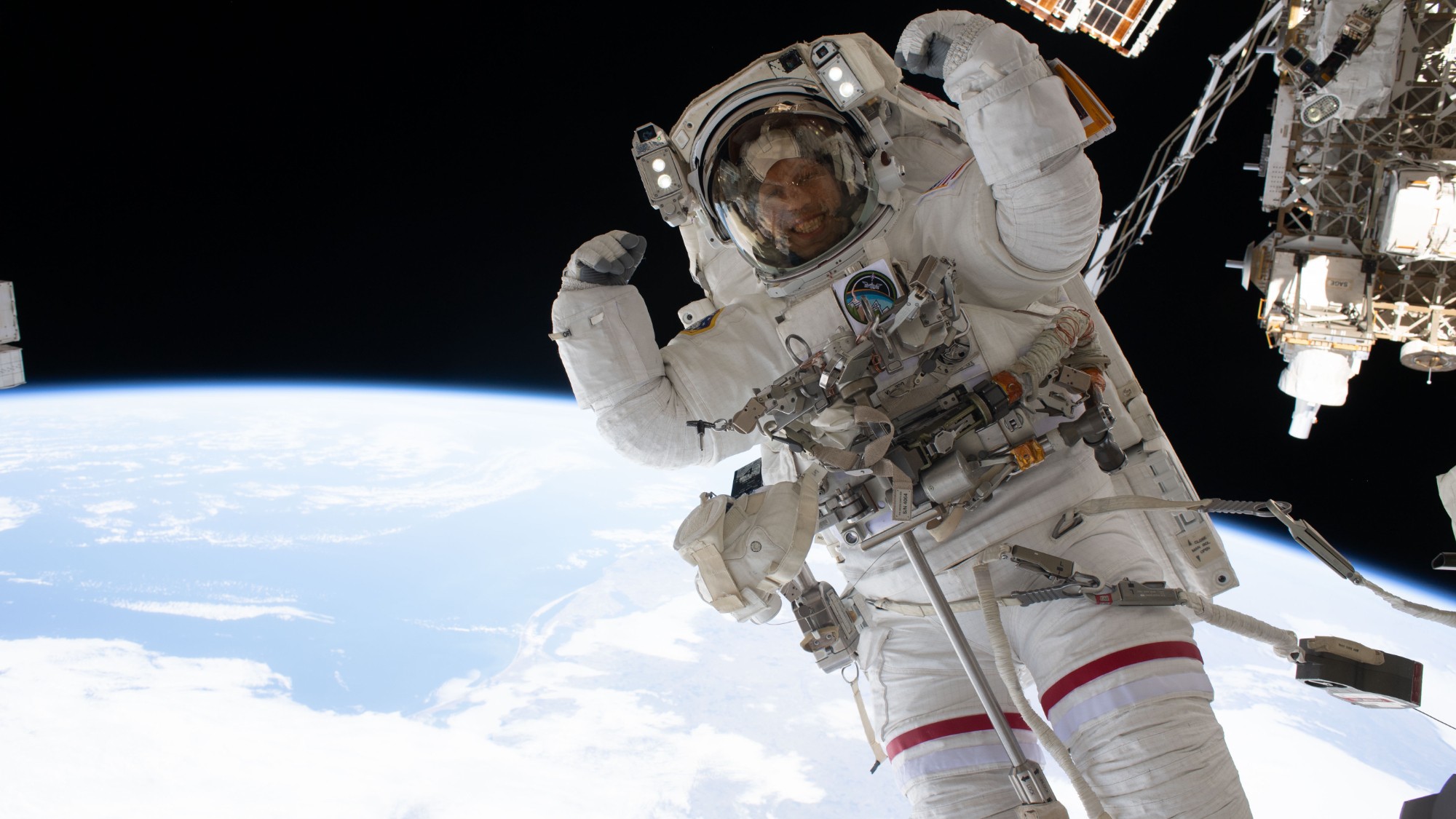
It’s just a photo. But it says so much.
On July 7, 2036—or wait, let’s check the date—July 7, 206? No. July 7.
The year is 2026.
Chris Williams was hanging out in space. Or rather, floating outside the International Space Station with Jessica Meir. It was his second walk. Meir’s fifth. Seven hours and twenty minutes of vacuum and steel.
Somewhere in there, Williams flexed.
“Classic Muscle Beach pose”
Earth was below. A blue marble glowing in the black. Above it all, a helmet. And through that faceplate? A massive grin.
Why?
Fun? Sure. Maybe. But look closer. This wasn’t playtime. Not really.
They had a job.
The broken joint
Six days prior, June 30. They went out there to fix something broken.
Canadarm2. The robot arm. It’s old. Twenty-five years of use. It gets stiff. One of its wrists malfunctioned.
Williams and Meir swapped it out.
That’s it. That was the whole point of hanging in a tin can over a vacuum while radiation zaps you and your joints lock up in a suit designed by committees. They replaced the joint. They’re bringing the old one home to Earth. Might need it as spare parts later. Recycling in the final frontier.
The contrast
Williams looks relaxed. Easy, even.
He makes spacewalks look like a summer holiday.
But you don’t get there by relaxing. You get there by strapping into layers of plastic and fiberglass, pumping yourself into a suit that weighs hundreds of pounds on Earth, then dragging yourself onto a airlock door into nothingness.
It’s hard work. Brutal work. Precision work while floating blind and tethered by a cord thinner than a phone charger cable.
Did Williams enjoy the pose? Probably.
Does that negate the physical toll? No way. He used every ounce of stamina he had. Then he flexed.
And now we have the picture.
Earth below. Smile above.
Work done.
For now.