A recent study published in Science has sparked intense scientific controversy by claiming that Monte Verde, one of the oldest known human settlements in the Americas, is significantly younger than previously believed. However, a coalition of 30 leading archaeologists and geoarchaeologists has published a scathing rebuttal, labeling the study’s findings as “categorically false” and riddled with “egregious failures” in methodology.
The debate centers on the age of Monte Verde II (MV-II), a site in southern Chile that has long served as a cornerstone for understanding early human migration. For decades, the site has been accepted as a 14,500-year-old occupation, providing crucial evidence that humans inhabited the Americas thousands of years before the widely recognized “Clovis” culture. The new challenge to this timeline threatens to rewrite the narrative of how the continents were populated.
The Controversial Claim
In March, a team led by Todd Surovell, an archaeologist at the University of Wyoming, published a paper arguing that MV-II was not occupied 14,500 years ago, but rather between 4,200 and 8,200 years ago.
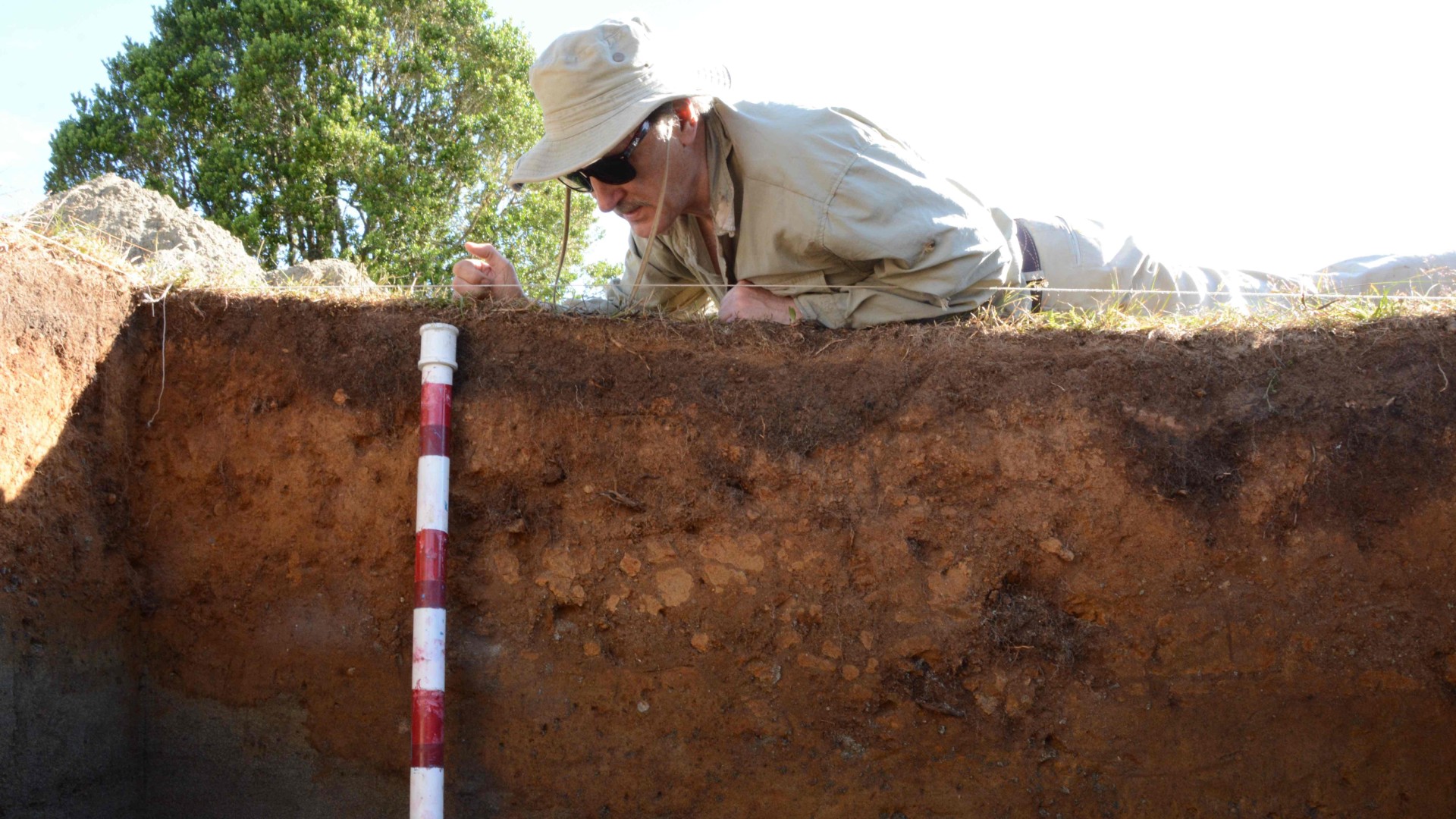
Surovell’s team based this conclusion on newly collected soil samples and the identification of a specific layer of volcanic ash known as the Lepué Tephra. This ash layer, deposited by a volcanic eruption approximately 11,000 years ago, was found in geological sections near the site. The researchers argued that erosion had cut a channel through the area, causing the archaeological materials to settle on top of this ash layer. If true, this would mean the site could not be older than 11,000 years.
“The so-called 14,500-year-old archaeological component that was supposed to forever change our understanding of the colonization of the Americas actually comes from a landform that’s at best 8,000 years old,” Surovell stated in March.
A Swift and Unified Rebuttal
The archaeological community reacted swiftly. On May 4 and 5, three separate scientific commentaries (eLetters) were published in Science, authored by 30 experts including Tom Dillehay (Vanderbilt University), Michael Waters (Texas A&M University), and David Meltzer (Southern Methodist University). Collectively, these letters—spanning over 100 pages with supplementary data—systematically dismantle Surovell’s arguments.
The critics highlight several fundamental flaws in the original study:
- Misidentified Geological Layers: Dillehay and colleagues argue that the Lepué Tephra does not exist below the MV-II archaeological layer. They assert that the samples Surovell’s team analyzed were taken from a different geological context, characterized by fungus and iron-oxide-rich pyroclastic beads, rather than the actual occupation site.
- Unsubstantiated Speculation: Waters criticized the claim that older materials were “washed into the site and redeposited.” He noted that the study provided no physical evidence that the dated wood or bones had been moved, calling this assumption “speculation” and the study’s stratigraphic analysis its “most egregious failure.”
- Contradiction of Established Data: The rebuttal emphasizes that decades of rigorous research, including multiple radiocarbon dates from artifacts and features directly within the MV-II component, consistently support a Late Pleistocene age (older than 12,900 years).
The Broader Context: Pre-Clovis Migration
The significance of Monte Verde extends far beyond its specific date. Discovered in 1976 and excavated extensively by Tom Dillehay, the site contains well-preserved stone tools, hearths, human footprints, and remains of extinct animals.
For much of the 20th century, the dominant theory was “Clovis First,” which posited that the first humans entered the Americas via an ice-free corridor around 13,000 years ago. Monte Verde helped shatter this paradigm by providing undeniable proof of human presence prior to the Clovis culture. Since then, numerous other pre-Clovis sites have been discovered, reinforcing the idea of earlier, complex migration waves.
David Meltzer and his co-authors point out that genetic studies independently support the older timeline. Genetic data shows that Native American lineages split from ancient Beringians around 20,900 years ago and diverged into northern and southern groups around 15,700 years ago. This genetic evidence attests to human presence south of the continental ice sheets well before the Clovis period, aligning with the 14,500-year-old date for Monte Verde.
Why This Debate Matters
The conflict between Surovell’s team and the broader scientific community raises important questions about scientific rigor and the interpretation of archaeological data. Critics argue that Surovell’s study relies on a quick survey of geological layers outside the original excavation site, contrasting sharply with the decades of methodical, on-site research conducted by Dillehay and others.
Meltzer warns that the study appears driven by an agenda to revive the “Clovis First” theory, disregarding decades of multidisciplinary research. “Their lack of engagement with the full range of site data, selective use of the broader literature and over-stated conclusions do not advance scientific discussion,” Meltzer wrote.
While Surovell maintains that the strong reaction underscores the importance of his findings, the consensus among the 30 responding experts is clear: the original interpretation of Monte Verde as a late Pleistocene human occupation remains robust, supported by both archaeological and genetic evidence.