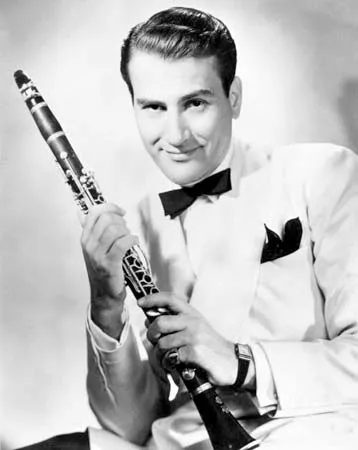
Artie Shaw was born in New York on May 23, 1910, and died in Newbury Park, California, on December 30, 2004. He stands out in music history as a clarinetist and bandleader who defined the swing era of the 1930s and 1940s. There is one thing that makes him different from other jazz greats. Shaw’s commitment to jazz was never clear cut.
He started playing in high school. Then he went pro in 1925. The cracks in his dedication showed up early. He quit music for a full year in the early 1930s.
One moment he was leaving the scene entirely. The next, he was back at a New York swing concert in 1935. He performed an original piece accompanied by a string quartet. That experiment led to a jazz dance band with strings. Shaw abandoned that format in 1937. He returned to a more standard band structure.
How Artie Shaw Became a Swing Icon
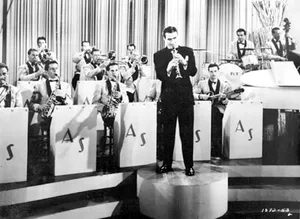
The shift paid off. In 1938, he recorded Cole Porter’s “Begin the Beguine.” The track made him an international name. Hits kept coming. His fame eventually rivaled that of Benny Goodman.
Goodman was known as the “King of Swing.” Shaw ran right alongside him. But Shaw had a different reputation. He was known for being unpredictable. Perfectionism drove him. He was hard on himself. He was even harder on the music business.
Shaw was harshly critical of himself and of the music business.
This tension between artistic ambition and commercial reality defined his career. He wasn’t just playing notes. He was questioning everything around him. The industry didn’t always appreciate that. But the music spoke for itself.
Shaw’s story isn’t just about hits. It’s about a musician who couldn’t quite decide what he wanted to be. He wanted to be an artist. The world wanted a star. He gave them both, eventually. But the cost was high.
The clarinet was his voice. It was sharp. It was precise. It cut through the noise. That sound became iconic. Yet behind the music lay a complex man. He struggled with the very fame he created.
Did he love jazz? Or did he just love the power it gave him? The answer isn’t simple. It never is with Shaw.

The Quiet After the Storm
The noise of the big bands finally faded for Shaw. From 1939, he bounced between Mexico and the U.S., but the magic was different now. He experimented with small jazz combos, sticking to the name Gramercy Five no matter who was in the group. The lineup shifted. The sound changed. But the label stayed.
There were comebacks. Sure.
He even led a U.S. Navy orchestra from 1943 to 1944. That’s not nothing. But it wasn’t the same fire.
Why Artie Shaw stopped playing clarinet
Here is the hard truth about the Artie Shaw clarinet career timeline.
He pulled the plug in 1954.
Total dissociation. He didn’t touch the horn again. Not for decades.
One might ask: Why walk away from the instrument that defined a generation? Shaw never gave a clean answer. He just left. The silence was deafening.
A second act in writing and farming
The bandleader became something else entirely. A farmer. A theater producer. An author.
He wrote books. Real books. The Trouble with Cinderella (1952) offered a look inside his head. It was revealing. Uncomfortable, maybe.
Then there were the novels. Collected in I Love You, I Hate You, Drop Dead! (1965). Three short stories. Sharp. Cynical. Very Shaw.
The marriages of Artie Shaw
His personal life was just as turbulent as his music.
He was married eight times.
Eight.
Actress Lana Turner was one. Ava Gardner was another. Two of Hollywood’s biggest names. It wasn’t just about fame. It was about chaos.
In 1983, he did one last thing. He led a re-formed Artie Shaw Orchestra.
Did he pick up the clarinet?
The records say no. He conducted. He didn’t play.
He had said his piece. The music was in the past. The writing remained.