


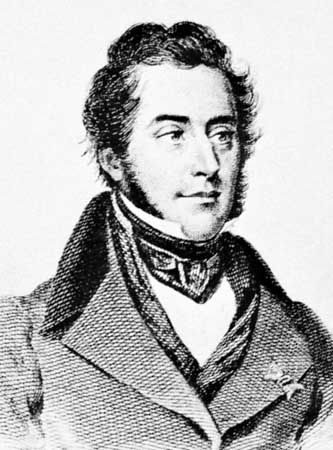

Alcide d’Orbigny was not just a traveler with a notebook. He was the architect of micropaleontology, the scientific discipline that studies microscopic fossils to decode Earth’s history. Born in Couëron, France, in 1802 and dying near Paris in 1857, his career redefined how we understand the planet’s geological timeline.
His most transformative period began in 1826. For eight years, he roamed South America. He didn’t just walk around. He studied the people, the natural history, and the geology of the continent with a precision that was rare for the era. He compiled these findings into a massive ten-volume work titled Voyage dans l’Amérique méridionale (1834–47). He also produced the first comprehensive map of the continent in 1842.
The real breakthrough, however, came from the rocks themselves. While studying the Paraná Basin in South America, d’Orbigny focused on exposed fossil-bearing strata. He realized that sedimentary rock layers were deposited in water at successive periods. The key to dating these layers lay in the fossils within them.
He was the first to divide geological formations into distinct stages of deposition.
This method established the foundation of stratigraphical paleontology. It allowed scientists to correlate rock layers across vast distances by matching their fossil content. Yet, d’Orbigny’s interpretation of this data was fundamentally different from his contemporary, Charles Darwin. Both men were in South America around the same time. Darwin was observing the same phenomena. But while Darwin was moving toward the theory of evolution, d’Orbigny believed each stage represented a unique fauna created by a special act of creation. His views were static. Darwin’s were dynamic. This divergence marked a major rift in 19th-century science.
Despite his rejection of evolutionary theory, his methodology proved invaluable. By studying small marine fossils, pollen, grains, and spores found in sedimentary rocks, he pioneered micropaleontology. This field is not merely academic. It has immense practical value, particularly in petroleum exploration. Geologists today still rely on these microscopic markers to locate oil reserves, tracking geological stages that d’Orbigny first identified.
His work continued in Europe. In 1850, he undertook the detailed assignment of Jurassic Period fossils in the geologic formations of northwestern Europe. His magnum opus, Paléontologie française (1840–54), spanned 14 volumes. It was never completed. It remains, however, a monumental record of his effort to categorize the fossil record.
He died in 1857. The science he founded, however, kept moving. We still use his stages. We still drill for oil using his methods. The map he drew is outdated, but the lens he created remains sharp.