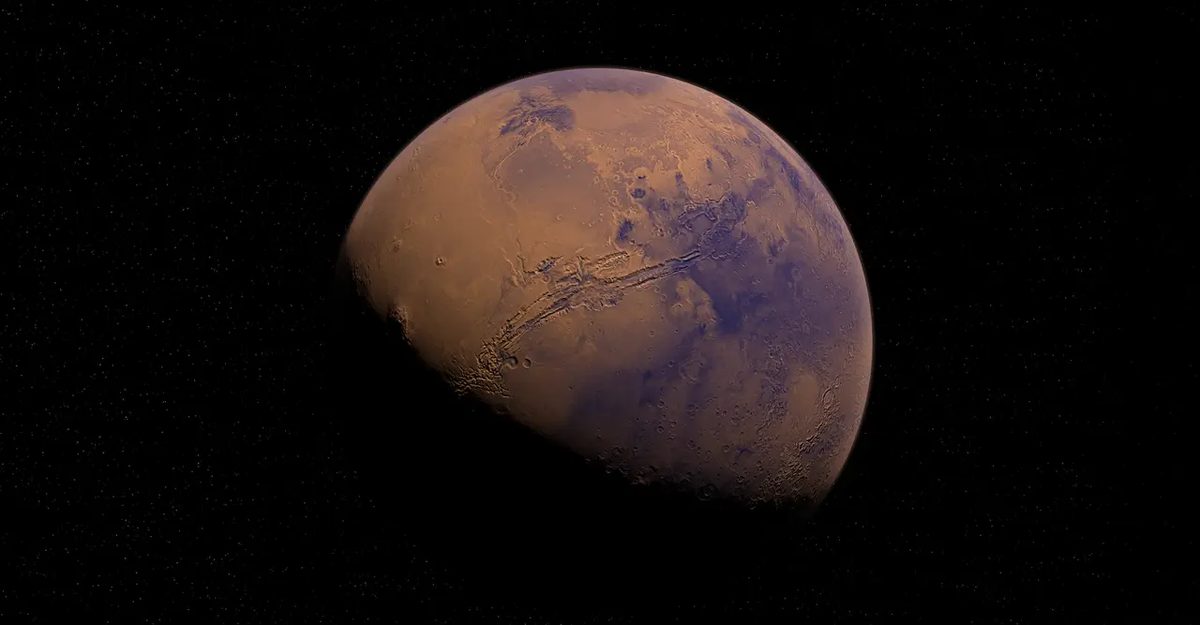
How #ExoMars TGO captures seasonal changes on Mars
Spring on Mars is more than just a change in the calendar. This is a physical change. The planet wakes up and dust settles in ways that create a whole new landscape before the summer heat peak.
The ExoMars Trace Gas Orbiter (TGO) is closely monitoring.
NASA-ESA partnership mission has released two striking images that highlight this seasonal change. These are more than pretty pictures of a dusty world. These demonstrate the dynamic nature of the Martian surface response to increasing solar intensity. Parked in high orbit, the orbiter can pick up details that ground-based telescopes 140 million miles away simply cannot resolve.
Why is this important? Mars is Earth’s closest neighbor, but it’s a stark reminder of what happens when a planet loses its protective magnetic field and thick atmosphere. Observing these seasonal changes helps scientists understand atmospheric dynamics, the causes of dust storms, and how volatile materials such as water ice interact with the surface.
TGO’s cameras offer a bird’s-eye view of these processes. The new images reveal subtle changes in albedo (brightness of the surface). Light dusting reveals dark areas and dusting reveals lighter areas. It is a slow-motion dance of erosion and deposition.
One image shows a crater floor, where the seasonal frost has sublimated, revealing dark material underneath. The other highlights a dune field where the wind patterns have changed and the shape of the sand ridges has changed. These changes happen in weeks, not years.
“Mars is not static. It breathes, moves and changes with the seasons.”
The data from the TGO is crucial for future missions. If we want to land on Mars, we need to know when dust storms might roll in, how the atmosphere changes at different altitudes, and where water ice is likely to occur. These spring pictures are part of the puzzle.
The orbiter’s spectrometers also analyzes trace gases in the atmosphere, such as methane. Although the images show changes on the surface, the science payload looks for signs of activity below the surface. If methane is shown to be of biological or geological origin, it may indicate the existence of life or active geology. But that’s another story.
So far, these images demonstrate the power of orbital observations. They remind us that even the seemingly lifeless world is full of change. Spring on Mars is real, it’s happening now, and captured by a machine we built and sent across the void.
The next time you look at a photo of Mars, remember that this is not a snapshot of a bygone era. This is a current event. A planet that is constantly changing and changing. We were lucky to see it happen.
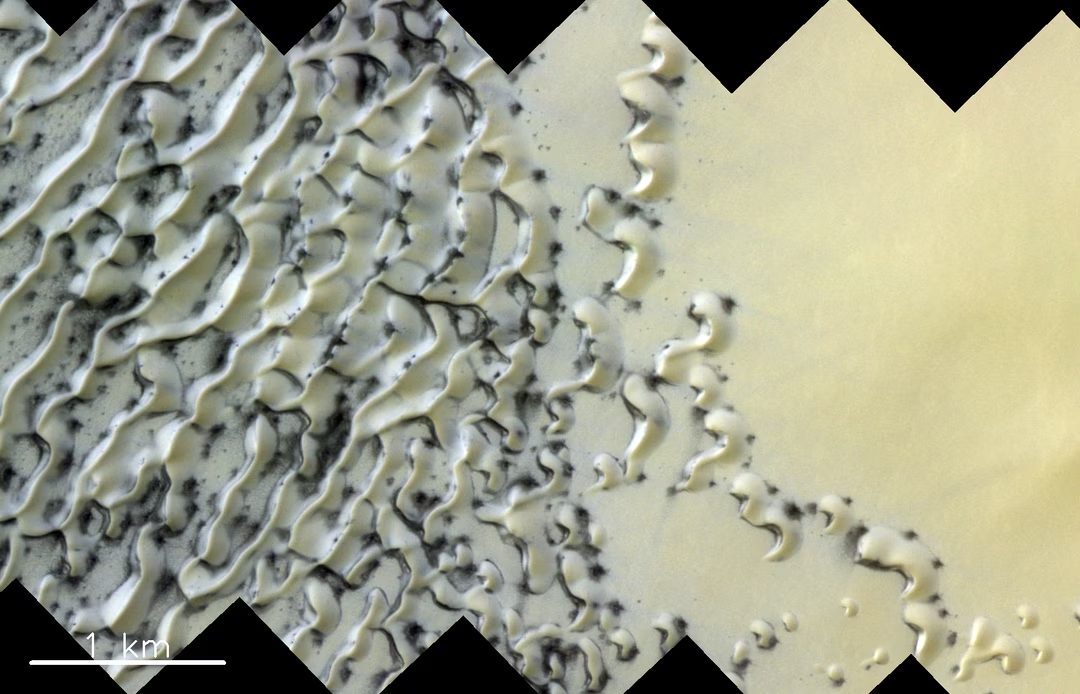

This view captures the location of the sand dunes near the north pole of Mars. In severe winters, a thin layer of carbon dioxide ice accumulates on the Martian surface. Even in spring, the ice doesn’t melt. Sublime. That is, the solid state from the 気体 directly jump.
This process happens in a strange order. Sublimation starts from the bottom up. The gas is trapped between the sand and the remaining ice crust. Finally the ice broke. The trapped gas will be released.
Sublimation mechanism
On Earth, ice is expected to melt into water before it turns into water vapor. Mars is different. The atmosphere is so thin that liquid water cannot exist for long periods of time. Carbon dioxide behaves differently. It deposits directly as frost. After that, it turns back into a gas instead of turning into a liquid.
The most important thing here is the direction of the heat. Sunlight penetrates through the translucent ice. It heats the sand below. The sand first warms the bottom of the ice. This starts the sublimation from the bottom.
The gas is trapped between the sand and the ice until the pressure breaks the ice.
This bottom-up process is not intuitive. We usually think of ice melting from top to bottom. On Mars, however, the heat source is sand. The gas has no other direction but up. Push the ice out from below.
Pressure and sudden release
Gas accumulates in the spaces between the sand grains and the ice layer. It’s like a balloon inflating under a sheet. Ice acts as a cover. It maintains the pressure.
If the pressure is too high, the ice breaks. It’s broken. The gas goes out quickly. This release creates visible changes on the surface. Visible black spots are the result. They indicate the location of gas breakthroughs.
Tracks follow the path of least resistance. They show the direction of the gas flow. This is not just a static scene. This is a dynamic process. This happens every year. It shapes the Martian landscape.
Why this matters
Understanding this process will help map Mars. We explain the seasonal changes in albedo. Black spots absorb more heat. They affect local temperatures. This affects the movement of dust. Sandstorms can be caused by these local thermal effects.
It also tells us about the atmosphere. The amount of carbon dioxide ice varies. This depends on temperature and pressure. By studying these cracks, we get information about the density of the atmosphere. Helps improve climate models.
This process is easy in theory. The implementation process is complex. The ice broke. Gas escapes. The surface changes. This cycle repeats itself. It reminds us that Mars is still alive. It has nothing to do with biology. But it depends on the weather. And physics. And time.
The dunes are moving. The ice is receding. The gas finds its way out. The landscape is evolving. slowly. invisible. Then suddenly. Spring on Mars, it all happened in the blink of an eye.
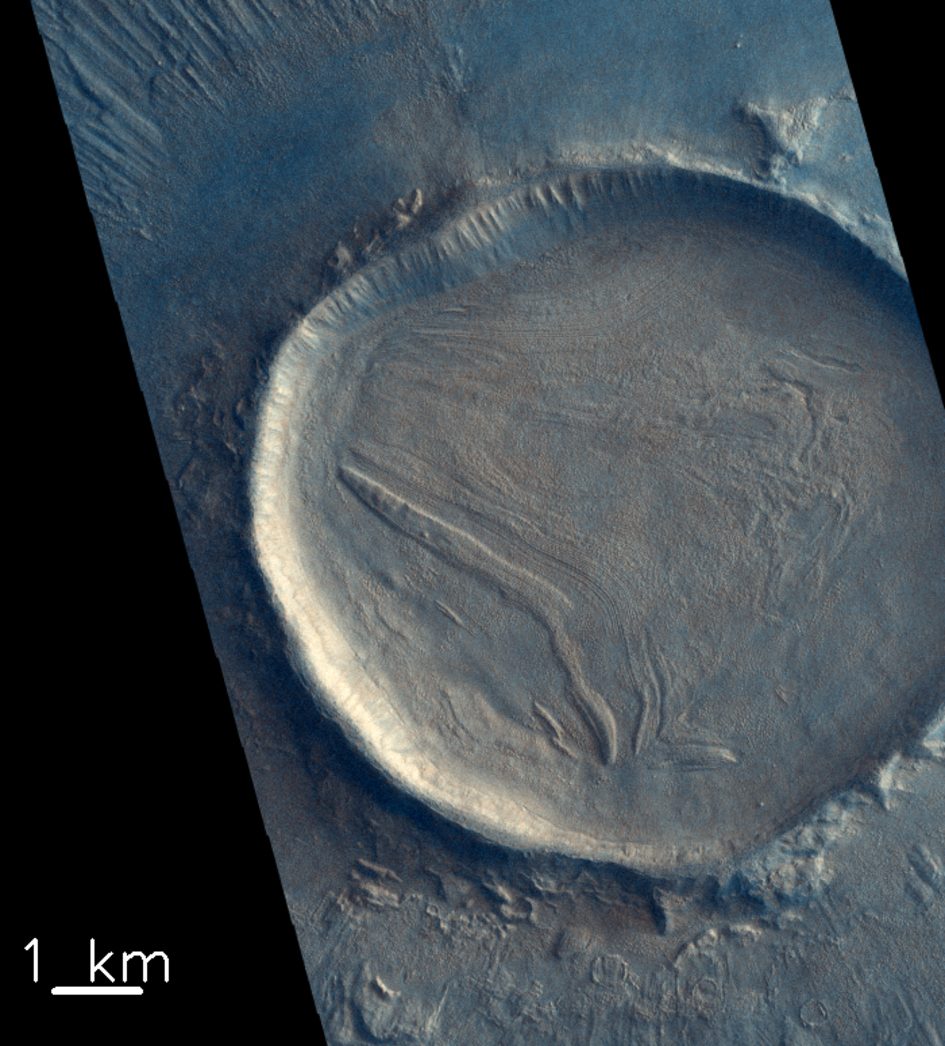

The scene cuts to an unnamed crater. Its interior is filled with a visibly wrinkled substance. It has a texture that gives you a sense of flow. There may be a mixture of rocks, ice, frost and other soil debris underneath, but didn’t just settle in place. It moved.
There are hints inside the layers. Parallel strata hint at a process that occurs in stages. The materials don’t come all at once. It trickled, settled, and then maybe shifted again.
For those wondering about the possibility of life or simple geological activity, here’s the really interesting thing: These volatiles can still be trapped inside. Water ice could be hidden in the dark, preserved in the shadows of that crater to await exploration.


If you want to stay up to date with the latest developments in science and technology, one of the fastest ways is to subscribe to our news feed on WhatsApp or Google News. These platforms send updates directly to you, so you’ll never miss out on major advancements.
It’s about convenience. Instead of searching for articles hours after they break, you can search for information the moment they break. Whether it’s a new AI model, space launches, or medical research, the active flow of information makes it easy to keep up with the latest happenings.