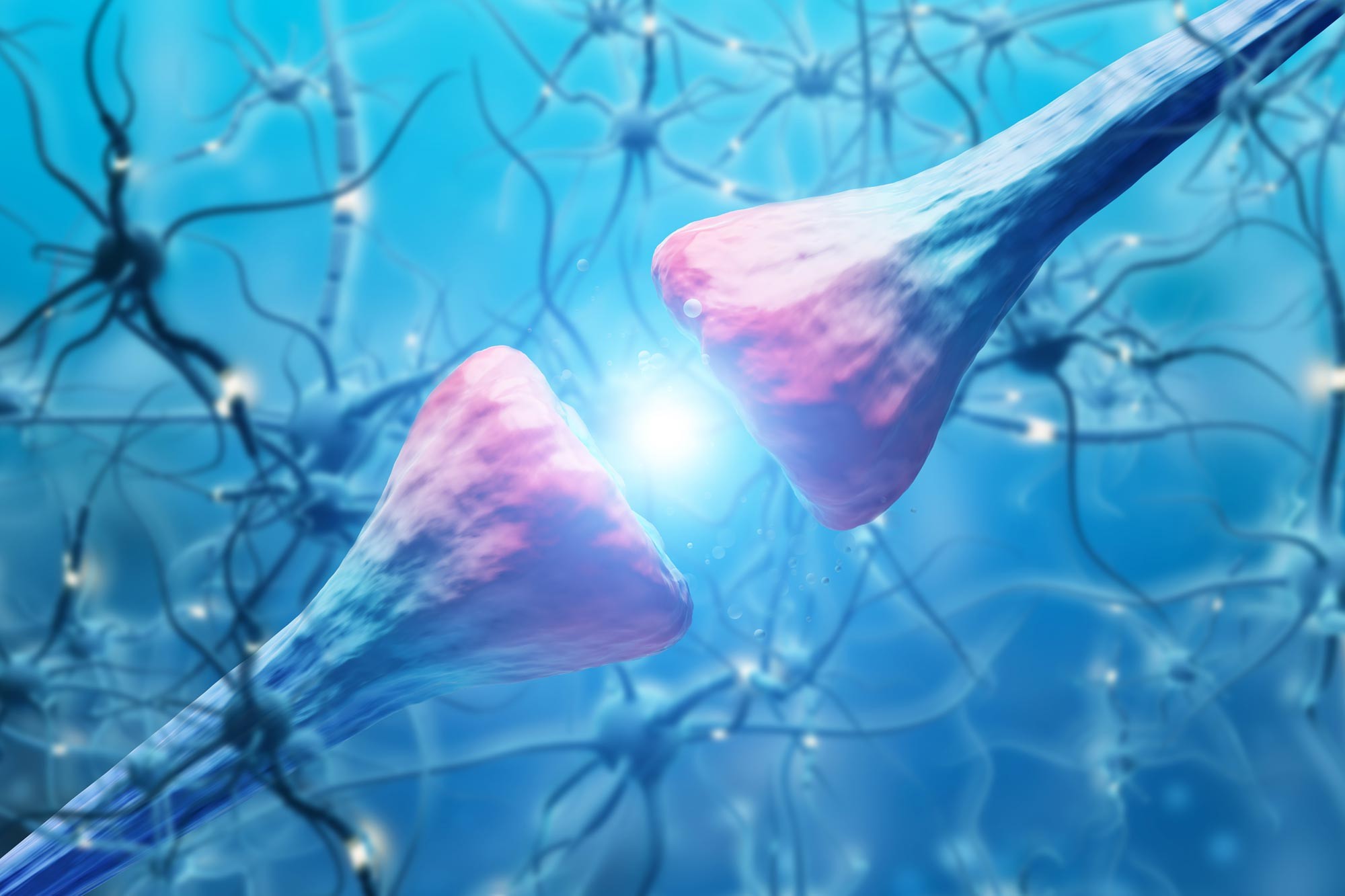
A single neuron is not a simple switch. It’s a powerhouse.
New research flips the script on how we understand the brain’s processing units. For decades, science assumed our cognitive edge came from sheer scale. You know the logic: 100 billion neurons. Trillions of connections. Bigger hardware equals bigger smarts.
But a recent study published in the Proceedings of the National Academy of Sciences (PNAS) suggests that assumption is outdated. The real secret? Computational complexity of human neurons runs far deeper than previously thought.
One brain cell can perform computations rivaling a deep artificial neural network. Not the simplified units in today’s AI, but the complex, layered kind.
This shifts the entire landscape of neuroscience. If intelligence isn’t just about quantity, but quality per cell, we have to look at where language, math, and even imagination actually originate. They might start inside a single, solitary microchip in your cortex.
The “Microchip” Inside Your Head
Neurons in the human cortex—the outer layer responsible for higher-order thought—are behaving more like sophisticated processors. They don’t just pass signals along like a bucket brigade. They analyze. They combine. They compute.
Researchers from Hebrew University, led by Profs. Idan Segev and Mickey Londan, teamed up with scientists at the Edmond and Lily SafraCenter for Brain Sciences (ELSC) to prove it. They included collaboration from Prof. Chris de Kock at the Free University of Amsterdam.
“People often think of a neuron as an on-off switch,” Segev explained. “What we show is that a single human neuron is itself an extraordinarily sophisticated computing device.”
Think of it this way: A light bulb either lights up or it doesn’t. A human cortical neuron? It weighs incoming data, considers the context of its dendrites, and makes a calculated decision that mimics a multi-layered AI model.
How They Tested It
You can’t just measure the size of a cell and guess its IQ. A bigger neuron doesn’t always mean a smarter one.
The team needed a metric. So they built digital twins.
Using computer modeling and AI, they attempted to replicate the behavior of biological neurons using artificial neural networks (ANNs). It was an imitation game.
- They took a biological neuron.
- They fed it inputs.
- They watched the output.
- Then, they tried to train an AI network to reproduce that exact output.
Here’s the kicker: Simple neurons from other mammals were easy to copy. A small, shallow AI network could mimic their behavior with ease.
Human cortical neurons? Those were tough.
The AI needed to be significantly deeper, more elaborate, and vastly more complex to accurately reproduce the firing patterns of a human cell. The harder the neuron was to copy, the more computational power it possessed.
Why Human Brains Win
The data is clear: human cortical neurons require more complex artificial networks to imitate them than those of other mammals.
Why? It comes down to structure. Specifically, the dendritic trees. These are the branch-like structures that receive signals. Human neurons have richly branched, complex dendritic trees with distinctive electrical properties.
This isn’t just passive wiring. It allows the neuron to analyze combinations of signals rather than just adding them up linearly.
One cell can operate as a layered system with capabilities comparable to a deep neural network.
This capability explains why we can distinguish subtle details, like the difference between a cat and a dog in an image, or grasp abstract mathematical concepts. We aren’t just counting neurons. We are leveraging the advanced processing power of each individual cell.
What This Means for Artificial Intelligence
This isn’t just academic curiosity. It has huge implications for the design of brain-inspired AI.
Most current machine-learning models rely on simplified artificial units. They stack them in deep layers, hoping that collective complexity emerges. It’s a brute-force approach.
If we want to build truly advanced systems, maybe we need to look inward. Toward the biology.
Future AI models could use artificial components that mimic the computational complexity of human neurons. Instead of dumb, dumb, dumb units stacked high, imagine smart, nuanced processing units that handle complexity individually.
That’s a different path. One that moves away from raw scale and toward structural sophistication.
The research challenges the old view that intelligence is just a numbers game. Human cognition isn’t just about having a big brain. It’s about having smart parts.
As we push the boundaries of both neuroscience and machine learning, the line between biology and silicon might blur in unexpected ways. But one thing remains clear: the human brain’s greatest asset might not be its size.
It’s the complexity of the cell.