Sharks are in the headlines. They’re big, they’re scary, and they fit our primal fear of the deep. But if you look beyond Hollywood’s finned nightmares, the real threat to human life in the water often comes from creatures that belong on the sea floor rather than in an aquarium.
The sea is not a gentle place. It’s full of poisonous spikes, crushing jaws and electric shocks. Although many fish are harmless, certain species are actively lethal. They don’t just eat; they defend, they ambush, and they kill.
We ignore the obvious predators. We left the sharks and eels aside. Although the information is biologically accurate, keeping them in this list clutters the data. We want to talk about real bony fish – the ones you might accidentally step on or bump into. These are the most dangerous fish in the world because they can cause serious harm or death to humans.
1. Stonefish
It starts with stonefish. This is not a subtle creature. It is undoubtedly the most poisonous fish in the entire ocean.
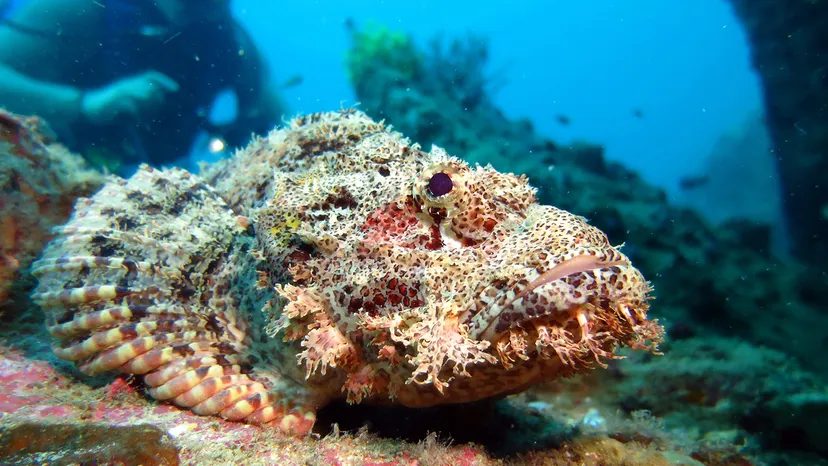
Native to the Indo-Pacific, the stonefish is a master of camouflage. It looks exactly like a rock. Or a piece of coral. Or moss-covered garbage. It has no flashy colors. Not a thin, aerodynamic body. Just a lumpy, brown, camouflaged body resting on the sandy bottom of shallow reefs.
“The stonefish is an ambush predator. It doesn’t hunt you. It waits for you to make a mistake.”
The danger is not his teeth. It doesn’t bite. The danger lies in the spines. It has 13 sharp, poison-filled spines on its back. These spikes are connected to a gland that produces a powerful neurotoxin and cardiotoxin.
When you step on a stonefish—which happens more often than you’d think because it’s so well hidden—the spine pokes through your foot. The gland ruptures. The poison floods your system.
The pain is immediate and overwhelming. Victims describe it as a burning electric shock that travels up the leg. That’s not all. The toxin causes tissue necrosis, swelling that can lead to gangrene and, in severe cases, respiratory paralysis. Without proper antivenom, mortality is significant.
It is not aggressive. It doesn’t interest you. But if you’re snorkeling in Australia or Southeast Asia and you step on a rock that turns out to be a fish, you’re in big trouble. The stonefish is a lesson in humility: just because it looks dead doesn’t mean it can’t kill you.
2. Puffer fish
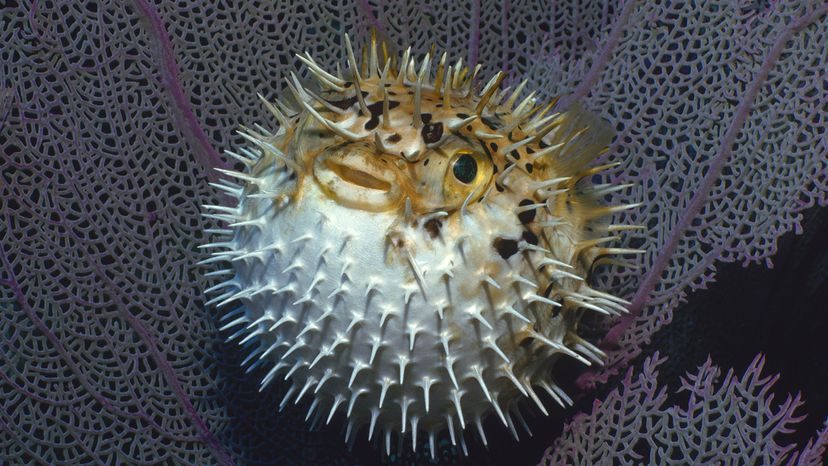
The stonefish waits you to make a mistake, but Pufferfish demands your respect. It has a different crown – not because of the poison from the outside, but because of the toxicity inside. Tetrodotoxin is the silent killer here, a powerful neurotoxin found in the organs of various puffer fish species. This substance is up to a thousand times more lethal than cyanide.
You don’t have to touch this fish to be at risk. The threat comes from consumption. The stakes are high in countries where raw puffer fish, or fugu, is a culinary delicacy. Preparation requires a special permit. A chef must train for years to remove the toxic organs – liver, ovaries and skin – without contaminating the edible flesh. One slip. A microscopic crack. And the poison penetrates the flesh.
The result is not instant death, but terrible paralysis. Victims remain fully conscious. They hear and feel everything as their muscles shut down. Breathing becomes impossible. The mind stays awake while the body turns to stone. That’s why the question which part of the puffer fish is poisonous is not just an academic one – it’s a matter of life and death for diners.
The toxin targets the sodium channels of neurons and blocks signals from the brain to the muscles. It is a biological short circuit. There is no antidote. In the treatment, the patient is kept alive with mechanical ventilation until the body metabolizes the poison naturally. Some are recovering. Some don’t.
This danger has inspired research into pain management. Researchers are studying tetrodotoxin because it offers a potential alternative to opioids for the relief of severe pain. It is not addictive. It works differently. But the line between treatment and killer is thin. You can hold the fish. You can stare at its inflated, spiky exterior. But you can’t eat it. Not unless you trust a master who has spent his life learning how to keep you alive.
The puffer fish known as Fugu has a bad reputation as the most poisonous fish in the world. Native mainly to the Pacific and Indian oceans, these creatures are deadly due to tetrodotoxin. This powerful neurotoxin attacks the nervous system. Small doses cause paralysis. Larger doses stop the heartbeat and cause death.
In parts of Asia, especially Japan, Fugu is a risky delicacy. Chefs go through years of rigorous training to remove the toxic organs without contaminating the meat. But one slip means disaster. There is no margin of error, which reinforces its position as one of the deadliest animals in the sea.
3. Lionfish
attack
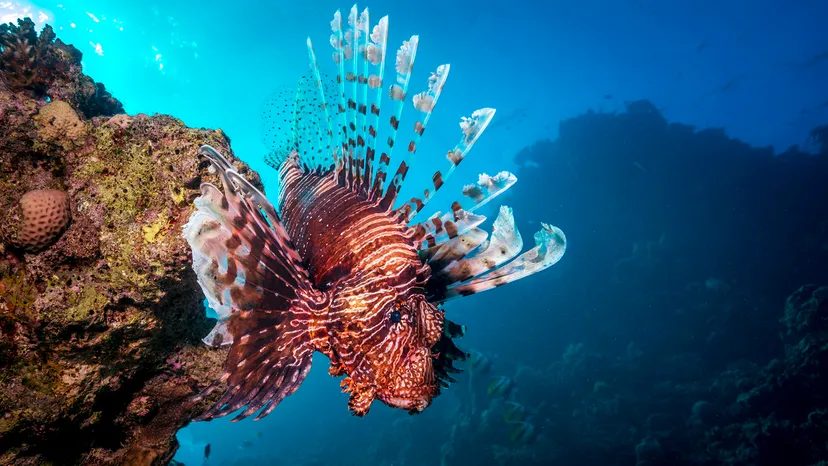
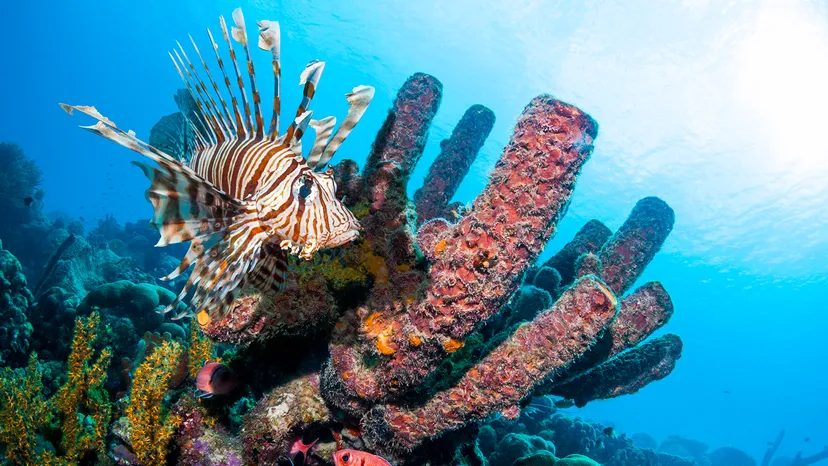
Lionfish looks like something out of a fantasy novel. Delicate, fan-like fins. The red and white stripes catch the eye. It is undeniably beautiful. But this beauty is a trap.
This predator is deadly. Its elongated dorsal spines are hollow needles designed to inject venom. Get too close and you’ll be in trouble. Native to the Pacific and Indian oceans, lionfish have a powerful effect that can cause extreme pain, nausea, and difficulty breathing. Fortunately, fatalities are rare. Most people who encounter these spikes survive, but are unlikely to forget the experience.
But the lionfish has a bigger problem than its own poison: its own success. They have spread to non-native areas at an alarming rate. In places like the Caribbean and the Atlantic, they are now considered a dangerous invasive species. They eat native fish, disrupt ecosystems, and have few natural enemies in their new home. Her beauty does not save her; As a result, they are becoming more and more popular in the aquarium trade, accelerating their spread.
4. Barracuda
Why do barracudas have such a bad reputation?
While the lionfish is a slow, ambush predator, the barracuda is designed for speed and aggression. Native to tropical and subtropical waters around the world, these fish are often misunderstood. Their reputation as man-eating monsters is largely a myth.
However, they are still powerful predators. Their sharp, serrated teeth and powerful jaws make them formidable hunters. They eat smaller fish, crustaceans and occasionally squid. Their streamlined body allows them to break through the water at incredible speeds.
So why the fear? This is mainly due to their appearance. jagged teeth. Piercing eyes. How they glide through coral reefs like eerie shadows. They look like they belong in a horror movie. In reality, they are more likely to flee than fight unless provoked or perceived as prey.
Barracuda vs. Lionfish: A Clash of Styles
If you put the two against each other, it would be a tactical battle. Lionfish rely on ambush and defense. It remains stationary, allows prey to approach it, and defends itself with poisonous spines. Barracuda relies on attack and speed. When hunting, it pursues its prey and defeats it with brute force and sharp teeth.
In a head-to-head encounter, the barracuda may have an advantage due to its speed and aggressiveness. But lionfish venom is a powerful deterrent. A barracuda bite would be serious and could lead to infection or significant tissue damage. A lionfish sting would be painful, though rarely fatal.
Both species highlight the diversity of marine life. One is a master of camouflage and defense. The other is a hunter of speed and power. Neither is inherently “good” or “bad”. They are just animals doing what they have to do to survive.
Here’s how to stay safe around these predators
Whether you’re diving near coral reefs or swimming in tropical waters, respecting these animals is crucial. Do not provoke them. Do not touch them. Keep your distance.
The threat of lionfish is passive. You just have to avoid getting stung. Wear protective gear when in an area where lionfish are abundant. Be aware
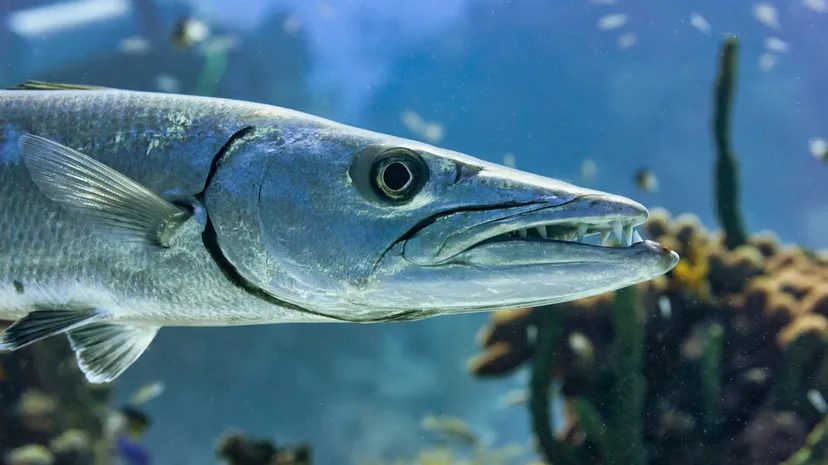
You can see the shadow arrow through the blue. It is tall, slender and moves with frightening speed. Most swimmers know it as a barracuda. A popular story depicts these fish as mindless killing machines, all sharp teeth and aggression. The reality is a bit more nuanced, but no less dangerous.
Barracudas have a streamlined body that serves only one purpose: speed. In fact, their teeth are sharp enough to cut through meat with ease. They are top predators in many tropical waters. When they feel cornered or threatened, their instinct is to strike first. This defensive aggression has led to a reputation that sticks like barnacles.
People are being attacked. They are not common. But when they do happen, the damage is often severe. The combination of high speed and jagged teeth turns a simple swim into a potentially traumatic event. These fish do not hunt humans. People just stand in the way of a hungry, fast-moving predator.
5. Goliath Tigerfish
If the barracuda is the sneak attack of the ocean, the Goliath tigerfishfish is the brute force of the river. Located in the Congo Basin, this freshwater giant is often called one of the scariest fish in the world.
The name alone suggests danger. “Goliath” refers to its enormous size, which can be over three feet long and weigh up to 150 pounds. A “tiger” suggests a striped pattern on its scales, though its teeth define its actual presence.
These teeth are locking, serrated and designed for cutting meat. They resemble the teeth of a wolf more than the needle-like teeth of a reef predator. One bite can sever a human limb. There have been documented cases of fishermen being attacked, with injuries ranging from deep lacerations to amputations.
Unlike the barracuda, which strikes in open water, the Goliath tigerfishfish hunts in murky, slow-moving rivers. It relies on ambush. Its explosive acceleration in low-visibility waters makes it particularly unpredictable. It inspires respect bordering on fear from both fishermen and locals.
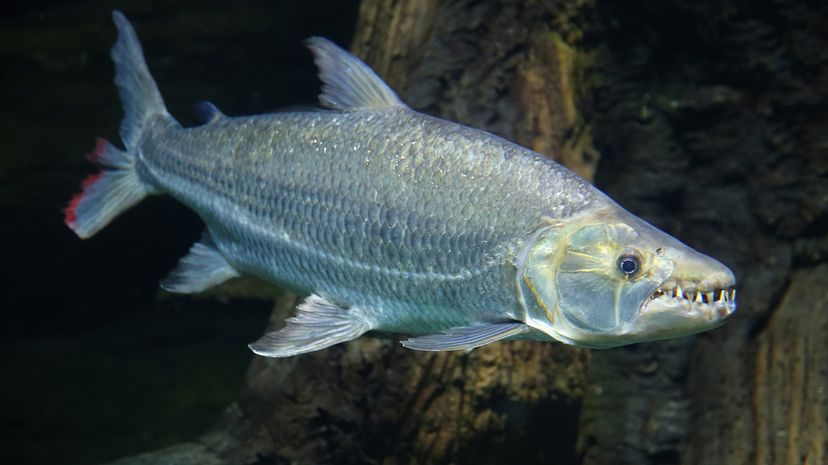
The Goliath tiger fish has a terrible reputation in African waters. Although it is a primary game fish, it is also a real threat to humans. The combination of its massive body and teeth that look like jagged shingles make it one of the world’s most dangerous freshwater predators. Although attacks on humans are rare, they do happen.
The creature rules the Congo and Lake Tanganyika. The locals know better than to swim in their area without a lot of caution. The fear is not unwarranted. The fish has powerful jaws that can crush bones and an aggressive nature that is not afraid to strike.
6. Piranhas
If Goliath is the heavyweight champion of African rivers, Piranha is the infamous face of the Amazon. The name alone triggers a primal fear, much of which stems from decades of Hollywood exaggeration. The reality is more nuanced, but no less impressive.
These fish belong to the Serrasalmidae family. They live in freshwater systems throughout South America from the Amazon to the Orinoco. Most species are omnivorous and eat fruits, insects and worms. But some have evolved into aggressive scavengers and predators.
The idea of piranhas as mindless eating machines is a myth. In the wild, they avoid people. They are more likely to run than fight. The real danger arises when the water level drops and the fish concentrate in the shrinking ponds. Hunger makes them braver. This is where the “piranha effect” comes into play.
A single piranha is not a threat. A school is. They can strip a carcass clean in minutes. Their teeth are triangular in shape and interlock to tear flesh efficiently. They don’t chew; they shear.
Which species is the most dangerous? The red-bellied piranha is the most famous, but the black piranha has a stronger bite force. Research shows that their bite can crush coconut shells. This adaptation allows them to crack nuts and hard seeds, which are an important part of their diet in riparian forests.
Why are they important? They are vital to the ecosystem. They recycle nutrients by eating dead animals and damaged plants. Without them, Amazon’s health would suffer. They keep the water clean and support the food web.
The fear of piranhas is both cultural and biological. Western media turned them into monsters. However, the locals respect them. They know how to avoid them. They understand the seasons and water levels. The danger is situational and not inherent.
Nevertheless, the image remains. A school of hungry piranhas is a powerful symbol of nature’s ruthlessness. It reminds us that the wilderness is not a theme park. It is a place where survival is a daily calculation.
“Piranhas aren’t evil. They’re just efficient.”
The difference is important. We fear what we don’t understand. Understanding these fish turns the narrative from horror to appreciation. They are survivors. They have been around for millions of years. They adapt. They last.
In the end, Goliath and Piranha have a common thread. They are top predators in their respective domains. They remind us that water is not always safe. It is dynamic. It’s alive. And it demands respect.
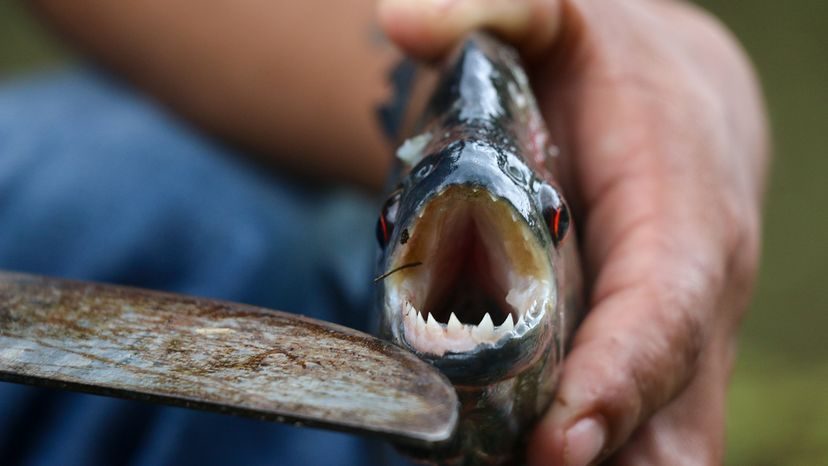
We often imagine the ocean as a place of peaceful beauty, but survival below the surface is a daily task. While piranhas get all the press with their teeth, the sea creatures of tropical waters have their own arsenal of defense mechanisms that can leave their mark on the unwary.
Take surgeonfish for example.
Scalpel in the reef
Despite their cute, colorful appearance, surgeonfish are anything but passive. Their common name comes from the sharp, blade-like scales at the base of their tails. These spikes aren’t just for show; These are evolutionary weapons designed to scare away predators.
When threatened, the surgeonfish can lash its tail with surprising speed and force. The result is a deep, often oozing cut for anyone foolish enough to handle it without protection. Divers and snorkelers are especially at risk if they accidentally trap a fish against the reef or try to pick it up.
The injury may not be life-threatening, but it is notoriously painful and prone to infection if not properly cleaned. The “scalpel” effect is real. That’s why marine biologists and tour operators always recommend keeping a safe distance.
“A surgeonfish isn’t trying to eat you. It’s trying to survive you.”
Why it matters
Understanding this dynamic changes the way we interact with nature. We no longer see these creatures as mere decorations in our pictures, but come to respect them as complex, defensive animals. Surgeonfish’s bright colors aren’t just for aesthetics; they can be a warning.
So the next time you’re in clear blue water, admire the fish from afar. Let them swim. This way you avoid nasty cuts and stay unharmed. It’s a simple rule, but many tourists ignore it until it’s too late.
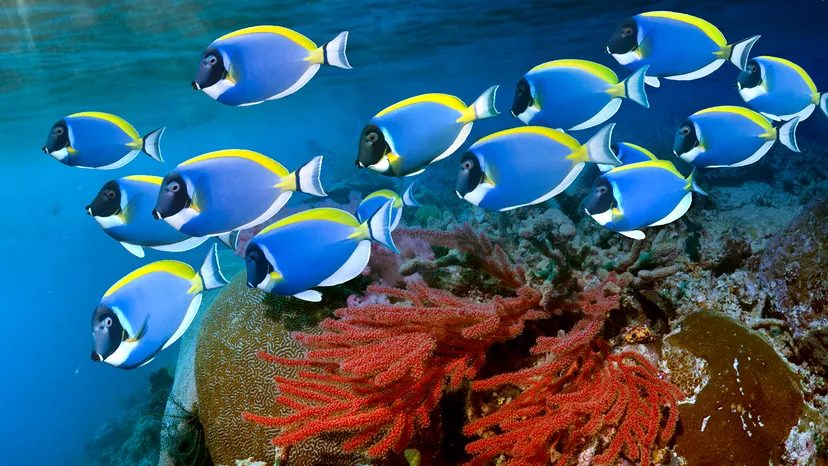
Surgeonfish might look like harmless grazing robots on the reef, but they pack a nasty surprise near their tails. These spines are not just for show. They act like scalpels, sharp enough to slice through wetsuits and skin alike.
Most people don’t realize they are in danger until it is too late. The fish themselves are usually peaceful. They hang out in schools, nibbling on algae without a care. But corner them? That is when things get serious.
The spines near the caudal peduncle are the main issue. If you bump into one, you will likely feel a deep, stinging pain. In some species, these spines are hollow and connected to venom glands. That changes a simple scratch into a medical issue. The venom causes intense pain and swelling. It does not usually kill, but it can keep you out of the water for days.
The lesson here is simple. Respect the space of these fish. Do not try to catch or handle them. A accidental nudge against a rock where a surgeonfish is hiding is all it takes to end a dive early.
Triggerfish
Why Triggerfish Are Reef Aggressors
If surgeonfish defend themselves, triggerfish attack. They are not just aggressive; they are territorial guardians with a reputation for biting. This behavior is tied to their nesting habits.
When triggerfish prepare to lay eggs, they become extremely protective. They view divers, snorkelers, and even other fish as threats. A sudden, sharp bite is their standard response. These bites can break skin. Some larger species have jaws strong enough to crush shells, which means they can easily break human fingers or toes if you get too close.
Their name comes from a unique locking mechanism in their fins. They can lock their dorsal spines in the upright position. This makes it nearly impossible for predators to swallow them. When threatened, they raise these spines, puff up their bodies, and charge.
Identifying the Danger
Triggerfish come in many sizes and colors. Some are small and less dangerous. Others, like the Titan Triggerfish, can grow over two feet long and weigh more than 10 pounds. The larger the fish, the stronger the bite.
“They are not looking for a fight, but they will start one if they feel their nest is at risk.”
The key is to recognize their warning signs. Darker coloration often means they are agitated. Circular patterns or spots appearing on their body can be a sign of heightened aggression. If you see a triggerfish hovering over a hole in the sand or coral, leave it alone.
How to Avoid Trouble
The best defense is awareness. Do not touch the reef. Do not chase fish. If a triggerfish approaches you, do not run. Slowly back away. Sudden movements can trigger a chase response.
These fish are intelligent. They remember individual divers. If you have annoyed one before, it might remember you. This is why consistent respect for marine life is not just polite; it is practical safety advice.
The reef is a complex ecosystem. Every creature has a role, and often, that role involves defending its territory. Surgeonfish use hidden blades. Triggerfish use brute force. Both remind us that the ocean is not a playground
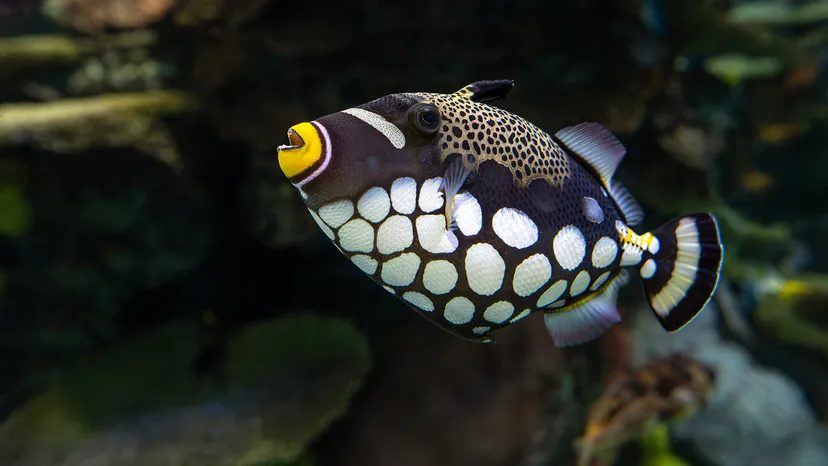
We often imagine danger at sea as big and vast. But sometimes it is small, colorful and very territorial. Take the triggerfish. You can find these lively swimmers in tropical waters. They are not big. They don’t look like apex predators of the deep. But don’t let their size fool you.
Triggerfish are surprisingly aggressive. Their main motivation? Protecting their nests. When a diver or swimmer comes too close to the nesting site, the fish will attack. They have sharp teeth. They have a bite that feels like a vice grip. This isn’t just a warning nip. Serious injuries can occur. Their territorial behavior makes them a potentially dangerous fish despite their small size. It’s a reminder that in the ocean, aggression is not always proportional to mass.
3 most dangerous sharks
1. Great white shark
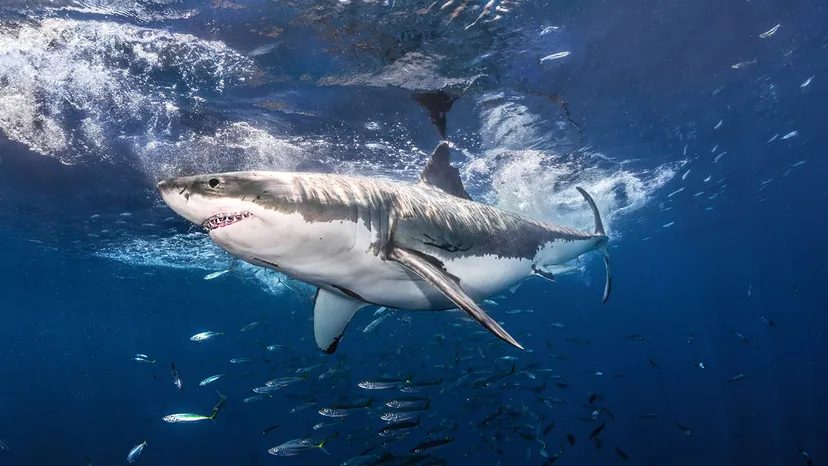
We know them as the poster children of shark terror. The movies made sure of that. Their huge size and jagged rows of teeth make them look like living nightmares. It’s no surprise that they hold the record for most unprovoked attacks on humans.
But here’s the thing: they really don’t want to eat you.
Great whites don’t hunt people for dinner. When they do strike, it’s often mistaken identity. They investigating a silhouette that looks like a vaguely like a seal from below. The result is catastrophic. Their bite force is enough to crush bones and tear flesh. The injuries are serious. Sometimes fatal. But the intent? Usually just out of curiosity or a clumsy mistake.
The real danger: tiger sharks
If you’re looking for a shark that actually sees a human as a potential meal, look no further than tiger sharks.
While great Great White Sharks are large and intimidating, tiger sharks are opportunistic. They have a reputation for eating almost anything that floats. From fish and seals to turtles, birds and even garbage. This indiscriminate appetite makes them significantly more dangerous to swimmers and divers.
While great Great White Sharks may mistake you for a seal, tiger sharks are more likely to be investigate you out of sheer boredom or hunger. They don’t have the same “seal mimicry” hesitation. They bite first. And they bite hard.
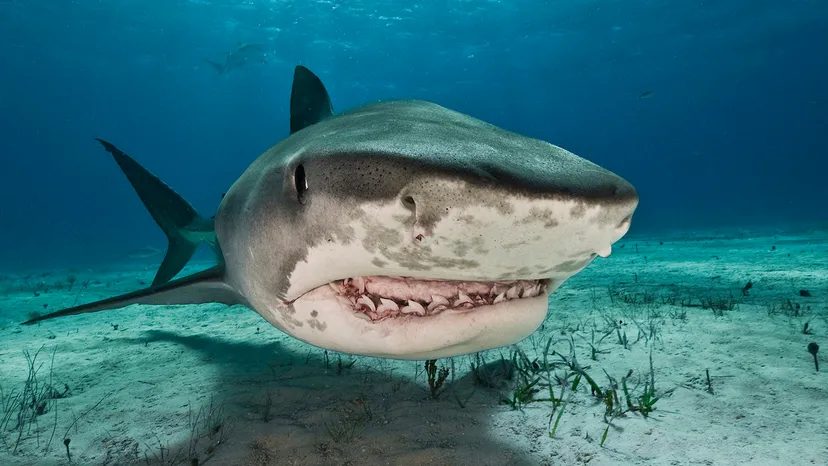
Tiger sharks are considered the ultimate nuisance in the oceans. They don’t just hunt fish; They munch on sea turtles, seals, and yes, even pieces of driftwood or debris that wash up in their area. This indiscriminate appetite makes them unpredictable.
Their danger to humans is not only theoretical. With a bite force capable of crushing bone and teeth sharp enough to cut through armor, they are involved in a disproportionate number of fatal shark attacks. But the risk is increased by a geographical factor: tiger sharks often patrol shallow coastal waters. There are swimmers, surfers and waders here. The overlap of habitat types is significant.
The bull shark case
If the tiger shark is an unpredictable scavenger, the bull shark is a calculated invader.
This species is widely considered to be one of the most dangerous sharks in the world and is often named, along with the great white and tiger shark, as the “most dangerous shark”. Why? It depends on anatomy and habitat preferences.
Unlike most sharks, which rely on salt water to regulate their internal chemistry, bull sharks have evolved a special gland that allows them to tolerate fresh water. This physiological trick means it can travel hundreds of miles up rivers. It has been spotted in the Mississippi River, the Amazon, and even Lake Nicaragua.
This feature creates a unique threat profile:
- Shallow Water Presence: They thrive in murky, shallow bays and estuaries, where visibility is poor and human activity is high.
- Aggressive Behavior: Witness reports and attack records suggest bull sharks are more likely than other species to repeatedly investigate humans. They are less shy about entering areas where people swim or wade.
- Global Range: Found in tropical and subtropical waters worldwide in tropical and subtropical waters from the Atlantic to the Pacific, and they overlap heavily with human recreational areas.
The combination of a stocky, muscular body, blunt snout, and ability to hunt in river areas in near-total darkness make bull sharks a particularly deadly encounter. Given their tolerance for fresh water, the danger zone extends far beyond the typical reef or open sea.
Which shark is actually the most dangerous?
Which shark is the “most dangerous” depends on how you measure risk.
When looking at unprovoked attack statistics, great white sharks often top the kill list due to their size and power. However, the bull shark is often higher in the frequency of attacks, especially in coastal areas. The tiger shark follows closely behind, guided by its curious and omnivorous nature.
“The bull shark’s ability to move between salt and fresh water means it can inhabit areas where people swim, often with poor visibility, making encounters more frequent and dangerous.”
For anyone who goes into the water, the lesson is not to avoid the ocean altogether. It is important to understand that these predators are not looking for humans, but their hunting grounds and habits put them in our path. In shallow, murky, or riverine environments, the risk shifts from theoretical to concrete.
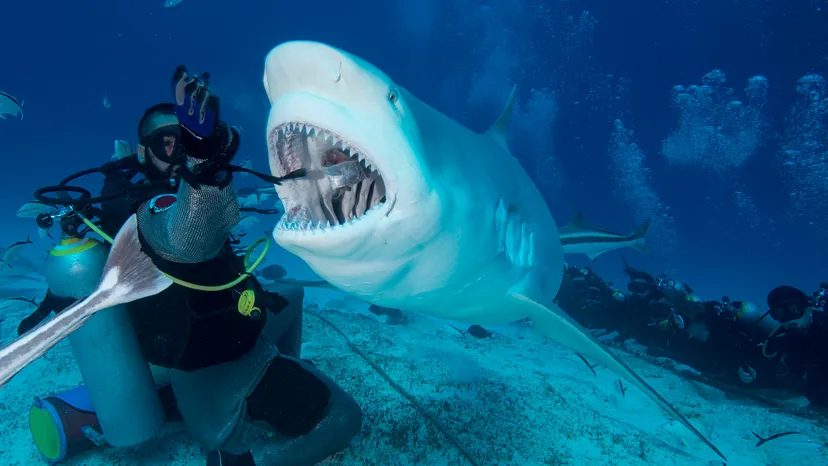
Bull sharks don’t just tolerate freshwater. They thrive in it. This ability to switch between salt and fresh water makes them uniquely dangerous. They swim into rivers. They enter lakes. They patrol shallow coastal waters where people swim, fish, and surf.
Their aggression is well documented. But it’s not just temperament. It’s physiology. Bull sharks have sharp, serrated teeth designed to tear flesh. They don’t need a reason to attack. Provocation is optional.
This combination of habitat overlap and predatory instinct has made the bull shark one of the most dangerous fish species on the planet. They are responsible for numerous fatal shark attacks. More than any other species.
The Electric Eel: A Living Battery
Moving from teeth to volts, we look at the eel category. Specifically, the electric eel.
It sounds like a misnomer. Electric eels are not true eels. They are knifefish. Related to catfish. But their power is real.
1. Electric Eel
The electric eel (Electrophorus electricus ) is a freshwater predator found in the Amazon and Orinoco basins in South America. It can grow up to eight feet long. Weight? Up to 200 pounds.
But size is secondary. The shock is primary.
An electric eel can deliver a shock of up to 860 volts. That is enough to power a small household appliance. In water, that current spreads. It affects the entire body.
Humans are not natural prey for electric eels. They rarely hunt us. But contact is dangerous. A direct shock can cause muscle paralysis. It can stop breathing. It can drown a person who is already in the water.
The eel uses electricity for two main things. Hunting. Defense.
When hunting, it zaps prey to stun them. Small fish. Frogs. Birds. The shock knocks them unconscious. The eel then swallows them whole.
When threatened, it delivers a high-voltage discharge. This is a last-resort defense. It can incapacitate a predator larger than itself. A jaguar? A caiman? The shock forces them to retreat.
How Does It Generate Power?
The electric organ makes up most of the eel’s body. It is composed of specialized cells called electrocytes. These cells act like tiny batteries. When the eel decides to shock, it aligns these cells. They fire simultaneously.
This creates a powerful electrical field. The current flows through the water. Any living thing in that field feels the impact.
Why Is It So Dangerous?
The danger lies in unpredictability. Electric eels are often found in murky, shallow waters. People might wade in without seeing them. The eel might mistake a leg or arm for prey. Or it might feel threatened.
A single shock can be fatal. Especially if the victim is unable to swim or is already exhausted.
Comparison: A bull shark attacks with teeth. An electric eel attacks with voltage. Both are lethal. Both prefer environments where humans are vulnerable.
The electric eel’s power is a biological marvel. It is also a warning. Nature has multiple ways to kill. And it doesn’t always use teeth.
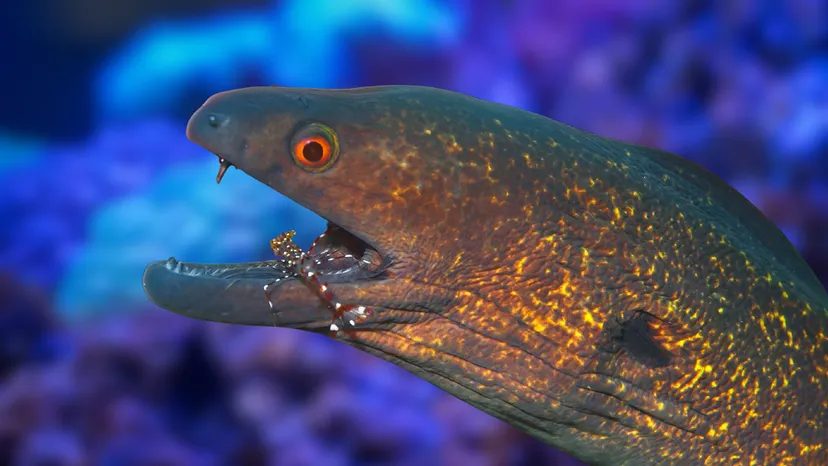
It’s easy to assume that eels are all slippery snakes that swim in the dark, but the electric eel breaks the mold. Technically, it’s not an eel at all. It belongs to the knifefish family and is closely related to catfish and characins. But its ability to produce high voltage discharges makes it probably the most dangerous freshwater creature on the planet.
How electric eels work
These fish can pump up to 600 volts of electricity. This is enough to stun large prey or keep predators away. The shock is powerful enough to stop a human heart as the current passes through the chest. Although they rarely seek human contact, accidents do happen. Caught unprepared in the murky rivers of South America, a swimmer faces a real threat. Multiple shocks can cause muscle paralysis. If you can’t swim, you’ll drown. There are documented cases where these discharges have been fatal.
Moray eel
Then there’s the moray eel. These predators live in warm, shallow waters around the world. They have sharp teeth and a strong grip. Bites can cause serious infections caused by bacteria in the mouth. Some species are venomous, although the venom is usually not fatal to humans. However, the moray eel bites are painful and require medical attention. Unlike electric eels, they won’t shock you. They bite. And they bite hard.
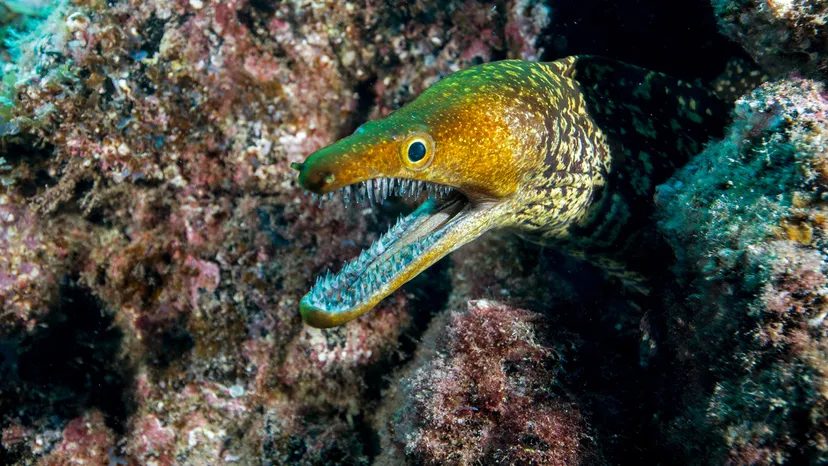
You don’t want to stick your hand into a hole in a coral reef just to see what’s inside. Moray eels are known to be aggressive, and it’s not entirely wrong that they act defensively. If you provoke one, the sharp teeth become a serious threat.
These predators usually stay hidden in crevices. They are not looking for trouble. But if you disturb them, they will strike quickly. The wounds they cause can be deep and serious. Their jaws are built for crushing, not just biting.
Do they hunt humans? No. They don’t come to us. But their instinct to defend their territory makes them potentially one of the most dangerous fish in the ocean. If you get too close, you’re in their territory. The bite is strong. The teeth are razor sharp.
This article was generated using artificial intelligence technology, then edited and fact-checked by a HowStuffWorks editor.