On 12 August. Totality hits parts of Europe, the Arctic, and the Atlantic. It is rare. Cosmic luck that the Sun and Moon play this specific visual trick on us. A partial eclipse will bleed into Canada, north-west Africa, and bits of the US.
Scientists will swarm these zones with expensive gear. You don’t have to be one of them to help. You can be part of the data haul.
Here is how.
Shadow bands
Moments before and after totality, the ground seems to ripple. These are shadow bands. The Earth’s atmosphere distorts the hidden sunlight, kind of like how distant stars twinkle at night.
If you are in the path of total darkness, put down a white sheet. Perpendicular to the sun. Film it. The goal? Quantify how altitude and distance from the center of the eclipse change those wavy lines. Set up a camera. Let it roll.
Smartphone photometry
The sun looks round. It isn’t perfectly so. The SunSketcher app needs thousands of eyes—and phones—to measure the exact shape of our star.
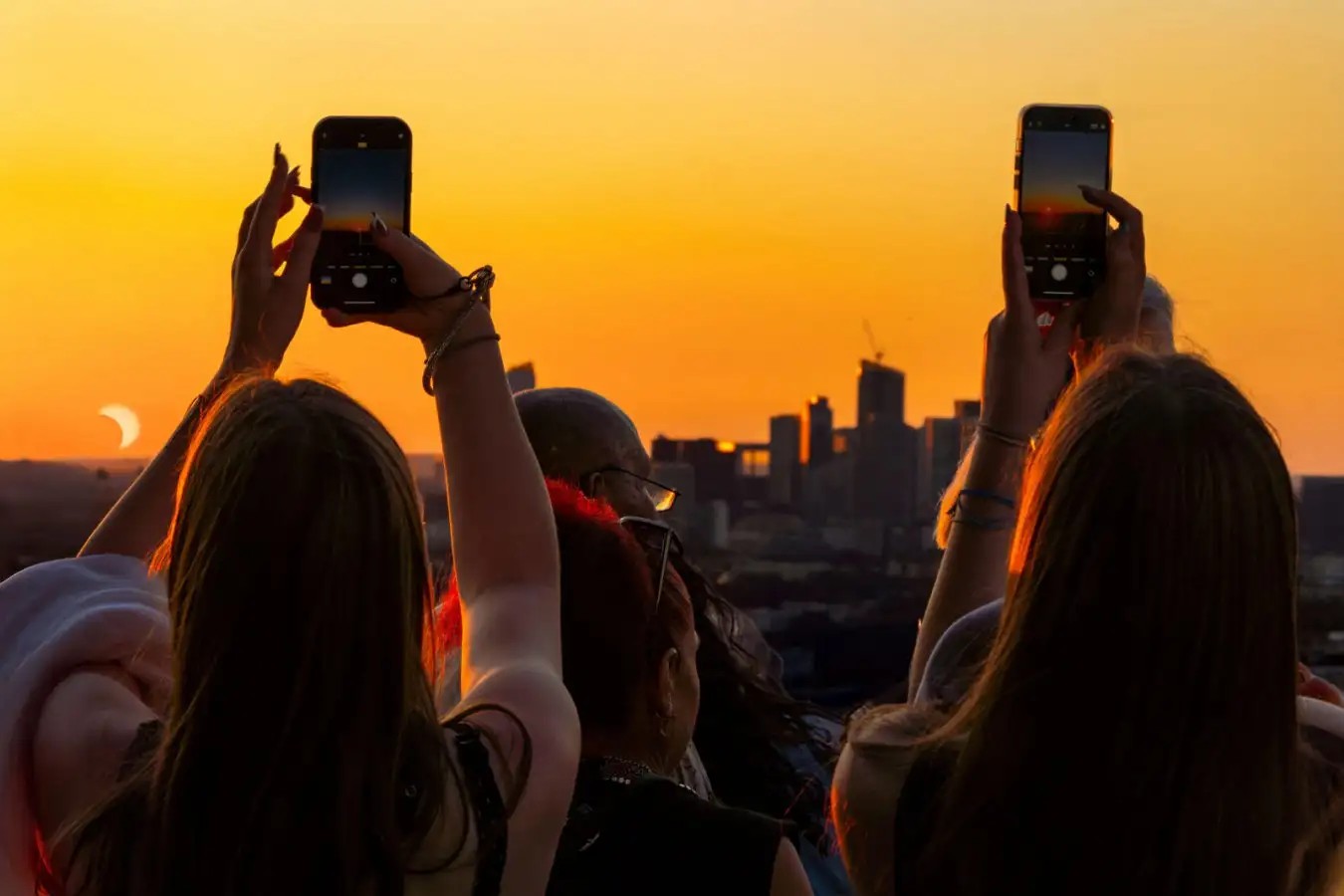
Install the app. Let it run while you watch. It snaps pictures at precise times. It is looking for Baily’s Beads.
When the Moon almost completely covers the Sun, sunlight pokes through the lunar craters along the edge. It looks like a string of pearls, or a diamond ring. These beads happen right at the start and end of totality. When combined with maps of the Moon’s surface, those geolocated photos give us a hyper-precise measurement of the Sun’s roundness. Why go through all that trouble? To measure the curvature of reality with the camera in your pocket.
Sky darkness meters
Partial eclipse view only? Good. You can still contribute to the Gaia4Sustainability project. It takes more effort than an app. You need a device with sensors for brightness and meteorology.
Set it up, though, and it runs year-round. The main goal is tracking light pollution. But during the eclipse? The sensors catch how the atmosphere reacts to sudden, total darkness. The more scattered data points, the clearer the picture of atmospheric dynamics.
The sky changes when the sun disappears. Your device proves it.
Comet hunting
Can’t see the eclipse? Most people can’t. That does not stop the science.
Enter Sungrazer. You download satellite images of the Sun. You look at the outskirts. You hunt for moving specks. These are comets diving dangerously close to the star. Researchers use your sightings to trigger detailed follow-ups. A vast number of known comets came from citizen efforts.
All you need is a computer, internet, and boredom.
Wait for 2027
If you want the full immersion experience, look at the Dynamic Eclipse Broadcast (DEB) initiative. Teams get training. They get basic equipment. They chase eclipses along the totality path to study the corona, that outer layer of the solar atmosphere.
You can’t sign up for August. It is too late.
But 2027 is coming. Northern Africa will see the path. Start planning now. Learn the ropes.
Safety first
One rule applies to everyone, regardless of project.
Do not look directly at the Sun. Use eclipse glasses or a proper solar filter. Your eyes are not built for staring at a star, even if it is temporarily blocked by a rock.