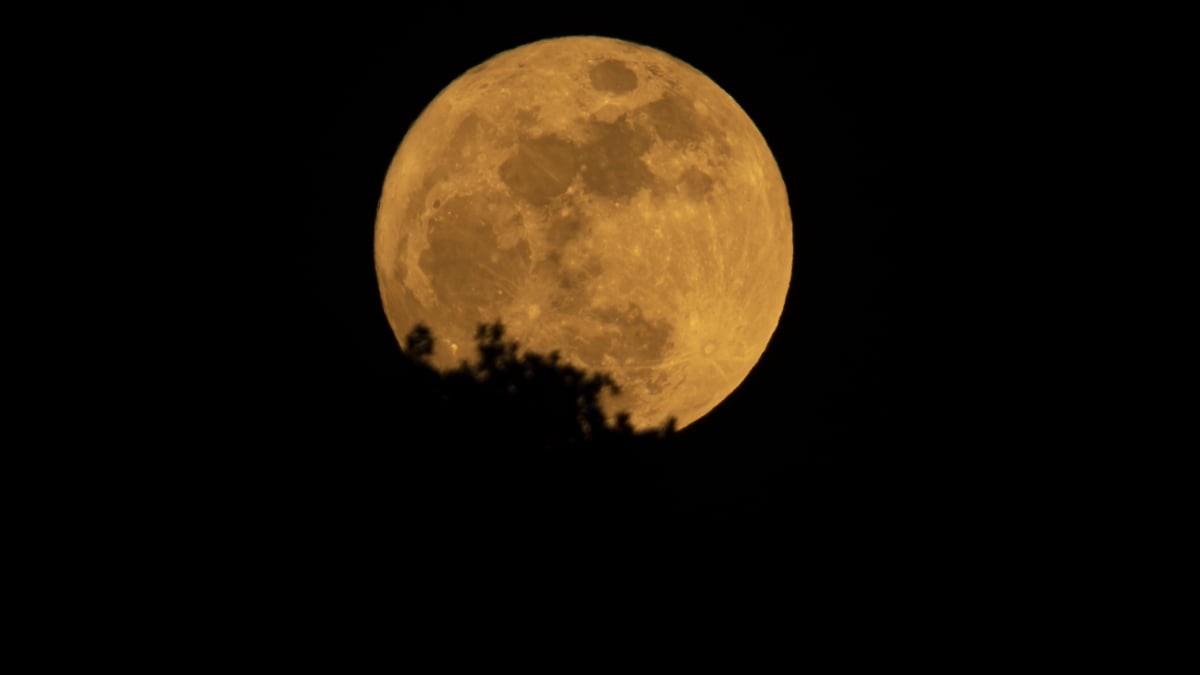
May 2026 is doing double duty for anyone who stares at the night sky.
You get two full moons.
The first hit May 1. The second lands May 31. Astronomers call this a Blue Moon, which sounds like a sci-fi movie title about atmospheric weirdness, but the reality is just bad timing. Or good timing, depending on how much you like celestial overlap. The moon isn’t actually going blue. It’s a nickname for rarity.
Once in a blue moon… you’ll have two full rides.
So, what is a Blue Moon anyway?
It’s not magic. It’s math that didn’t work out.
According to NASA, a “calendar month” Blue Moon happens when a second full moon squeezes into a single month. Here’s why that happens: the lunar cycle—Earth’s little orbit partner doing laps—takes roughly 29.5 days. Calendar months usually have 30 or 31.
Two plus two does not always equal four when you’re dealing with moon cycles. If you start a month with a full moon on day 1, that 29-day clock ticks forward. Add 29 days, and you land back in the same month. Boom. Full moon again.
It doesn’t happen every year. Maybe once every two years? Roughly. That’s why the idiom sticks. It’s rare enough to be annoying for astronomers who need precise cycles, but exciting enough for Instagram photos.
There is another kind, though. The “seasonal” Blue Moon. That one kicks in when a season gets four full moons instead of the usual three. Nature has its own calendar, and sometimes it runs fat.
The 2026 schedule
Don’t miss it. Or do. The sky doesn’t care either way.
The showstopper for May 2026 is May 31. That’s the Blue Moon. Time and Date puts the peak at around 4:45 a.m. Eastern Time.
Early risers win again.
How rare is rare?
Pretty rare.
NASA suggests it happens about every two or three years. It’s frequent enough to not be a once-in-a-lifetime event, but uncommon enough to warrant checking the calendar twice.
Looking ahead
Mark your calendars? Maybe.
Royal Museums Greenwich says the next one hits May 20, 2.027.
Wait, what?
- That’s two years from the current event. And that one won’t be a monthly glitch—it will be a seasonal Blue Moon. Four full moons in a season. The calendar just keeps shifting sand.