New data from the James Webb Space Telescope (JWST) has provided a stark look at the harsh realities of life around red dwarf stars. By observing two Earth-sized planets in the TRAPPIST-1 system, astronomers have mapped extreme temperature divides that suggest these worlds may be stripped of their atmospheres, casting doubt on their potential to host life.
The TRAPPIST-1 Laboratory
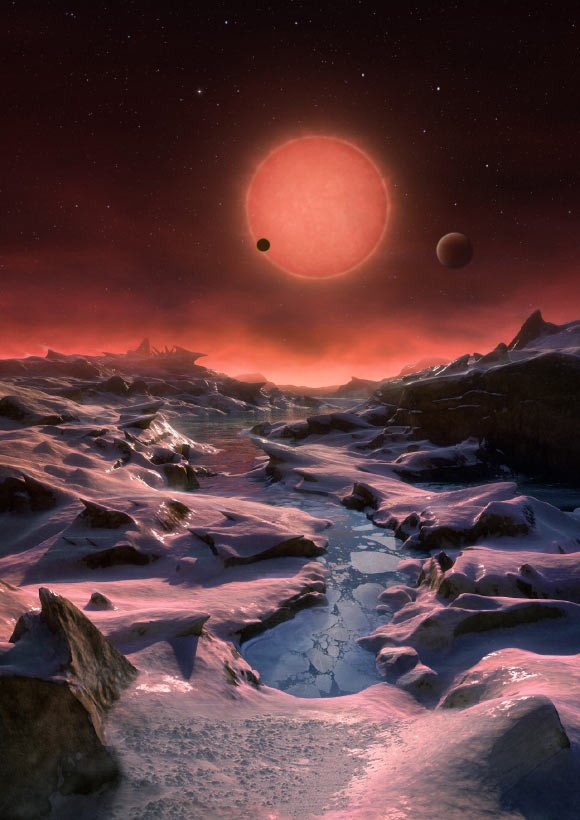
Located 38.8 light-years away in the constellation Aquarius, the TRAPPIST-1 system is one of the most significant targets in modern astronomy. It features seven rocky planets, most of which are similar in size to Earth.
Because red dwarfs —stars smaller and cooler than our Sun—make up over 75% of the stars in the Milky Way, understanding these systems is crucial. If Earth-sized planets orbiting red dwarfs can support atmospheres and life, the statistical likelihood of finding life in the universe increases dramatically.
A Tale of Two Extremes: Blistering Days and Frozen Nights
Using the JWST to measure light flux, researchers analyzed the two innermost planets: TRAPPIST-1b and TRAPPIST-1c. The findings revealed a massive thermal disparity between the sides of the planets facing the star and those facing away:
- TRAPPIST-1b: Daytime temperatures soar above 200°C, while the night side plunges below -200°C.
- TRAPPIST-1c: Daytime temperatures reach nearly 100°C, with night-side temperatures dropping below -200°C.
This extreme contrast is a major scientific red flag. On a planet with a substantial atmosphere, winds and heat circulation would distribute energy from the day side to the night side, smoothing out these temperature spikes. The “stark divide” observed here suggests that these planets lack significant atmospheres to redistribute heat.
Why the Atmospheres Disappeared
The absence of air on these worlds is likely due to two primary factors inherent to red dwarf systems:
- Radiation Bombardment: Red dwarfs are highly active stars. They frequently emit intense ultraviolet radiation and energetic particle fluxes that can physically strip a planet’s atmosphere into space.
- Tidal Locking: Because these planets orbit so closely to their star, they are likely “tidally locked.” This means one side always faces the star (permanent day) while the other always faces away (permanent night), creating a static environment that is difficult for life to inhabit.
“While red dwarf stars and their planets are common in our Galaxy, their habitability is not necessarily guaranteed,” noted the research team.
Looking Further Out
While the news for the innermost planets is grim, it does not mean the entire TRAPPIST-1 system is dead. The researchers draw a parallel to our own solar system: much like Mercury lacks an atmosphere while Earth and Venus retained theirs, the outer planets of TRAPPIST-1 may be far enough from the star to have preserved their atmospheres.
At least three planets in the system reside in the habitable zone, where temperatures could theoretically allow for liquid water. The next step for astronomers is to determine if these outer worlds have successfully held onto their air despite the volatile nature of their host star.
Conclusion
The observations of TRAPPIST-1b and 1c confirm that intense stellar radiation can strip Earth-sized planets of their atmospheres, creating uninhabitable worlds of extreme temperature swings. However, the search continues for the outer planets in the system, which may yet hold the secrets to planetary habitability.