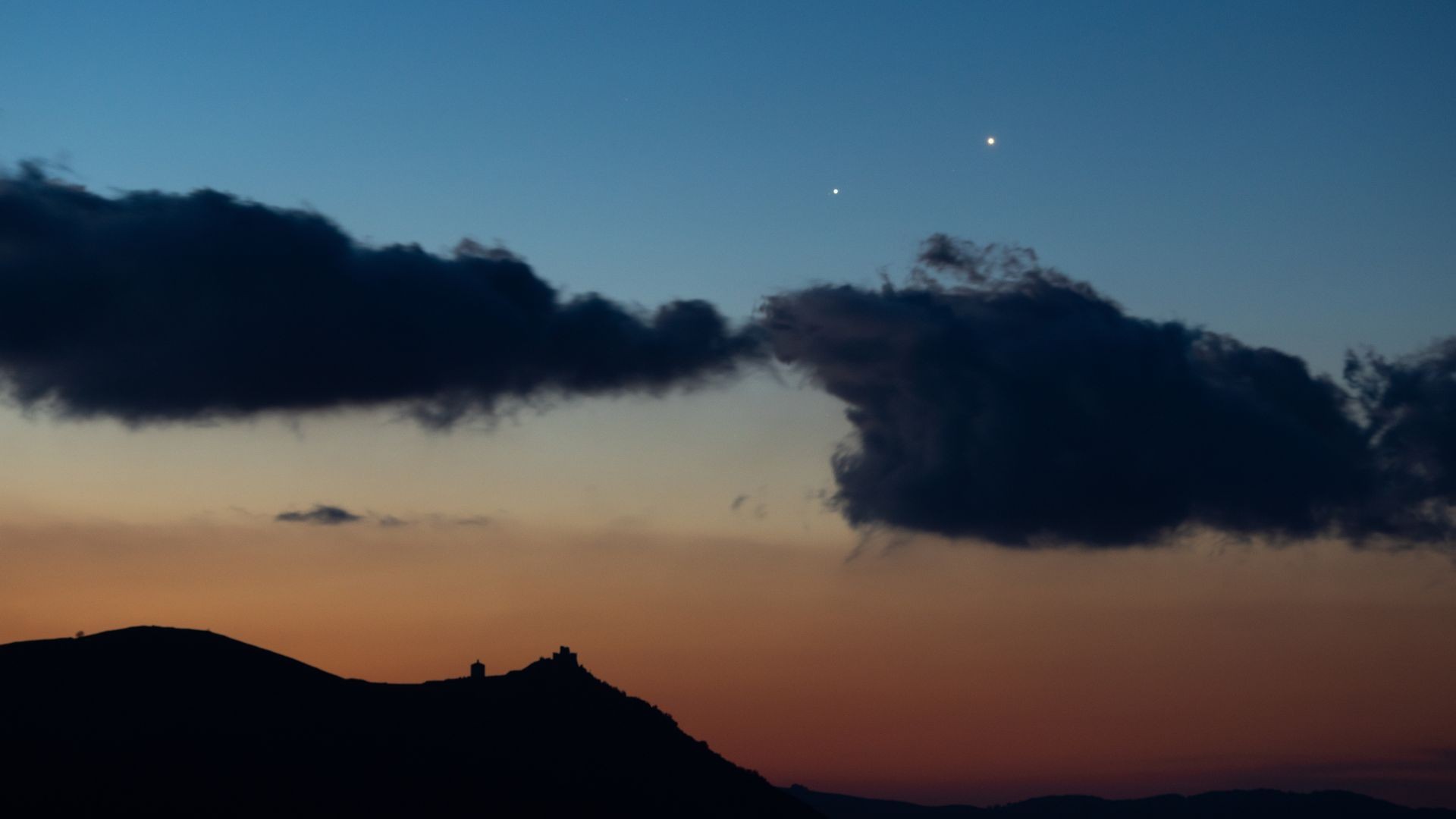
Look up tonight. May 27. Jupiter, Venus, Mercury. They’re lining up. A ‘planetary bridge’ spanning Gemini and Taurus.
Three worlds. One glance. Don’t miss it.
Jupiter sits steady, about 30 degrees above the western right after sunset. Venus is below it to the right. Bright, like a fake star. Mercury? That one’s tricky. It’s glistening near the horizon, battling the glow of the dying sun. You’ll struggle to spot it. Maybe.
Wait. Until the sun is fully down. Then grab your binoculars. Or a small scope. Time and Date’s daylight tracker knows when sunset hits your zip code. Check it.
Clear skies? Good. You might see four faint dots around Jupiter. Those aren’t planets. They’re the Galilean moons. Io. Europa. Ganymede. Callisto. A tiny cluster around the big gas giant.
Jupiter rewards the patient. A 6- to 8-inch telescope reveals its cloud bands. Multicolored. Colossal storms. They dwarf our hurricanes. Our fiercest weather systems look like gentle breezes by comparison.
Venus needs less glass. A 4-inch scope shows its moon-like phases. Shadows and light. Simple, beautiful.
Timing is tight for Mercury. In the U.S., it sets less than 90 minutes after sunset on the 27th. Venus follows an hour later. Gone. Jupiter hangs on. It stays until just before midnight. Drifting off with Castor and Pollux. The heads of the twins.
Want in? Go buy the right gear. Our roundups on telescopes and binoculars can help. Photographers? There are lists for cameras and lenses, too.
The sky moves. Planets shift. Tonight’s window is small. Look now, or wait for next year. The choice is yours, really.
Why rush the view? 🌌