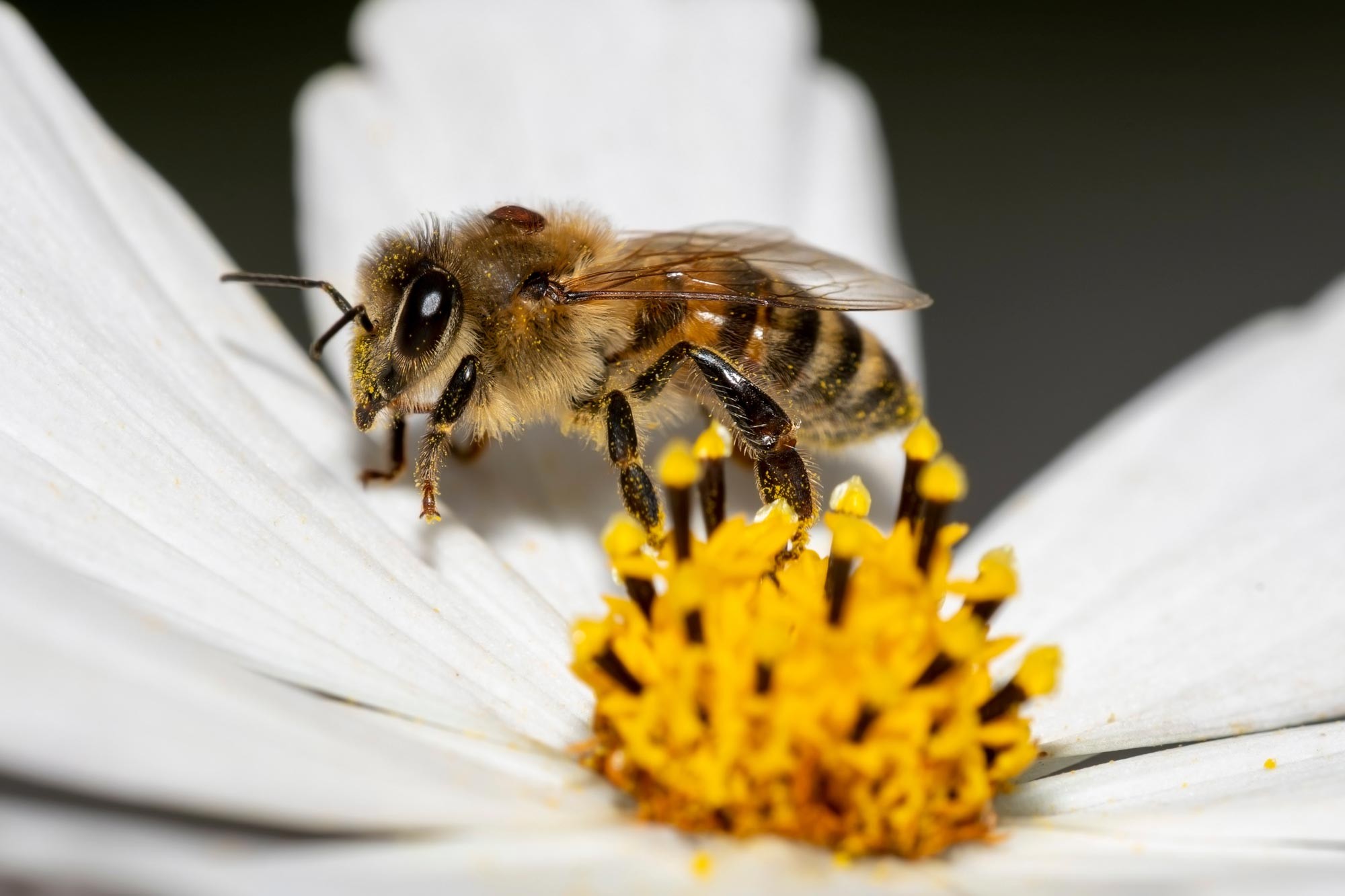
California has a secret.
Well, it’s not really a secret to the beekeepers, who have been watching these things survive while everything else dies. But the scientific community? They’re stunned.
Southern California is breeding honeybees that shrug off Varroa mites like rain on a windshield. 🐝
The Problem With Everyone Else’s Bees
2025 was bad.
Real bad. Beekeepers reported losing 62% of managed colonies. That is a massacre.
It hurts agriculture, yes, but it’s also a biological nightmare. We are watching pollinators collapse under pesticides, climate chaos, habitat loss, and then this : the Varroa mite
This tiny parasite doesn’t just sit there.
It eats.
It feasts on the bee’s “fat body.” Think of that tissue as a cocktail of liver, pancreas, and the whole immune system. When the mite drains it, the bee starves internally, gets weak, and becomes a vector for viruses.
Deformed Wing Virus. Acute Bee Paralysis. The mite injects them straight into the bloodstream.
Grim, right?
To stop it, we spray chemicals. The bees suffer. The mites eventually learn to shrug that off too.
We were running out of options.
The Hybrid Solution
A UC Riverside study flipped the script.
Lead author Genesis Chong-Ech Chavez wanted to prove a rumor.
Beekeepers said, “Hey, the locals are fine.”
She didn’t believe it until the data backed it up.
The team tracked 236 colonies between 2018 and 2021 (wait, the article said 2019-2022). Let’s stick to the text: 2019 to 2022.
Here is the kicker:
- Commercial bees? Struggling. High mite counts. Constant treatment needs.
- California Hybrids? Averaged 68% fewer mites.
That isn’t a margin of error. That is survival.
These colonies were five times less likely to hit the threshold where chemical treatment became mandatory.
“I wanted to test them rigorously,” Chong-Echavez said, chasing down the reason why these specific bees weren’t dying off like their commercial cousins.
Who Are They?
These aren’t your standard grocery-store hive bees.
They’re feral.
They live in trees in Southern California and represent a genetic melange of four lineages: African, Eastern European, Western European, and Middle Eastern.
They have been fighting these battles without human help for decades.
They survived because they adapted. Not because we designed them in a lab.
Because the wild is brutal and honest.
The Defense Starts At Birth
Why do they win?
It’s not just adult bees grooming each other.
The researchers looked at the larvae. The babies.
Varroa mites love brood cells. They need young bees to reproduce. So Chong-Echazvez’s team put commercial larvae next to hybrid larvae in the lab to see what the mites chose.
The mites went for the commercial larvae.
They ignored the hybrids.
Especially when the larvae hit seven days old.
This is usually the peak invasion time. But the hybrids? Unappealing.
“This suggests the resistance… is genetically built into the bees themselves,” Chong-Echavez noted.
Think about that.
It’s not learned behavior.
It’s in their DNA. The very cells the mite wants to latch onto are sending a ‘No thanks’ signal from the moment of conception.
Not A Magic Bullet
Does this mean we can just dump the pesticides and let nature take the wheel?
No.
Be clear. The California hybrids aren’t immune.
Mites are still there. The disease hasn’t vanished.
But the levels stay manageable without drowning the hive in toxins.
Professor Boris Baer reminded us that science often lags behind reality.
The questions started with the farmers and hobbyists who were watching their bees while academia was still looking at microscopes.
So where does this leave us?
The research now pivots to genes. Chemicals. Behaviors.
If they can pinpoint the traits that make those seven-day-old larvae unappealing to mites, they could breed it. Or at least manage for it.
“Solutions may already be emerging in the field,” Chong-Echavez says.
We just have to be humble enough to look at them.
There are billions of dollars of crops riding on these bugs. And right now, the answer might not be in a test tube. It’s in an oak tree in SoCal.