When winter sets in and the house fills with relatives, you might notice your dog acting strange. They might stare intensely. They might grumble quietly. Or they might physically step between you and a guest who is giving you too much attention. Is this jealousy? Or is it a strategy to keep their cozy spot in the family circle? Before the holidays turn into a battle for territory, we need to understand what is actually happening. It is not always about hurt feelings.
Signs of “Jealous” Behavior in Dogs
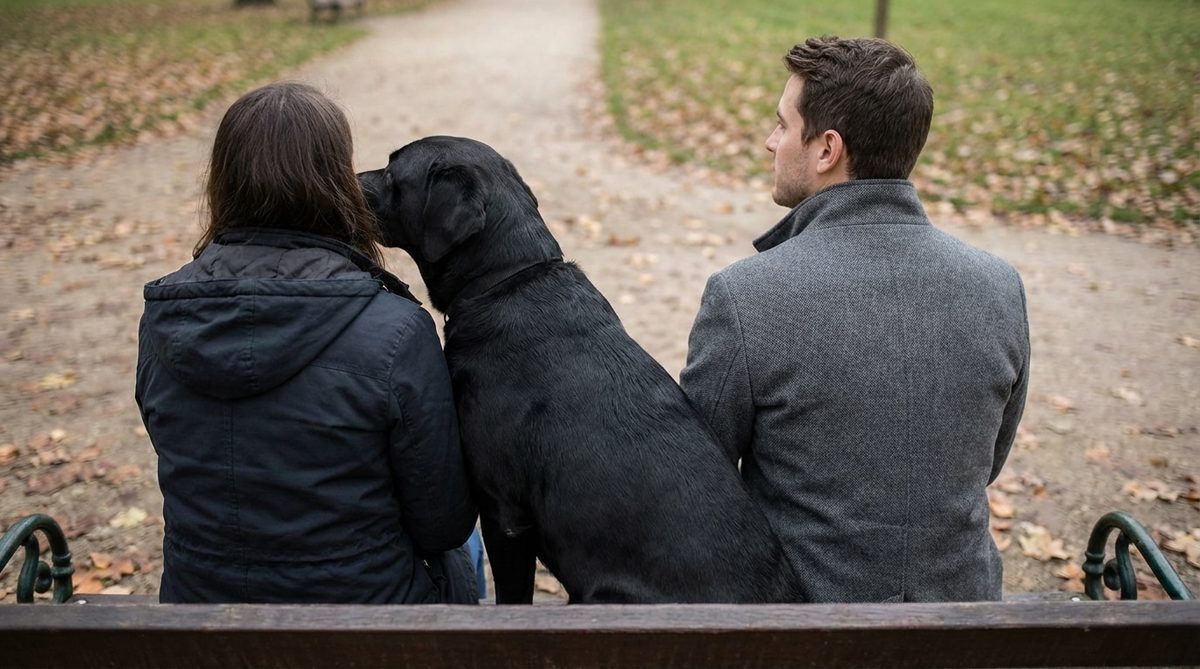
You have likely seen the scenes before. Your dog pushes an invited guest’s hand away to demand pets. They squeeze onto the couch between you and your partner. They give a dark look to the youngest family member sitting at your feet. It looks like jealousy on four legs. But should we interpret these gestures through human emotions?
The signs are easy to spot. Your dog might bark suddenly when you pay attention to another animal or person. Their posture becomes tense. Ears go back. They might even use avoidance gestures to push the “intruder” away. Subtle dogs might place a toy between you and the other person. It is a subtle display of force. It sets a boundary.
Behind these expressive behaviors lie complex emotions and instinct. Ethologists agree that these reactions are about maintaining familiar patterns as much as any sentiment toward their human. The line between a social survival reflex and what we call “jealousy” remains blurry. Dogs do not have the same emotional baggage as humans. Their sense of possession or favor is rooted in family pack dynamics.
Resource Protection vs. Jealousy
In reality, not everything is a matter of a wounded heart. These little crises are often about managing the environment. It is about protecting their space. It is about maintaining the balance of attention. It is also about reminding everyone that they hold a prime spot in the household hierarchy. This is where behavioral analysis becomes useful.
If dogs seem jealous, many of their reactions are better explained by resource protection. For a social animal, protecting what seems “acquired” is an ancestral strategy. This applies to their bed. It applies to their food bowl. It also applies to the affection of their favorite human.
Rivaling with another family member is not always a sentimental whim. Often, the dog acts in anticipation. They fear losing their comfort. They fear losing their calm moment. Or they fear losing a few treats. The fear of seeing their advantages vanish is a powerful driver of behavior. This is especially true when the house gets crowded. Think about Christmas. Think about friends visiting. Think about a new baby arriving.
Manifestations where “jealousy” turns into competition are common. Growling during treat distribution. Agitation when a new person enters the home’s intimacy. Loud intervention when the master gives a treat to another animal. This is not jealousy in the strict sense. It is an anchored reaction. It is the instinct that what I own or what I am used to having must be preserved. Even if it means raising the tone in front of a guest.
How to Help Your Dog Feel Secure During Holidays
The key to avoiding a canine possessiveness championship is adopting the right reflexes. One major key is anticipating tension. Prepare your dog for visitors. Avoid encouraging possessive behaviors. Do not overreact to every attempt to interpose. Distribute attention, treats, and pets equally.
To ease potential conflicts, multiply reassuring rituals. Regular walks. Exclusive game sessions. An enriched environment so the dog can channel their energy elsewhere. Do not let them fixate on the jealousy of a newborn or a passing cousin. Always reinforce trust. Prioritize positive reinforcement. Reward your dog when they stay calm during family interactions. Offer alternatives like a toy or a mat when tension rises.
What the dog often expresses through these little crises is not so much a painful feeling of jealousy. It is a form of communication. It says: “Do I still have my place? Can I count on you?” In winter, when the house buzzes with festive preparations and routines are shaken, their need to be reassured is simply more intense. We must remind them, with kindness, that the family has room for everyone. Even the furry members.
Behind this fake jealousy is mostly attachment. The dog is expressing loyalty. Jealous or protective? The answer is not so clear-cut. It is hard to blame them for their fidelity. Even if it is a bit possessive. The key lies in family balance. Everyone finds their rightful place. This allows us to enjoy the holidays without drama. Or battles over cuddles.