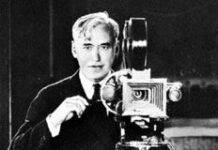
Arturo Benedetti Michelangeli didn’t just play the piano. He dissected it.
Born in Brescia, Italy, on January 5, 1920, he grew up to become one of the most feared and admired musicians of the 20th century. He died in Lugano, Switzerland, on June 12, 1995. But for decades in between, he controlled the room without ever raising his voice.
His story starts early. Age three. Violin lessons. By the time he was 14, he had graduated from the Milan Conservatory as a piano student under Giuseppe Anfossi. That’s young. Most people are still figuring out their majors. He was already a graduate.
Then came the war. He served in the Italian air force during World War II. It paused his career, but it didn’t break his focus. When he finally stepped onto the international stage, the reaction was instant. London in 1946. New York in 1948. Critics didn’t just clap. They were stunned. He embarked on an international career that would redefine what was possible on the keyboard.
Why Was He So Hard to Book?
Here is the thing about Michelangeli. He didn’t want to be seen.
He was reclusive. Reputedly, he did not enjoy public performances. He refused to tour endlessly like his peers. He gave master classes. He taught. His students included Martha Argerich and Maurizio Pollini, both of whom became giants in their own right. But he wasn’t interested in the spotlight. He was interested in the sound.
“Despite a small repertoire as a leading concert pianist, Michelangeli was especially adept at performing pieces by certain composers…”
His repertoire was tiny by modern standards. Most concert pianists carry 30 to 40 works in their active rotation. Michelangeli carried a fraction of that. He was picky. Ruthlessly so. He played Beethoven’s early compositions with a precision that felt surgical. He tackled Brahms’s Paganini Variations not to show off, but to reveal the architecture underneath.
Chopin’s Ballades? He played them like they were new discoveries. Rachmaninoff, Debussy, Ravel, Schumann. These were his territories. And within them, he was untouchable.
The Michelangeli Sound
What made his playing so distinct? Clarity.
His technique was consummate. It wasn’t flashy for the sake of noise. It was control. Tone colour. Counterpoint. He could make a piano sound like a crystal glass tapping against another glass. You could hear every note. Every intention. Every mistake avoided.
He was especially adept at Romantic music, particularly that of Claude Debussy. Debussy’s music requires a sense of floating, of water moving over stone. Michelangeli captured that. He didn’t rush. He didn’t drag. He let the music breathe, then he struck with absolute certainty.
Is he one of the greatest pianists of the 20th century? Some say yes. All of them.
He left behind recordings that still sound fresh. Not because they are old. But because they are perfect. And perfection is