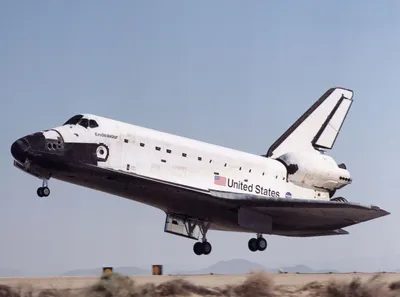
It was a machine that refused to choose between a rocket and a plane. The space shuttle, formally known as the Space Transportation System (STS), was NASA’s ambitious attempt to build a partially reusable vehicle capable of orbiting Earth. It didn’t just launch; it landed. This was a stark departure from the capsules that splashed down in oceans. The shuttle could glide onto a runway, touch down with wheels, and taxi to a hangar.
The program began on April 12, 1981. That was when the first orbiter, Columbia, lifted off. For thirty years, the system defined American access to space. It flew 135 missions. The last flight ended in 2011. The design was complex because it had to do two contradictory things. It had to withstand the violent chaos of launch. It had to survive the fragile silence of orbit. And it had to return like a brick.
The Core Components
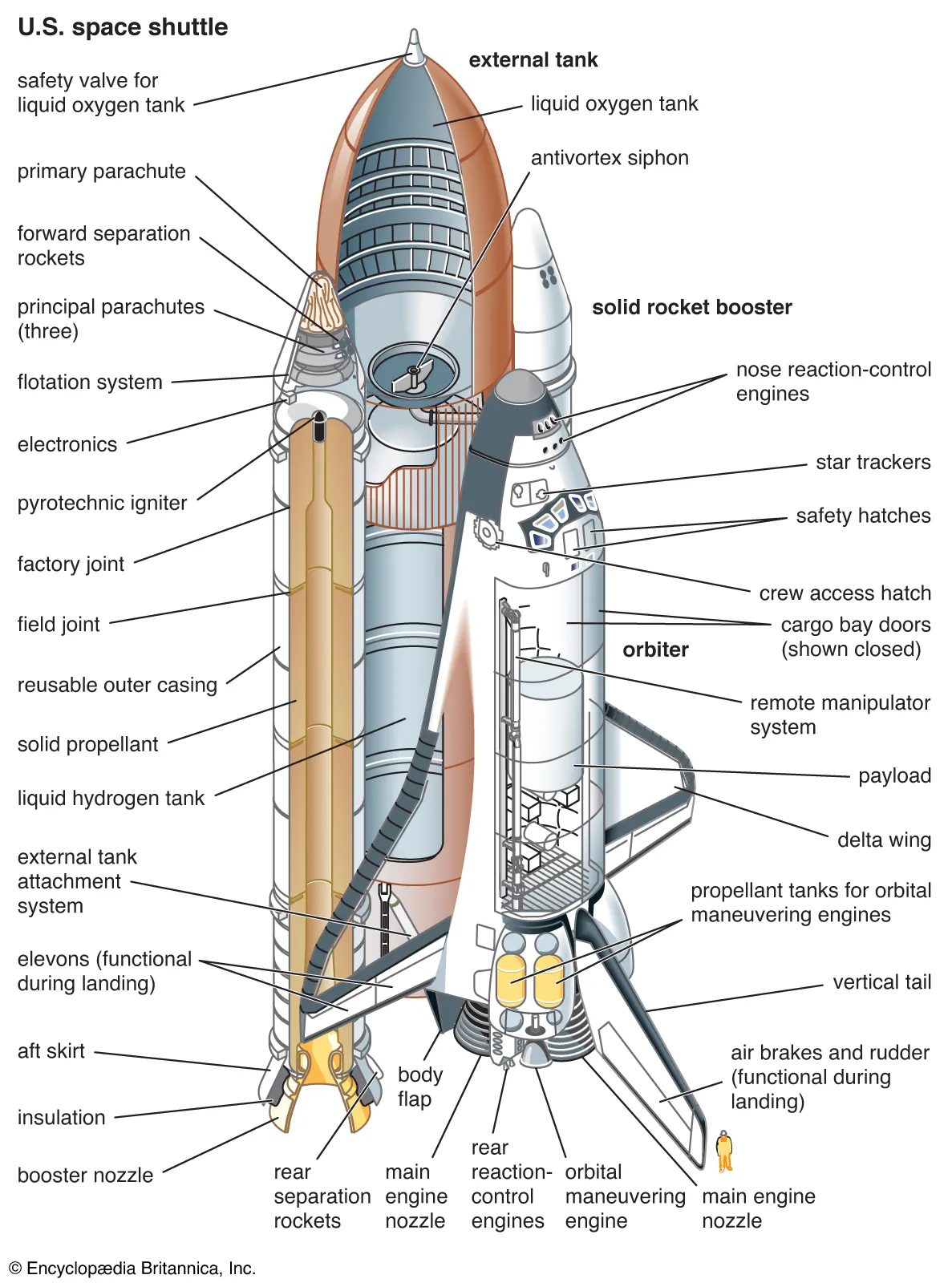
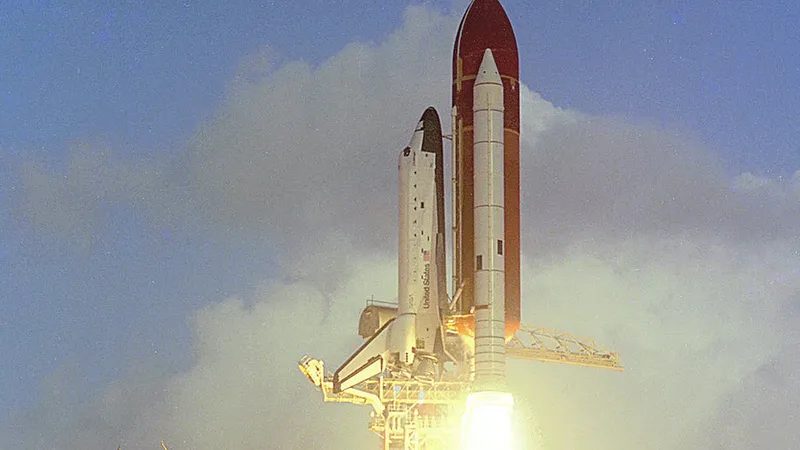
The shuttle wasn’t a single craft. It was a stack. Three main parts made up the system.
- Orbiters: These were the winged spacecraft. They carried the crew and payload. They were the only part that flew into orbit.
- External Tank (ET): This was a massive, orange-colored fuel tank. It held liquid hydrogen and liquid oxygen. It provided power for the first two minutes of flight. Once empty, it was jettisoned and burned up in the atmosphere. It was not reusable.
- Solid Rocket Boosters (SRBs): Two white rockets attached to the sides. They provided the initial thrust. They fell into the ocean after burning out. NASA recovered them, cleaned them, and refilled them for the next launch.
The orbiters were the stars of the show. There were five built: Columbia, Challenger, Discovery, Atlantis, and Endeavour. Challenger was lost in 1986. Columbia was lost in 2003. The other three completed the program’s final missions.
Why It Mattered
The shuttle changed how we viewed spaceflight. Before it, space was a one-way trip for the most part. You went up. You came back. You crashed into the ocean. You were done. The shuttle promised routine access. It promised a space truck.
“The Space Shuttle was the first space vehicle designed to be reused, revolutionizing the concept of space travel by allowing for multiple missions with the same core vehicle.”
This reusability lowered costs. At least in theory. In practice, refurbishing the orbiters was incredibly expensive. The heat shield tiles were fragile. They required hand-inspection. Each mission cost hundreds of millions of dollars. But the ability to bring heavy payloads back to Earth was unique. The shuttle could deploy satellites. It could repair them. It could build structures in space.
The Hubble Legacy
One of the shuttle’s most enduring contributions was the Hubble Space Telescope. Launched in 1990, Hubble needed repairs. It couldn’t do them alone. The shuttle flew five servicing missions. Astronauts went out into the void. They installed new cameras. They fixed mirrors. They replaced gyroscopes.
This wasn’t just maintenance.


The Anatomy of a 2-Million-Kilogram Beast
Forget the fairy tales of space travel. The U.S. space shuttle wasn’t a sleek silver bullet. It was a clumsy, terrifyingly loud hybrid of airplane, rocket, and disposable fuel tank.
To get it off the ground, you needed three distinct parts working in terrifying unison. First, there was the orbiter. This was the winged craft carrying crew and cargo. But it couldn’t fly on its own. It needed muscle. Specifically, it needed an external tank stuffed with liquid hydrogen and liquid oxygen. This tank fed the orbiter’s three main rocket engines. And if that wasn’t enough, you strapped on two massive solid-propellant booster rockets.
The scale is hard to comprehend until you measure it.
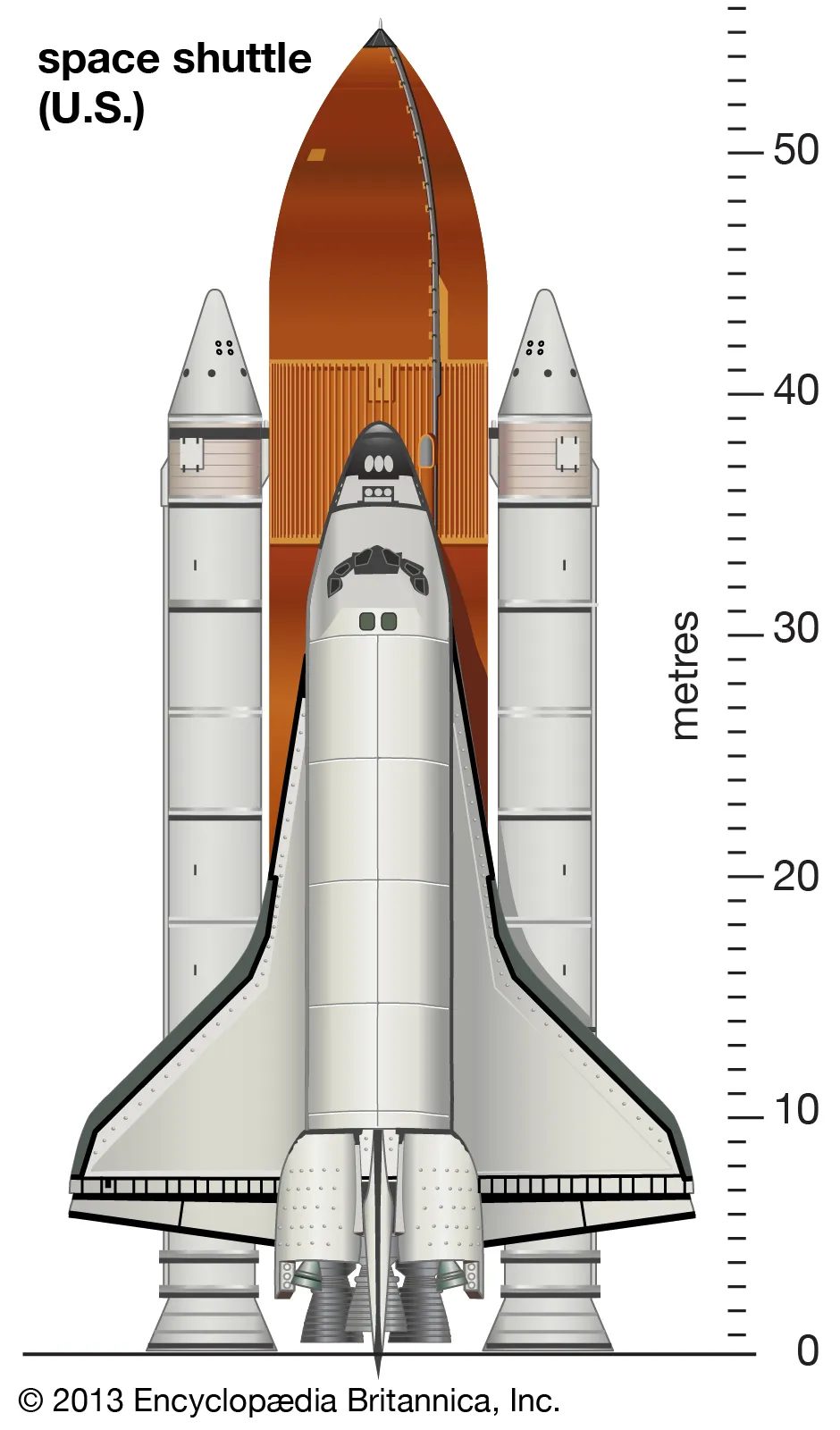
At liftoff, the entire system weighed 2 million kilograms. That is 4.4 million pounds of metal and fuel. It stood 56 meters high. 184 feet. Just to get that thing moving required 31,000 kilonewtons of thrust. Or, if you prefer imperial units that your gut understands better, 7 million pounds of force.
The launch sequence was brutal. The boosters and the orbiter’s main engines fired together. For about two minutes, you were sitting on a controlled explosion. Then came the first separation. The boosters jettisoned. They didn’t just fall away. They deployed parachutes. They were returned to Earth intact. Reusable. That was the selling point. The dream of a spaceplane.
But the external tank? That was expendable.
Once the orbiter hit 99 percent of its orbital velocity, the tank was empty. Propellants gone. The orbiter released it. The tank didn’t make it back. It disintegrated upon reentering the atmosphere. A fireball in the sky.
And yet.
Here is the weird part. The shuttle lifted off vertically. Like every other rocket. But once it reached orbit, the descent changed everything. It wasn’t a rocket landing. It was an unpowered glide.
How the Shuttle Landed Without an Engine
People think of space travel as a series of explosions. Up. Down. Boom. But the shuttle’s return was silent.
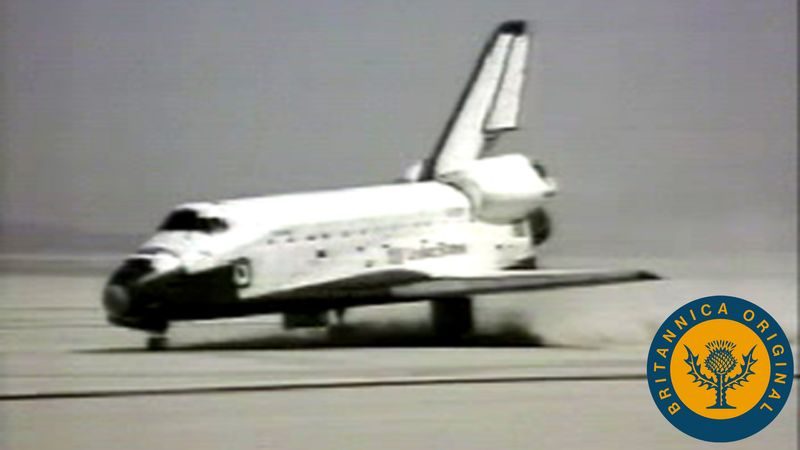
After the external tank burned up, the orbiter was essentially a brick with wings. It had no engines to push it back to Earth. No parachutes to slow it down in the traditional sense. It had to glide.
This changed everything about how we think about spaceports. You couldn’t just launch from a pad and land in a field. The orbiter needed a runway. Long, concrete, reinforced to take the heat and impact of a 200-ton plane coming in at 200 miles per hour.
Why did they build it this way? Because they wanted the cost per launch to drop. Reusability was the holy grail. The boosters came back. The orbiter came back. Only the external tank was lost. In theory, this meant you could fly the same hardware dozens of times.
In practice?
The maintenance was a nightmare. But the physics remained the same. The orbiter landed like a glider.
The Reality of Orbital Velocity
Getting to 99 percent of orbital velocity is the hard part. The external
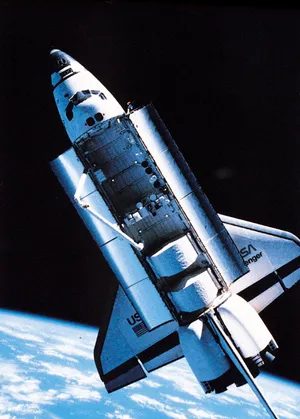

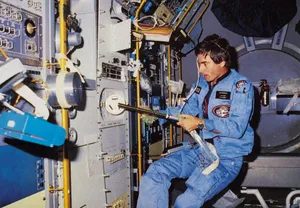

The Space Shuttle wasn’t just a rocket. It was a truck, a crane, and a laboratory rolled into one. Its real power lay in the payload bay—a cavernous space designed to swallow satellites whole. Once in orbit, the orbiter would release them. It could also dock with other spacecraft. This wasn’t just for show. Astronauts used these rendezvous to fix broken machines. They resupplied stations. They brought hardware back to Earth for repair.
Some missions lasted two weeks. That was enough time to turn the orbiter into a dedicated science platform. Crew members observed Earth. They tracked cosmic objects. They didn’t just look. They recorded data.
The Spacelab experiments
Not all missions were about hardware. Some were about biology. Physics. The Shuttle carried a pressurized module built by Europe. It was called Spacelab. Inside, the environment was controlled. Pressure matched Earth standards.
But the weight? Gone.
Astronauts worked in microgravity. They ran tests that couldn’t be done on the ground. Why does this matter? Because that data shaped how we understand human health in space. It influenced material science. It changed how we design future labs.
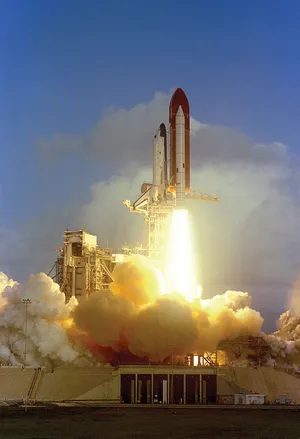



The vision was seductive. The U.S. space shuttle was engineered to be a workhorse, capable of being refown as many as 100 times. Early projections promised a radical shift. Spaceflight into low Earth orbit would no longer be a prohibitively expensive affair. It would be routine. Routine. That was the promise.
Reality intervened.
After the system went operational, the math stopped making sense. Operating costs soared. Time needed for refurbishment between flights dragged on far longer than engineers had bet on. The shuttle wasn’t a cheap ride to space. It was a maintenance nightmare.
Consider the fleet. Between 1981 and 1985, four orbiters entered service: Columbia, Challenger, Discovery, and Atlantis. Columbia held the distinction of being the first to fly into space. But by the end of that period, the initial optimism had evaporated under the weight of rust, replaced tiles, and complex logistics.
Why did the cost model fail so spectacularly? Because people aren’t rockets. You can’t just swap out a few bolts and send humans back up three weeks later. The shuttle required extensive manual labor. Inspections. Repairs. Delays.
The expectation of low cost for spaceflight in low Earth orbit simply didn’t hold up against the reality of human-spaceflight safety and vehicle refurbishment. The shuttle remained operational for decades, but its financial and logistical burden became the defining feature of the program, not its reusability.
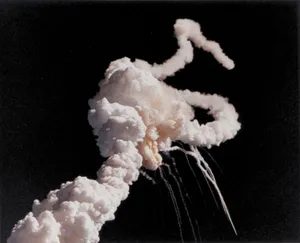

The Cold Truth Behind the Explosion
It happened on January 28, 1986. Seven astronauts aboard Challenger died moments after liftoff. Among them was Christa McAuliffe, a private citizen and schoolteacher. The image of the explosion remains seared into public memory. But the cause was mechanical.
A presidential commission investigated the disaster. They found that a joint seal in one of the solid rocket boosters had failed. This was not just bad luck. It was a design flaw. The unusually cold weather that morning made it worse. The cold caused the seal to lose its elasticity. Hot gases leaked past it. They eventually ignited the fuel in the shuttle’s external tank. The explosion was inevitable once that seal broke.
The accident wasn’t an anomaly. It was a known risk that was ignored due to schedule pressure and weather.
NASA grounded the shuttle fleet immediately. They did not fly again until September 1988. That gap allowed engineers to fix the design flaws. It also forced administrative changes in the shuttle program. Culture mattered as much as physics.
Replacing the lost orbiter took years. Endeavour flew its first mission in 1992. It was built to replace Challenger. The fleet continued, but the shadow of that January morning never fully lifted.
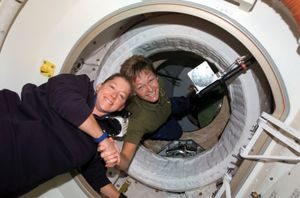

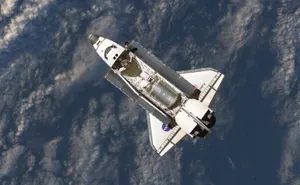

It wasn’t just a diplomatic handshake. The shuttle missions to Russia’s Mir space station between 1995 and 1998 were a brutal, high-stakes training ground. NASA needed to learn how to keep a human habitat alive in orbit without blowing up or running out of air.
“We were borrowing lessons from a station that was essentially held together with duct tape and hope.”
The goal was simple. Get ready for the International Space Station (ISS). The reality was messy.
Mir was old. It was Russian. It was leaking. But it worked. And working was the point.
Learning the Hard Way
Imagine trying to run a household in zero gravity while your plumbing occasionally sprays coolant into a circuit breaker. That was the vibe at Mir.
NASA sent shuttle crews up there to test procedures. They practiced docking. They practiced extravehicular activities (EVAs). They practiced dealing with emergencies that had no checklist because the Russians hadn’t written one down.
One mission. A fire alarm. A loose wire. Panic.
These weren’t simulations. They were real hours in space. Real problems. Real consequences.
The Transition
By 1998, things changed. Mir was getting too expensive. Too old. Too tired.
The focus shifted. The shuttle started hauling big modules into orbit. Truss segments. Solar arrays. Habitat rings.
The shuttle became the ultimate construction vehicle. It ferried astronauts. It brought food. It brought experiments. It built the ISS piece by piece.
But the skills? Those stayed. The muscle memory from Mir trips? Still there.
Why This Phase Exists
Why spend three years on a foreign station when you could build your own?
Because building your own requires knowing how to fix things when they break. You can’t simulate every failure. You can’t predict every leak. You have to go there. You have to see it. You have to survive it.
Mir provided the chaos. The ISS provided the scale.
The Legacy of That Era
Today, the ISS is a marvel of international cooperation. It’s a lab. It’s a home. It’s a testament to what happens when countries stop arguing long enough to build something in space.
But that cooperation didn’t appear out of nowhere. It was forged in the shadows of Mir. In the shuttle bays. In the shared panic of a malfunctioning system.
We look at the shiny modules of the ISS and see progress. We don’t always see the years of trial and error that preceded it. The messy middle. The awkward phases.
That’s where the real work happened.
And it wasn’t pretty. But it worked.
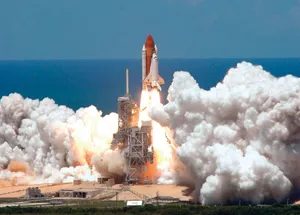

The breakup happened fast. One minute, the Space Shuttle Columbia was streaking across the sky over north-central Texas. The next, it was debris. On February 1, 2003, the orbiter disintegrated at an altitude of roughly 60 kilometers. That’s about 40 miles up. All seven crew members died. Among them was Ilan Ramon. He was the first Israeli astronaut to reach space. A proud moment for his country. A tragedy for everyone.
The shuttle fleet ground to a halt immediately. No more flights. No more launches. The nation held its breath. Investigators needed to know why. The answer lay in the launch, not the return.
The Foam Strike
The problem started on the pad. During launch, a chunk of insulating foam tore loose from the external fuel tank. It wasn’t a small piece. It was large enough to matter. This debris struck the left wing of the orbiter. You might think such a hit would be catastrophic in flight. It wasn’t. The foam hit during the ascent phase. The structural integrity held. For a while, that was enough.
But the wing’s thermal protection was compromised. The foam damaged the carbon-carbon composite panels. These panels were the shuttle’s first line of defense against heat. When Columbia later reentered the atmosphere, things went wrong. The superheated air found a weak spot. It penetrated the wing. The heat wasn’t just intense. It was enough to destroy the structure. The wing failed. The vehicle broke apart.
The investigation board laid it out plainly. This wasn’t just bad luck. It was a mix of mechanical failure and organizational blindness. The same issues that killed Challenger were still there. They hadn’t been fixed.
Why the Shuttle Had to Go
The Columbia disaster changed how NASA looked at risk. It wasn’t just about fixing wing panels. It was about fixing a culture that ignored warnings. Engineers had seen foam strikes before. They knew it was dangerous. They said something. Management dismissed it. Or at least, they didn’t act with the urgency it deserved.
This pattern of ignoring known problems is what the Challenger report had flagged years earlier. It was a failure of communication. A failure of prioritization. Safety took a backseat to schedule. That’s not just a technical error. It’s a human one.
Before shuttle flights could resume, NASA had to address these organizational causes. They redesigned the external tank. They added new inspections. They changed how they communicated risk. But the core issue remained: the shuttle was too complex, too expensive, and too dangerous for routine use.
The shuttle program started in the 1970s. It promised cheap, frequent access to space. It delivered something else. High costs. High risk. And ultimately, no sustainable business model. The Columbia loss was the final blow. It proved that the risks outweighed the rewards. Especially when the rewards were mostly scientific experiments and satellite repairs.
A Legacy of Lessons Learned
The Columbia disaster didn’t just end a mission. It ended an era. The shuttle fleet was grounded until 2005. When flights resumed, the atmosphere was different. Caution replaced confidence. But the writing

The silence after the roar was deafening. For nearly thirty years, the hum of the Space Shuttle’s main engines defined an era of American spaceflight. But that era didn’t end with a bang. It ended with a whimper on a hot July morning.
On July 8, 2011, the Space Shuttle Atlantis lifted off for what would become the 135th and final mission. It wasn’t a record-breaking launch. There were no new records set for duration or distance. It was simply the end of the line. A practical, quiet conclusion to a program that had reshaped how we view low Earth orbit.
To understand why the shuttle was retired, you have to look at the timeline. The program had nearly died before it truly began. After the tragic loss of Challenger in 1986 and Columbia in 2003, NASA’s budget was under siege. Public confidence was shattered. The idea of a “daily bus to space” had collapsed under the weight of safety concerns and soaring costs.
When flights finally resumed on July 26, 2005, with the launch of Discovery, the mood in Houston was somber. The shuttle was back, but the optimism of the 1980s was gone. What followed were six more missions. Each launch was scrutinized. Each landing was a relief. By the time Atlantis touched down in Florida in July 2011, the writing had been on the wall for years.
Where did the orbiters go?
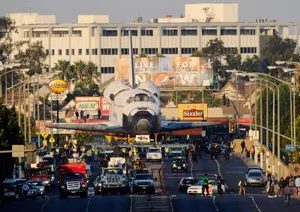
The retirement of the fleet left a logistical puzzle. What do you do with five massive, complex spacecraft? NASA didn’t scrap them. That would be wasteful. Instead, they were gifted to museums across the United States, turning expensive engineering failures and successes into permanent educational tools.
You can now walk inside them. You can sit in the cockpit.
- Atlantis rests at the Kennedy Space Center Visitor Complex in Florida. It is displayed exactly as it left orbit, with its payload bay doors open and its robotic arm retracted.
- Discovery was sent to the Steven F. Udvar-Hazy Center in Virginia, part of the Smithsonian’s National Air and Space Museum.
- Endeavour found a home at the California Science Center in Los Angeles.
- Enterprise never flew in space. It was a prototype used for approach and landing tests in 1977. Today, it sits at the Intrepid Sea, Air & Space Museum in New York City.
These aren’t just dusty relics. They are reminders of a bold, flawed, and ambitious experiment.
The post-shuttle reality
When the shuttles retired, a void opened in the sky. The United States had a crewed spacecraft, but no way to get astronauts to space. The shuttle had been our only bridge.
NASA didn’t just let that bridge burn. They turned outward.
For the next several years, American astronauts relied on the Russian Soyuz spacecraft to reach the International Space Station. It was a pragmatic, if politically awkward, solution. We paid the Russians to fly our people. It wasn’t ideal, but it kept the lights on in orbit.
But the real story is what happened next. The retirement