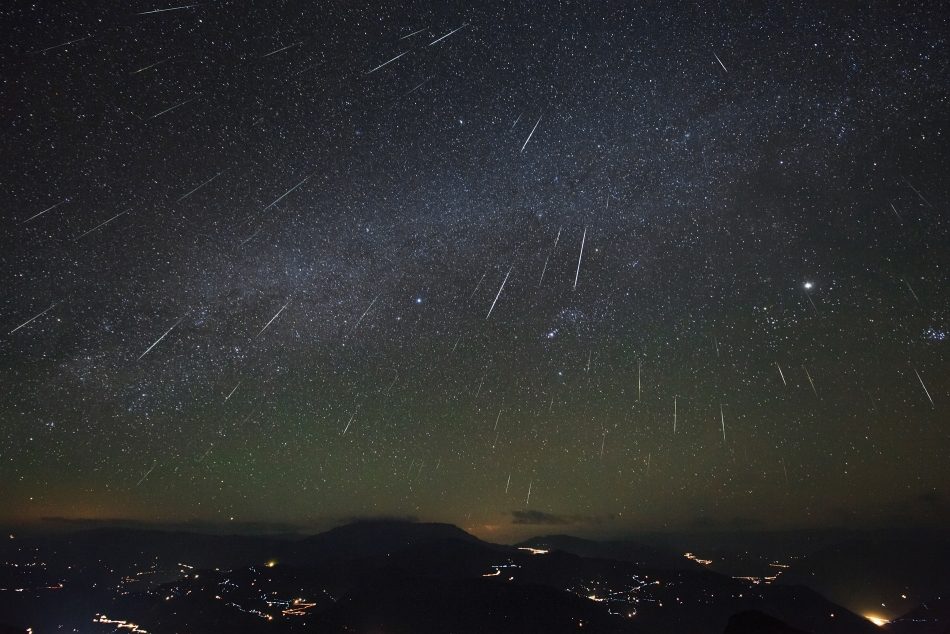
Earth is currently moving through the leftover trail of Comet Encke. As these fragments slam into our atmosphere, they burn up and create streaks of light. This is the Taurid meteor shower. 🌠
The activity peaks between November 4 and 12. After that window, the number of shooting stars will drop off significantly until early December.
Why does this matter? It’s not just about pretty lights. The Taurids are unique. They aren’t a sudden burst like the Perseids. They come from a wide cloud of debris. This means you might see a few sporadic meteors for weeks before and after the peak.
Comet Encke is old. It has passed by the sun many times. Each pass leaves behind dust and ice. The Earth hits this specific patch of space right now. That collision is what creates the Taurids.
Most people think meteor showers are quick events. This one is different. The peaks are subtle. The activity is spread out. You don’t need to be awake at 3 AM every night. But catching the window between the 4th and 12th gives you the best odds.
What makes these meteors special is their speed. They are slow. Very slow compared to other showers. This slowness is key. It gives you more time to watch the streak. It also means they can be brighter if they are larger.
Some of the particles are actually quite big. We are talking about grain-of-sand size or larger. When those hit the air, they can leave lasting trails. You might see a glowing path that hangs in the sky for seconds. That is rare. Most meteors vanish instantly.
The radiant point is in Taurus. Hence the name. You don’t need to look directly at the constellation. Just look up. The meteors will seem to radiate from there. But they can appear anywhere in the sky.
Do you need a telescope? No. Your eyes are enough. The best view is from a dark location. Away from city lights. Light pollution washes out the fainter meteors. If you are in a bright suburb, you might only see the brightest ones.
The dates are fixed. November 4 to 12. The peak is likely around November 7 or 8. But the shower starts weeks earlier. It ends weeks later. The core activity is tight. The edges are loose.
This debris trail is chaotic. It isn’t a neat, thin line. It’s a wide band. Earth cuts through it at an angle. That geometry creates the extended duration. We are not just passing a thin ribbon. We are driving through a fog bank.
You might wonder why Encke’s debris is still here. Comets usually lose their material over time. But Encke is small. It is less active than others. The debris stays close to the orbit. It doesn’t spread out as quickly. That allows us to hit a concentrated cloud now.
For astronomers, this is a chance to study old material. The particles are primordial. They haven’t changed much since the solar system formed. Analyzing them helps us understand early planetary formation.
For the rest of us, it is about patience. And looking up. The sky doesn’t always give up its secrets quickly.
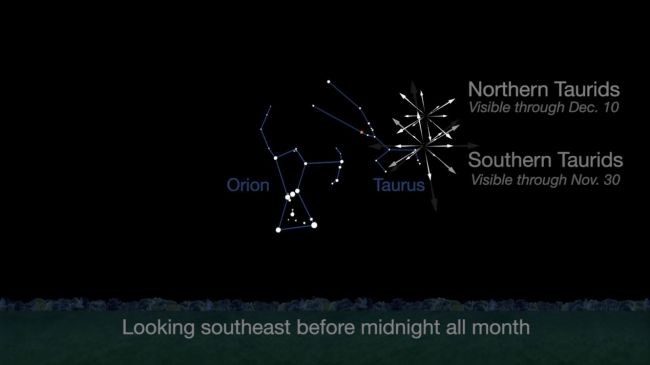

Where to Look for the Taurid Meteors
To catch them, you need a clear sky. No light pollution. Point your eyes toward Taurus, the constellation that gave the meteor shower its name. It rises between north and northeast as night falls. The best viewing window is between 11 PM and 3 AM. This is when the constellation hits its peak altitude. You want to aim for those hours. That’s when the numbers go up.
Why These Meteors Are Unique
They don’t match the drama of the Perseids in August. They aren’t the Géminides in December. Those are flashy. These are different. You might see about ten per hour if conditions are perfect. They are dim. They are slow. That slowness makes them easier to track. Your brain can process their path. Faster meteors just vanish. These linger. They are distinct.
The Moon Problem
There is a catch this year. The moon will be full on November 12. That washes out the fainter stars. And these meteors are faint. You will need to time your watching around the moon’s brightness. Or just accept fewer sightings. It is a trade-off.
Other Sky Highlights
Look elsewhere in the twilight too. Venus is blazing bright. Follow it with Saturn and Jupiter. They sit together at dusk. Easy targets for binoculars or the naked eye. Don’t forget them.


The news cycle is relentless. You can chase it through WhatsApp or Google News if you like. But let’s be honest. Most of us are just scrolling, hoping to catch the next big thing in science and technology. We want to know what matters. What moves the needle.
Why the last updates matter
It isn’t just about flashy gadgets. It’s about how these tools reshape our daily lives. A new algorithm isn’t just code. It’s a decision-maker. It chooses what you see. What you buy. Even what you believe. The stakes are higher than most realize.
The human element
Behind every breakthrough is a team of researchers working late into the night. They face failures. Dead ends. Budget cuts. Yet they keep going. Because the potential reward is huge. A cure for a disease. A cleaner energy source. A faster way to connect across the globe.
What’s next?
The pace is accelerating. Quantum computing. AI integration. Biotech advances. These aren’t distant dreams anymore. They are happening now. And they will change how we work. How we live. How we think.
Stay curious.