A routine observation turn for NASA astronaut Chris Williams turned into a spectacular celestial event last week. While stationed at the Cupola module of the International Space Station (ISS), Williams witnessed and recorded a dramatic fireball streaking through Earth’s upper atmosphere. The incident, which occurred on April 27, offers a vivid reminder of the constant, often invisible, activity occurring in low Earth orbit.
A Spectacular Orbital Reentry
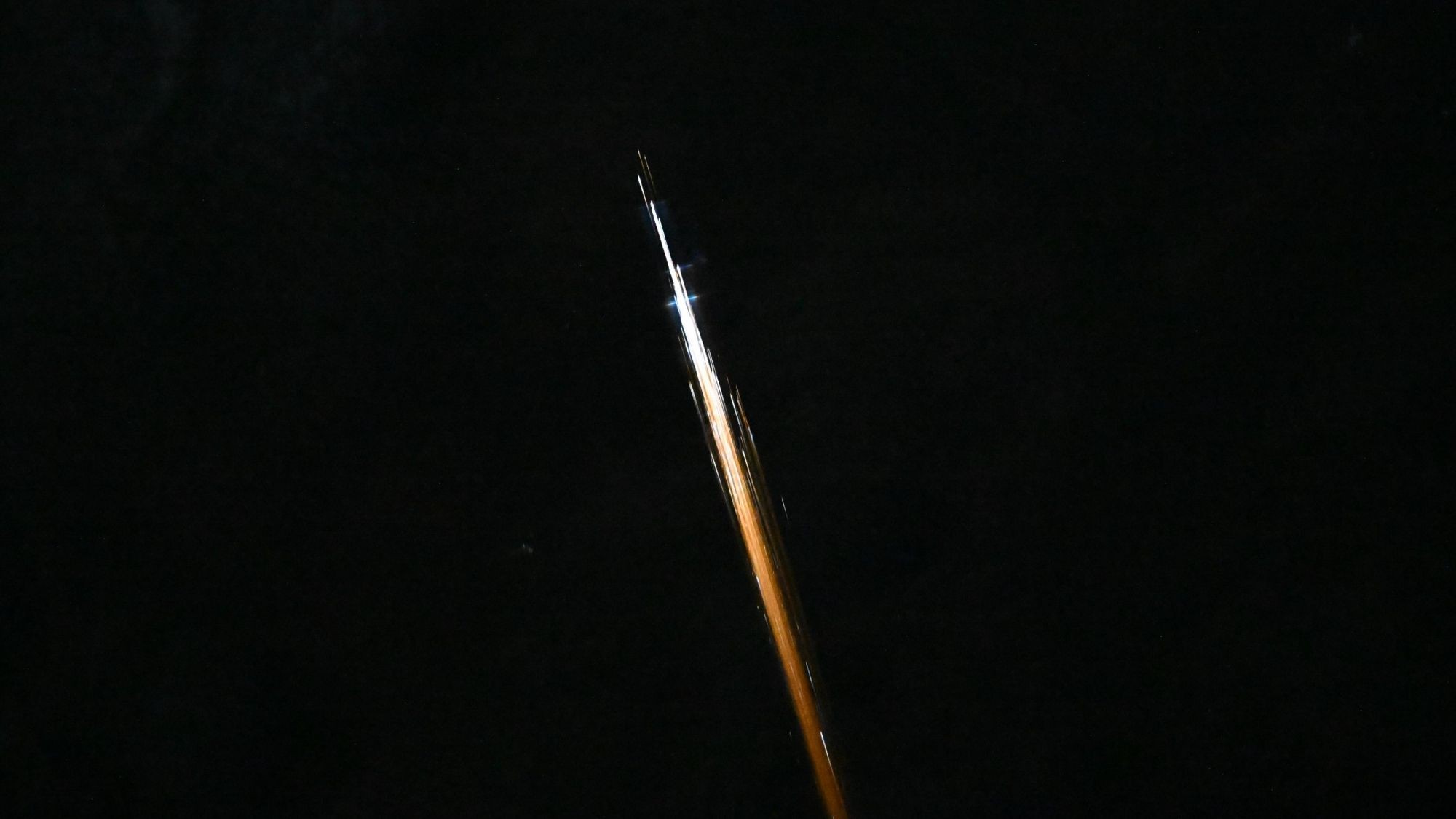
Williams shared his findings via social media on April 30, posting three photographs and a short video clip that captured the event’s intensity. At approximately 10:40 PM GMT, the astronaut was scanning the sky below, attempting to locate the approaching Progress MS-34 cargo vehicle.
“Just as we were passing over West Africa, I saw a bright object directly below us, streaking through the upper atmosphere,” Williams described. “I saw its tail grow and then split apart into a shower of smaller pieces… It was quite a light show!”
The footage reveals a bright object that not only illuminated the dark side of Earth but also fragmented mid-descent, creating a secondary shower of debris. While such events are technically reentries of space junk or defunct satellites, witnessing one from the vantage point of the ISS provides a rare and striking perspective on the lifecycle of orbital objects.
Connecting the Dots: Rocket Debris or Satellite?
The timing and location of the fireball suggest a plausible connection to recent launch activities. The Progress MS-34 (also known as Progress 95) launched on April 25 aboard a Soyuz rocket. The upper stage of that rocket likely remained in a decaying orbit for two days before reentering the atmosphere over West Africa at the precise moment Williams was looking down.
This highlights a common phenomenon in space logistics: rocket upper stages often deorbit shortly after delivering their payload. While the Progress spacecraft itself is currently docked to the ISS—delivering roughly three tons of food, supplies, and scientific experiments—it will remain attached for about seven months before departing to burn up in the atmosphere. The fireball Williams saw was likely the rocket’s booster, not the cargo craft itself.
Why This Matters
Events like this serve as a visual indicator of the orbital environment’s dynamic nature. As space traffic increases, so does the frequency of reentries. While most debris burns up harmlessly in the upper atmosphere, tracking these events is crucial for space safety.
Williams, a rookie astronaut serving an eight-month mission aboard the ISS since November 2023, captured this moment while accompanying cosmonauts Sergey Kud-Sverchkov and Sergei Mikaev. His observation underscores the dual role of ISS crew members: they are not only scientists and engineers but also watchers of the Earth and its orbital vicinity, documenting both the beauty and the mechanics of our planet’s immediate space neighborhood.
Conclusion
The fireball captured by Chris Williams is more than just a pretty sight; it is a tangible demonstration of orbital mechanics and the lifecycle of space hardware. As more missions launch, these atmospheric reentries will become increasingly common, reminding us that space is not a static void, but an active, evolving environment.