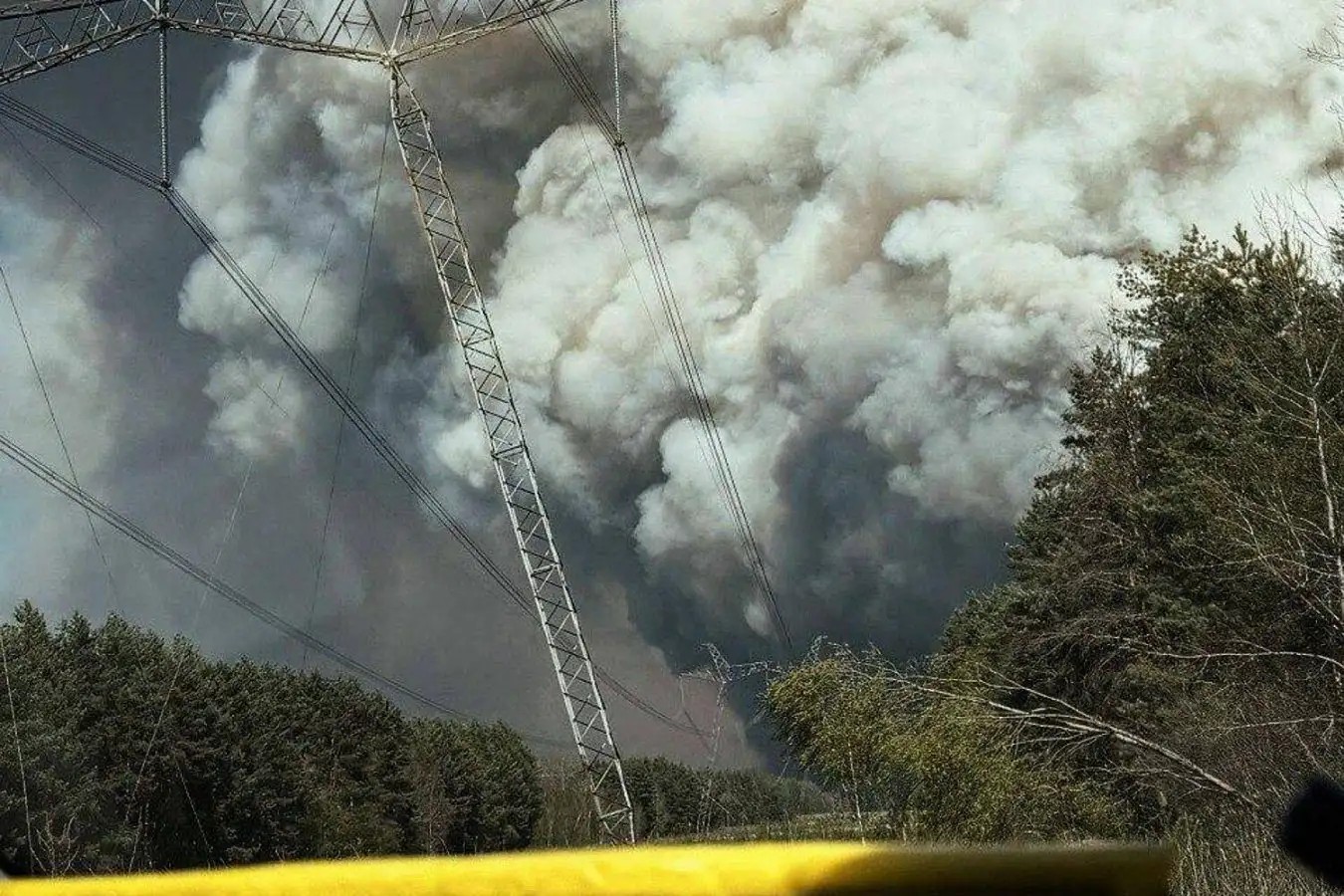
A significant forest fire is currently burning within the Chernobyl exclusion zone, sparked by a drone strike earlier this week. While the blaze has consumed thousands of hectares of land, officials maintain that the immediate risk of radioactive contamination spreading beyond the restricted area remains low.
The Scale of the Emergency
According to the Chornobyl Radiation and Ecological Biosphere Reserve (CREBR), the fire originated after a drone crashed in the south-eastern sector of the zone, near the former cooling ponds of the nuclear plant. Initial reports indicated that approximately 12 square kilometers of land were engulfed in flames. However, subsequent satellite imagery analyzed by New Scientist suggests the fire has since expanded to cover 24.4 square kilometers.
The emergency response has been substantial. As of Friday afternoon, 331 personnel and 75 units of specialized equipment were deployed to combat the blaze. The operation is being hampered by severe environmental and security challenges:
- Dry weather and strong winds are accelerating the fire’s spread.
- Landmines render certain areas inaccessible to firefighters, forcing crews to prioritize safer zones and temporarily leave other sections burning.
- Radiation exposure is a concern for those working directly on the fire line.
Radiation Risks and Worker Safety
While the fire is intense, the consensus among experts is that the threat to the wider region is contained. Denys Vyshnevskiy of the CREBR noted that firefighters working close to the flames are exposed to air with high concentrations of radionuclides. To mitigate health risks, workers undergo rigorous monitoring for radionuclide concentration in their bodies after each shift.
“After the shift, they check concentration radionuclides in the body,” Vyshnevskiy explained.
Despite the dangers on the front lines, Vyshnevskiy emphasized that radiation levels return to normal just 5 to 10 kilometers from the fire’s edge. Olena Burdo from the Institute for Nuclear Research in Kyiv, who was near the site when the fire began, echoed this assessment. Although military restrictions prevented scientists from entering the affected zone, she observed only smoke and concluded that the risk of radioactive fallout escaping the exclusion zone is minimal.
A Recurring Threat
This incident highlights the ongoing vulnerability of the Chernobyl site to military conflict. The exclusion zone is frequently traversed by Russian drones targeting Kyiv and other Ukrainian infrastructure. This is not the first time such strikes have endangered the facility.
Last year, a Russian drone struck the New Safe Confinement (NSC), the massive steel arch sheltering the remains of the Reactor No. 4. The impact blew a hole through the multi-layered structure. Fortunately, the strike occurred near the edge of the building, preventing debris from falling onto the fragile reactor sarcophagus below. Had that happened, it could have triggered a collapse and released dangerously radioactive material into the atmosphere.
Outlook
Firefighters are holding out hope that rain expected later in the day will provide critical assistance in containing the blaze. Until then, crews continue to battle the fire while navigating the dual hazards of radiation and unexploded ordnance.
The current situation underscores a persistent dilemma: while the immediate ecological and radiological risks to the wider public appear contained, the repeated targeting of the Chernobyl zone poses a long-term threat to one of the world’s most sensitive nuclear sites.