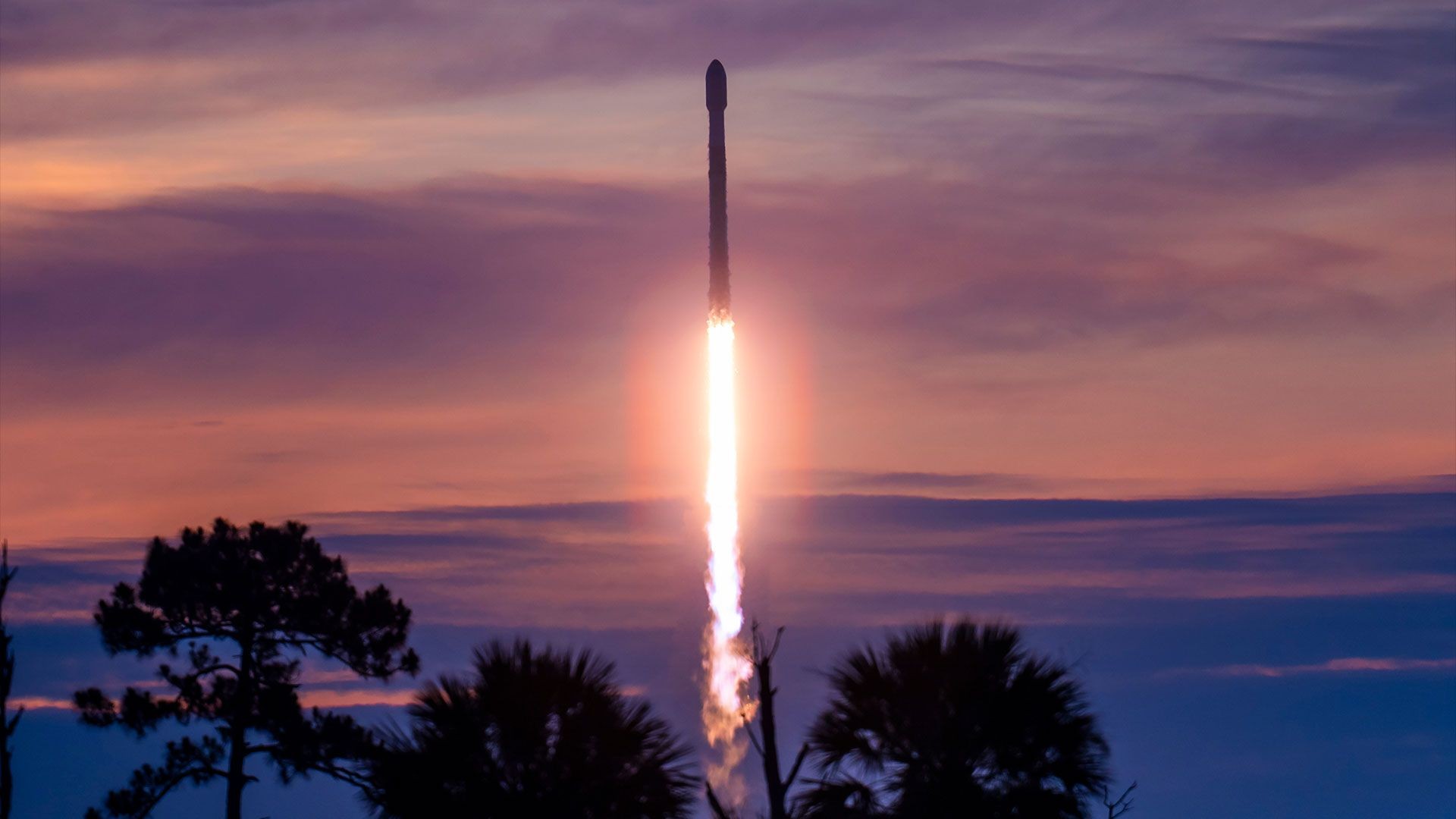
Another one. Another rocket.
On the morning of July 9. Early.
SpaceX is sending the Falcon 9 booster known as B1067 skyward for what will be its 36th mission. That breaks their internal record. Again. It’s a weirdly impressive thing to watch, really, seeing a metal tube get used this much without falling apart.
The liftoff is scheduled for 5:25 a.m. EDT from Cape Canaveral in Florida. Right on schedule. They are packing 29 Starlink broadband satellites onto it. The upper stage will carry those payloads up to low Earth orbit and deploy them exactly 63.5 minutes later. The lower stage—the booster everyone cares about about because of the reuse drama—has its own job. It has to get back to Earth. About 8.5 minutes after the roar fades. It will attempt to land on a drone ship in the Atlantic named A Shortfall of Gravitas. The name alone tells you the company’s sense of humor is intact, or maybe just exhausted.
You can actually see this happen. Live.
Start streaming about ten minutes before liftoff if you want the full sequence.
B1067 has already flown 35 orbital missions. That sounds like a lot until you remember the space shuttle Discovery flew 39 times. The shuttle still holds the all-time record. But Discovery was a spacecraft built for people and massive payloads, not a mass-produced rocket first stage designed to be tossed like a hot potato.
So yes. B1067 is chasing Discovery. Sort of.
This flight will also be the 80th mission for the Falcon 9 in 2025 already. It’s not even August. The sheer volume of launches is becoming mundane to anyone watching daily but it remains staggering in aggregate. Roughly eighty percent of this year’s flights have gone toward expanding the Starlink network. By far the largest satellite constellation in existence. It feels inevitable, like gravity pulling everything upward into the sky.
What does thirty-six reuses mean for the rocket? We will find out. Maybe nothing changes. Maybe a valve cracks. Or maybe it lands so hard the ocean splashes up to meet it.
We don’t know yet. Just watch.