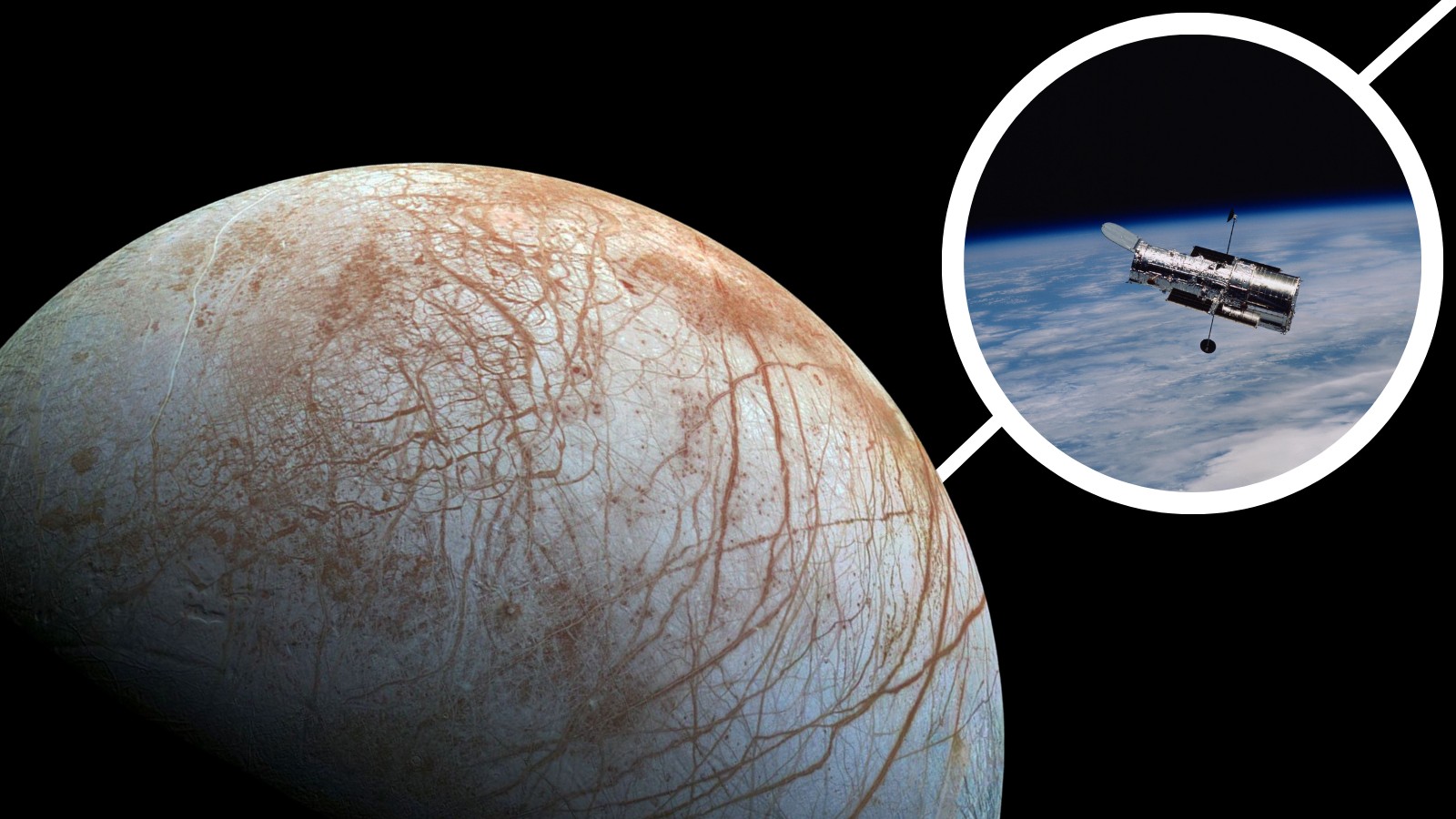
Europa is a big deal. Everyone knows that. It’s the go-to candidate for “aliens nearby.” Thick ice. Hidden ocean underneath. All the right ingredients for life if you squint. 🧊
For a while, the evidence looked solid. Or so we thought. Astronomers stared at Jupiter’s icy moon through the Hubble Space Telescope for 14 long years. They saw faint, flickering hints of water vapor. Big eruptions bursting through cracks in the shell. It felt like a breakthrough.
It wasn’t.
“The evidence for water vapor plumes onEuropa isn’t as strong as we first believed,” says Kurt Retherford, a scientist at Southwest Research Institute.
Remember the 2014 study? Retherford’s team? They were the ones who originally shouted “Eureka” (pun intended, maybe poorly received). Now, they’re backing off. Not all the way off, mind you, but they’ve retreated from their original certainty. They’re second-guessing themselves. Good. They should.
The pixel problem
The team didn’t start from scratch. They went back. They looked at the old Hubble data. Specifically, the Space Telescope Imaging Spectrograph (STIS). They were hunting for Lyman-alpha emissions—a specific UV light signature that hydrogen atoms scatter when they get excited.
It’s faint. Hard to see.
Between 2012 and this push into re-analysis, Hubble was already stretching its limits. The real issue wasn’t the light itself. It was the placement. Hubble doesn’t give you a perfect grid.
“If Europa’s placement is off by just a pixel,” Retherford explains, “it throws everything off.”
Think about that. A single pixel. A speck of digital dust. That tiny misalignment meant the team couldn’t be sure the UV signal came from Europa at all. It could have been background noise. Or a ghost in the machine.
The confidence interval collapsed. They started at 99.9%. Sure, sounds scientific, doesn’t it? But after looking closer, it dropped. Fell to less than 90%.
Lorenz Roth, from Sweden’s KTH Royal Institute of Technology and leading this new review, wasn’t shy about it.
“That’s simply not enough evidence,” he says. “It doesn’t support the claims we made back then.”
Why look at the ice?
If you aren’t sure about the plumes, why keep looking?
Because Enceladus exists. Saturn’s moon has plumes we actually believe in. Confidently detected. And Io? Jupiter’s neighbor. The most volcanic rock in the solar system is blasting sulfur dioxide everywhere.
If those moons can vent their interiors, why couldn’t Europa?
Maybe the ocean is quiet today. Maybe it only erupts when Jupiter pulls it just right. Maybe the plumes are real, just rare. Or maybe the Hubble data was just noise masquerading as a signal.
We might have to wait. NASA’s Europa Clipper is on its way. It lands in the Jupiter system in 2030. If we get answers, we get them then.
Until then?
The ice keeps its secrets. 🌊