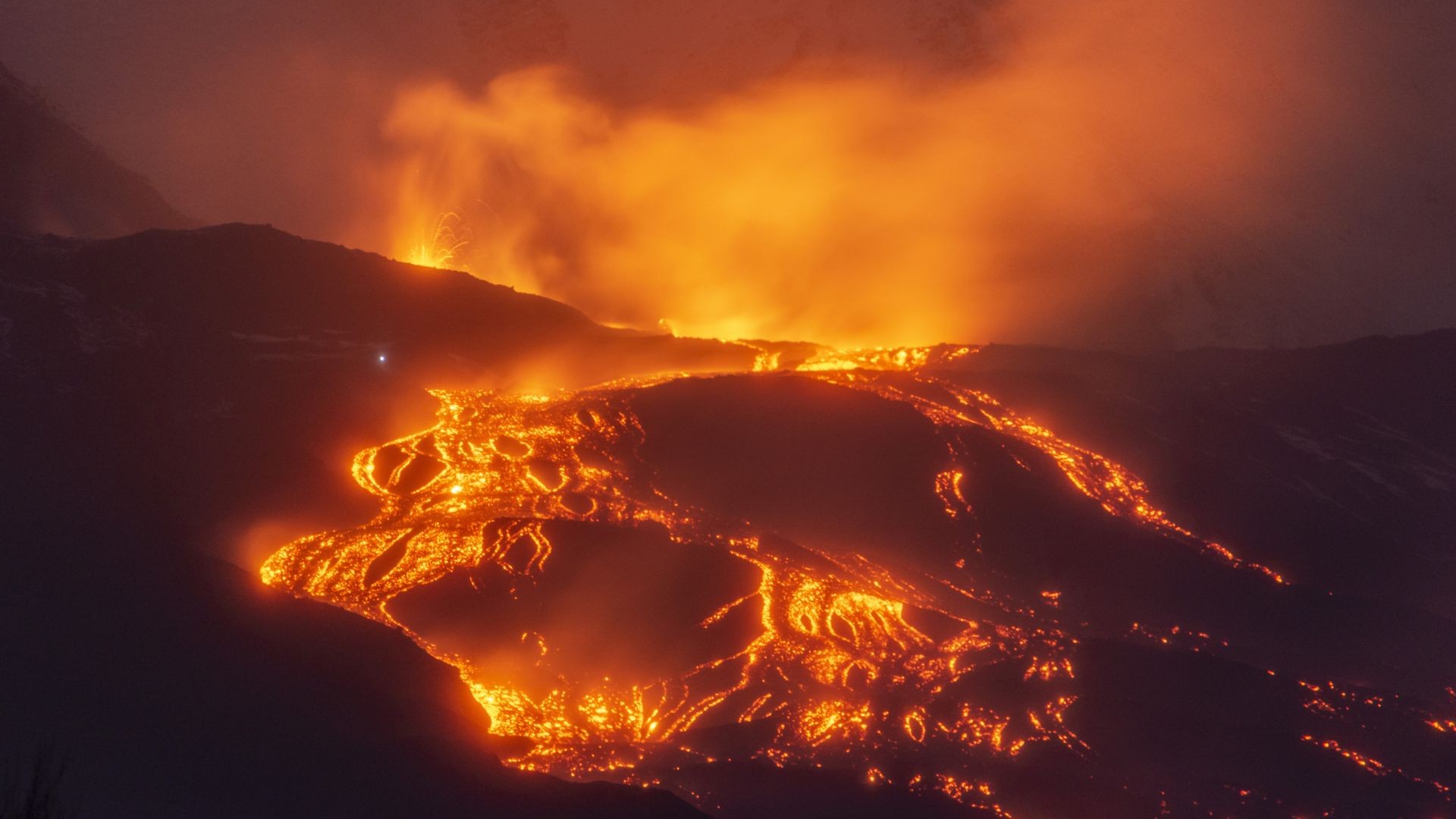
New research published in JGR Solid Earth suggests that Mount Etna, one of the world’s most active volcanoes, does not fit into any established geological category. Instead, scientists believe it represents a “new type of volcanism” that challenges our traditional understanding of how volcanoes form and evolve.
Challenging the Three Traditional Models
For decades, volcanology has categorized eruptions into three distinct frameworks based on tectonic activity:
- Mid-ocean ridge volcanoes: Formed where oceanic plates pull apart, allowing magma to create new crust.
- Intraplate volcanoes (Hotspots): Created by concentrated zones of heat in the mantle, such as the Hawaiian Islands or the Yellowstone caldera.
- Subduction zone volcanoes: Formed when an oceanic plate slides beneath a continental plate, often fueled by water melting the subsurface rock (e.g., Mount Fuji).
Mount Etna, located on Sicily, defies all three. While it sits near the junction where the African Plate meets the Eurasian Plate, it is positioned directly on the boundary rather than inland. Furthermore, while its lava chemically resembles that of a “hotspot” volcano, there is no evidence of a mantle hotspot beneath it.
A Strange Evolutionary History
The mystery of Etna is not just its location, but its changing chemical composition over time. Researchers noted a significant shift in the volcano’s “diet”:
- Early Stage: The volcano erupted relatively small amounts of silica-rich lava. Typically, silica-rich magma comes from large melt reservoirs and results in massive eruptions.
- Later Stage: The volcano transitioned to erupting large volumes of alkali-rich lava (rich in potassium and sodium). Usually, alkali-rich lava is produced by less-melted rocks and results in much smaller eruptions.
This reversal of the “expected” relationship between lava chemistry and eruption volume is what prompted researchers to dig deeper into the volcano’s plumbing system.
The “Folding” Mechanism: How Etna Works
By studying the geochemistry of different lava layers, Sébastien Pilet and his team discovered that Etna’s magma originates from a “low-velocity zone”—a particularly melty layer at the top of the mantle. While these zones are common, the magma rarely reaches the surface in most parts of the world.
What makes Etna different is the tectonic chaos at its doorstep.
The subducting African Plate is not sliding smoothly under the Eurasian Plate; it is partially stuck. This friction causes the rock to fold and deform. These tectonic folds act as conduits, creating pathways that allow magma to bypass traditional routes and rise to the surface.
The researchers propose a two-step history for this process:
1. Initially, magma had to struggle through the thick African Plate, reacting with the silica-rich continental crust along the way.
2. Over time, the geological structure shifted, creating a more direct “pipe” from the mantle to the surface, allowing less-adulterated alkali lava to flow more freely.
Why This Matters for Global Geology
The discovery of Etna’s unique mechanism is more than just a local curiosity. It highlights a significant gap in current geological models: the role of the lithosphere (the crust and upper mantle) in shaping volcanic activity.
As petrologist Sarah Lambart notes, the way magma interacts with the surrounding rock layers is often overlooked. If Etna’s “folding” mechanism is more common than previously thought, it could mean that many other volcanoes worldwide are behaving in ways we do not yet fully understand.
Etna may be a singular outlier, but its unique behavior suggests that the interaction between magma and the Earth’s crust plays a much larger role in global volcanism than current science recognizes.
Conclusion
Mount Etna’s unique position and shifting chemistry suggest it is a product of complex tectonic folding rather than standard plate movement. This discovery opens a new chapter in geology, suggesting that the Earth’s crust may play a much more active role in driving volcanic eruptions than previously understood.