Tuesday brought news. Not a surprise, but details anyway.
NASA just dropped three new mission concepts targeting the South Pole. These are the lead-in to Artemis, the big crewed landing due in 2028. Moon Base I, II, and III. Sounds like a franchise, but these are actual landings. NASA calls them “the first of more than a dozen” planned for this calendar year.
The strategy is simple. Send stuff. Learn how it breaks. Learn where to go next.
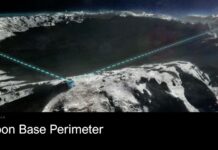
Moon Base I
Launches “no earlier than fall 2023,” or later if physics allows. It rides on Blue Origin’s Blue Moon Mark 1 Endurance lander. The payload list is technical, boring on the surface, and incredibly important underneath.
We’re sending the Stereo Camera for Lunar Plume- Surface Studies and a Laser Retroreflective Array.
Why? Dust. Lunar dust is a nightmare. Thrusters kick it up. It ruins engines, blurs vision, coats solar panels. This mission studies the interaction between fire and dust. The retroreflector helps orbiters lock in their position via laser reflection. Precision navigation requires precision reference points.
Moon Base II
This one goes sooner. “Later this year,” per the agency. Astrobotic’s Griffin lander is the vehicle.
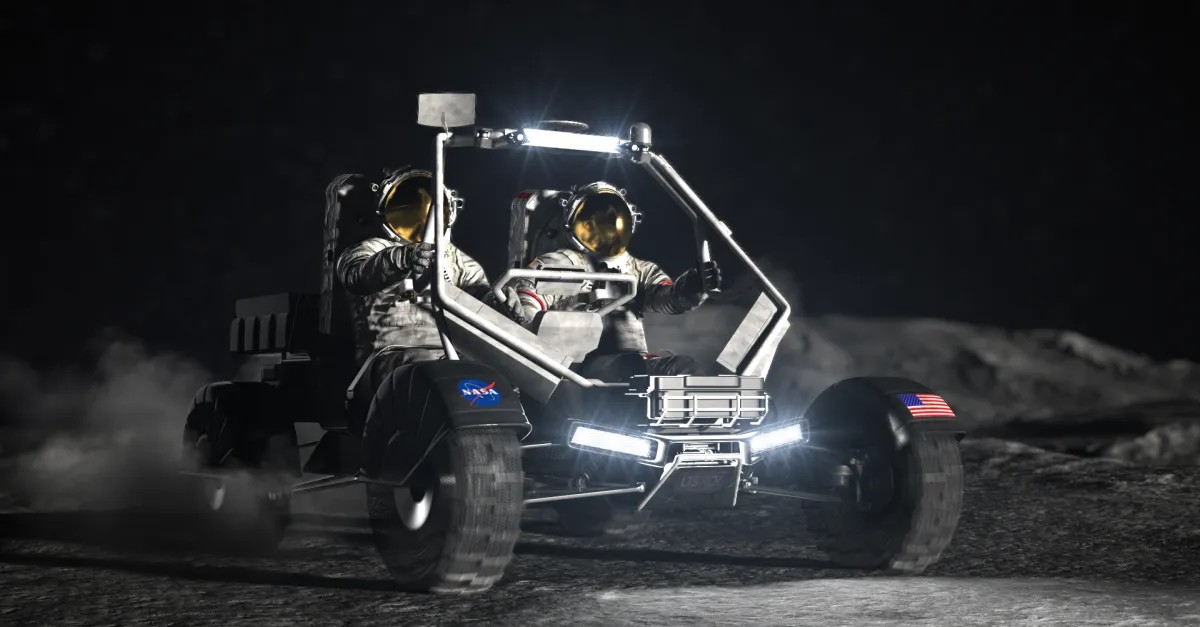
Over 1,100 lbs of cargo. Most notable is Astrolab’s FLIP rover. Its job isn’t exploration glory. It’s data collection. Inform future operations. That means figuring out how wheeled things actually behave in that specific terrain before astronauts try to drive one there.
The Lunar Terrain Vehicles (LTVs) astronauts will use need that intel. Real dirt doesn’t read the manuals.
Moon Base III
Also targeting launch this year. Intuitive Machines’ Nova-C lander (named Trinity, though they rebranded to IM-1 eventually, stick with the press release facts) carries a mixed bag of science. NASA, ESA, and Korea are all involved.
The star player: Lunar Vertex.
It’s studying lunar swirls. Those weird bright patches on the surface that have baffled people for decades. Understanding surface evolution and how materials act under extreme conditions (which basically covers everything on the Moon) is the goal. Swirls offer clues. We want the answers.
Rovers and Drones
Landing isn’t the whole plan. Moving around is.
NASA cut two major checks for ground transport:
- $219M to Astrolab
- $220M to Lunar Outpost
Astrolab is building the CLV-1, a crewed vehicle meant to haul humans, supplies, and enable remote work. Lunar Outpost is evolving its Eagle into Pegasus. Lighter. Ready for action. Capable of autonomous driving or being piloted from Earth.
Blue Origin got another $188M contract just to deliver these rovers to the surface. You need someone to drop the cars off before the people arrive. Makes sense.
Design finalization starts now. 18-month timeline to get flight-ready units qualified. The clock is ticking.
Then there are the drones.
JPL selected Firefly Aerospace for the spacecraft to carry the MoonFall quadcopters. Launch set for 2028 — coincident with Artemis. Four drones total. Their job? Go where the rovers can’t. Cliffs. Caves. Crater edges.
High-resolution imaging during a single lunar day. Then wait. They carry a payload designed to “survive the night.”
Nights on the Moon are long. -240 degrees Fahrenheit. No sun. Most electronics fry. These survive. They operate for months after the light fades.
Why the Rush?
It’s not about speed. It’s about failure management.
Every hop forward reveals a new problem. Dust behaves differently than expected. Gravity handles soft ground differently than simulated sand boxes. Swirls hold magnetic secrets or ice. Rovers sink.
These missions absorb the shocks. They answer questions like, “Does the battery drain faster in shadow than models predict?” and “How does the plume interact with regolith?”
If they fail? Good. Better a rover fails alone than an astronaut in it.
NASA has spent billions preparing for return. Now we watch the prototypes roll out. We’ll see if the algorithms hold. If the landers stay vertical. If the dust settles.
“Study how thrusters interact with the surface”
Simple goal. Complicated reality. The South Pole is waiting. Dark, cold, and full of ice that doesn’t care if you’re ready or not.