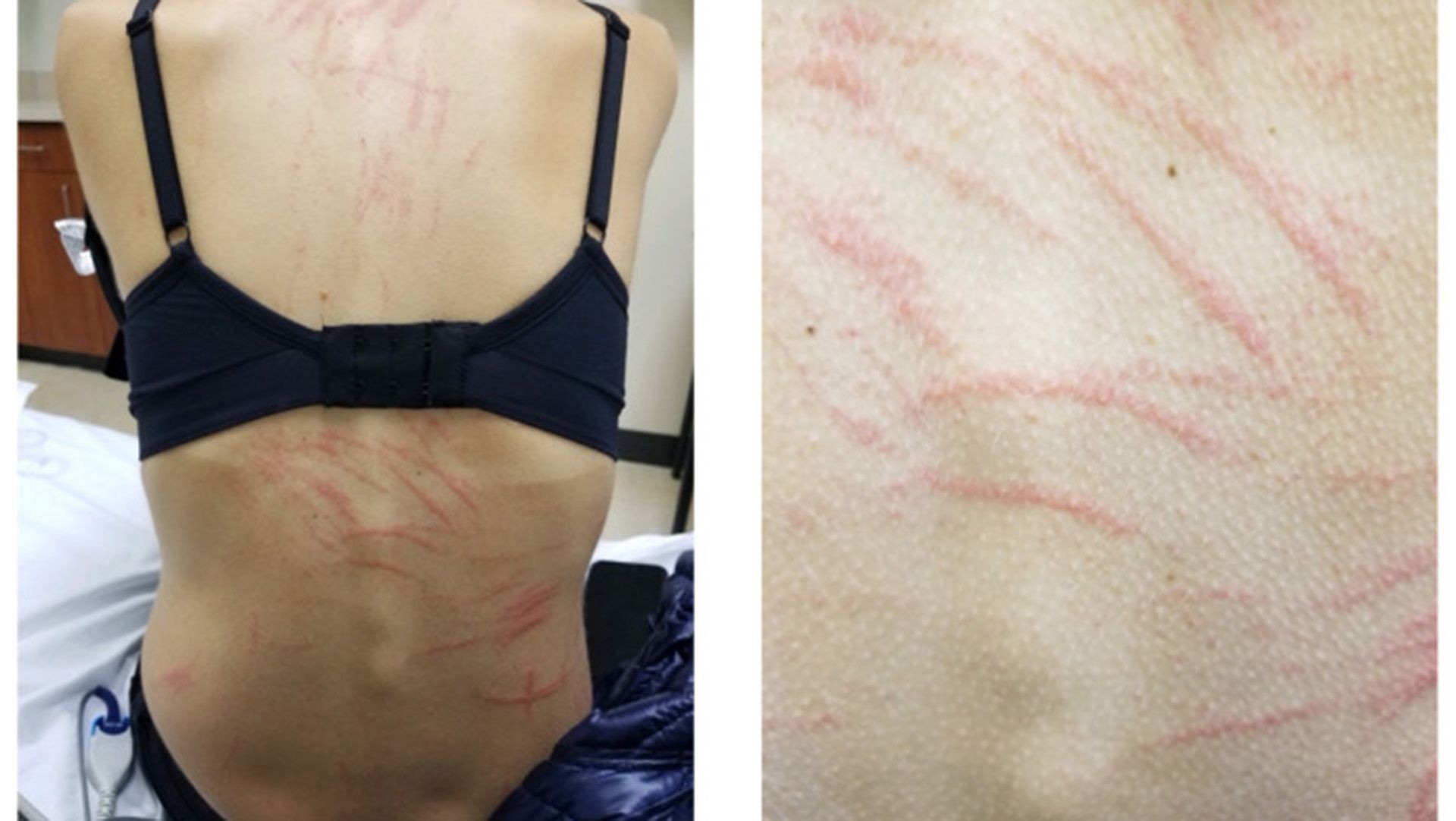
It looks like an abuse victim. Or maybe a medieval flagellant.
A 23-year-old woman from Florida showed up in the ER with her back covered in raised, angry stripes. They weren’t blisters. No peeling either. Just distinct, lash-like marks stretching across her spine. She’d had them for two days. They were itching badly.
Urgent care had already tried steroids. Antihistamines followed. Nothing stopped the spread.
The Search for a Cause
Standard procedure means ruling out the obvious stuff. First, the violence check. Did someone whip her? She said no. Was she scratching herself? No.
The team scanned her system. Blood pressure normal. Heart rate steady. A tiny fever spike to 99.1°F but nothing dangerous. No swollen joints. No throat tightness. Breathing was clear. Gastrointestinal systems quiet.
They checked for insect bites. None. Autoimmune disease history? Blank slate. Meningitis? No stiff neck, no severe headache. New detergents or perfumes? Nothing changed recently.
The trail went cold. Until dinner.
When pressed about what she ate the day before, she mentioned shiitake mushrooms. She eats them all the time. Usually fine. But this time something went sideways.
A Medieval Connection
It’s not poison. At least, not the kind that kills you.
This is shiitake dermatitis. A bizarre condition where the skin reacts to a compound inside the mushroom called lentinan. In some unlucky bodies, lentinan triggers a cascade of cytokines. Those proteins tell the immune system to inflame. The result? Whiplike rashes.
The name comes from history, not medicine. A Japanese researcher named Takehiko Nakamura spotted the pattern in 1977. He called it flagellate dermatitis.
Why? Because it looks exactly like the marks left by the Flagellants. These were medieval religious zealots who whipped themselves publicly. As proof of faith. The woman on the bed had done nothing but cook dinner, but her back told a very different story.
Researchers previously linked this to undercooked mushrooms, but log-grown shiitake varieties might carry a higher risk than substrate-grown ones.
Treatment and Aftermath
The ER didn’t fix it overnight. They kept the same game plan. Hydrocortisone cream. Clotrimazole. Oral antihistamines. A shot of corticosteroid.
She was breastfeeding too. Worried the toxins would pass into her milk. The doctors reassured her. Safe to continue.
The itch faded. Slowly. The stripes vanished after about three weeks. She went back to eating shiitakes. Nothing happened. Ever again. The medical writers didn’t explain why her body attacked itself only that one time. It’s a mystery. A happy one, mostly.
How Rare Is It?
Rare doesn’t quite cut it. There are maybe 100 reported cases in all the scientific literature. Most of them happen in Asia. Europe gets a few. The Americas? Very few.
Finding a Westerner with whip-mark skin lesions is statistically weird. But there you go. You ate dinner. You got spanked by biology.