Bill Freeman had the idea in 1985. Good thing the technology was too primitive to build it then.
He was an electrical engineer at Polaroad, not a textile artist. He saw an ad in Scientific American. The Innovative Design Fund was handing out $10,000. He pitched a zipper that didn’t close a jacket. It built structures. A three-sided fastener. Soft floppy material goes in, rigid 3D object comes out.
The jury hated it. They wanted better clothes, not architectural hardware.
Freeman didn’t give up. He built a prototype in his garage. Wood teeth. Plastic strips. A sliding mechanism pulled three sides into a triangular tube. He patented it. He stored it. He waited.
It took nearly four decades for the rest of the world to catch up.
From Garage Dust to Lab Bench
MIT researchers needed a way to make objects change stiffness on command. Current methods are clumsy. Hard to reverse. Messy. They found Freeman’s patent in the archives.
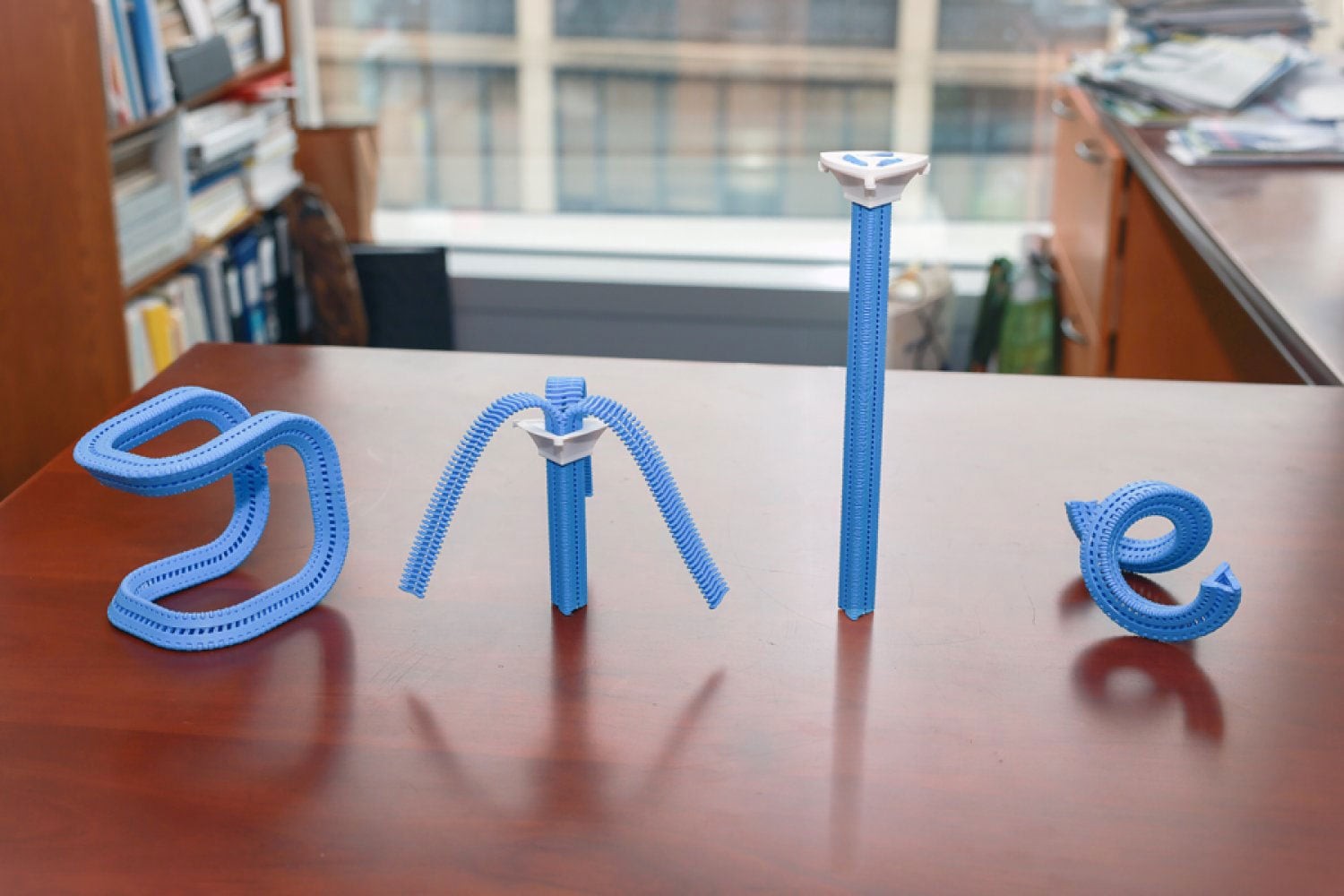
Enter CSAIL. They paired the old idea with modern tools. A new design software. 3D printing capabilities. The result is the “Y-zipper.”
“Freeman ideated something more dynamic than just closing a jacket. His mechanism transforms complex items,” says Jiaji Li.
The software is simple. Users pick a shape. Straight? Bent? Twisted? The program prints the corresponding three-sided plastic strip. You zip it. The object locks into place. Unzip it. It goes limp again.
It is fast. Tent assembly usually takes six minutes of struggle with poles. The Y-zipper did it in one minute, 20 seconds. Just zip.
More Than Just a Fastener
Think about the applications. It isn’t just camping gear.
Medical casts are uncomfortable. A Y-zipper wrapped around a wrist let a patient loosen it for sleep or activity. Rigid support by night, flexibility by day.
Robots need to move differently on different terrains. Too tall for a cave? Too low for a creek? Add a motor to the zipper. Change the leg length. Press a button. The robot adapts.
Art installations can bloom. A stationary motor zips a plastic flower open. It feels alive, even if it is just plastic and motors.
Strong Enough to Matter
Ideas are cheap. Durability is not.
The team stress-tested the Y-zip. They compared Polylactic Acid (PLA) against Thermoplastic Polyurethane (TPU). PLA holds heavy loads. TPU bends easier. Neither broke easily.
They ran a machine against it. Open. Close. Repeat.
It failed after 18,000, cycles.
That sounds low until you remember a zipper on a cheap bag fails after fifty pulls. The elastic structure spreads the stress evenly. It lasts.
Guanyun Wang at Zhejiang University called it “brilliant.” He noted it bridges the gap between soft matter and rigid structures. It makes sense now.
Freeman might still have the wood prototype in that garage. The MIT team prints the plastic ones. The principle hasn’t changed in 40 years. Only the capacity has grown.
We used zippers for closets. Now we zip together spaceships. Or shelters after disasters. Or robots that crawl through canyons.
Imagine what else Freeman thought of back then. Imagine what is sitting in a patent office, waiting for a 3D printer that hasn’t been invented yet.
He is probably watching. Waiting for us to get the tools right this time.