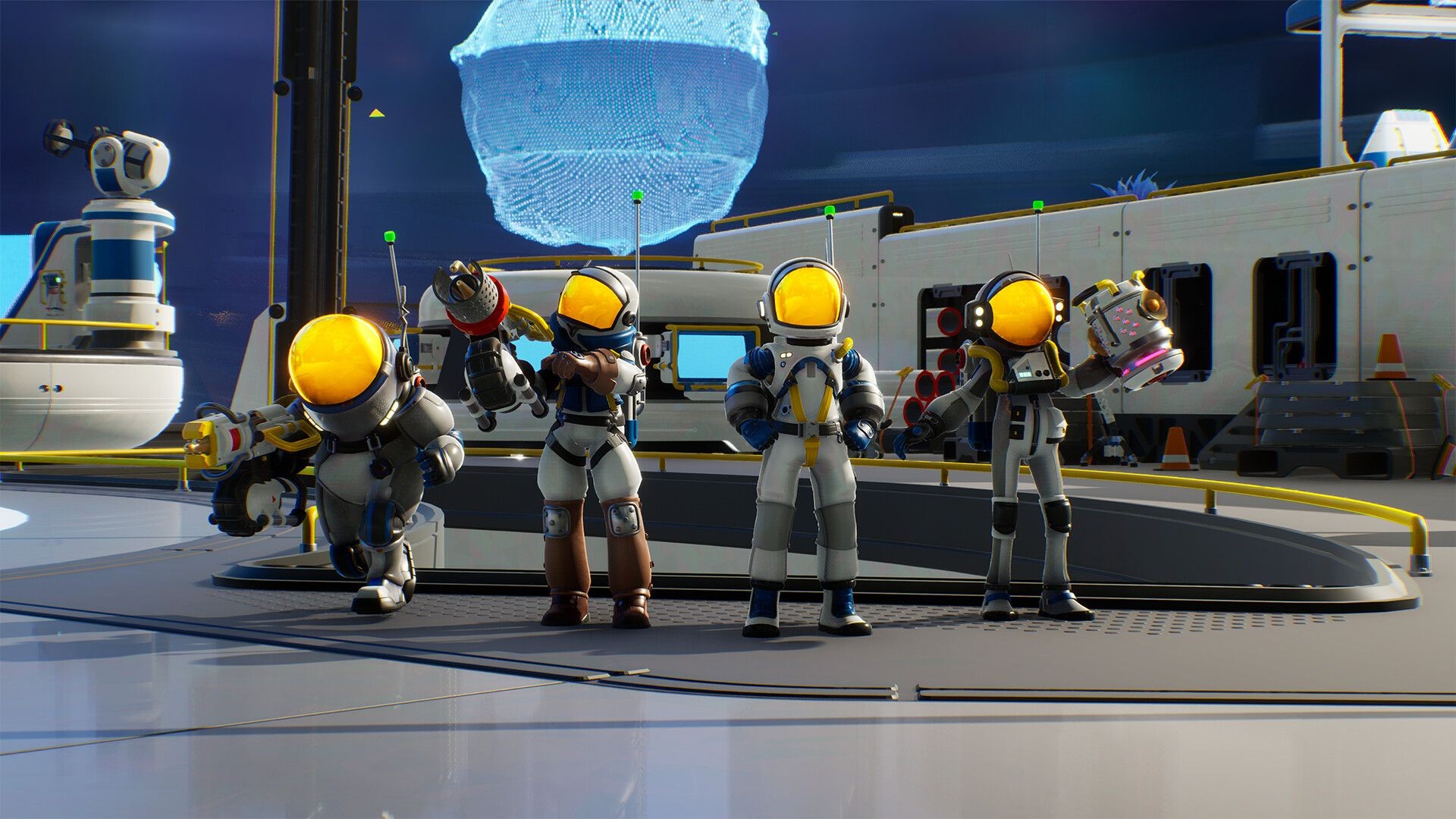
Starseeker: Astroneer Expeditions looks like Astroneer Part 2. It is not. On the surface, yes. Same art style, same universe. Underneath, the objectives shift completely. Astroneer is about base-building, creative tools, grinding. Starseeker strips that down. Short trips. Breezy missions. Discovery over construction.
System Era’s Adam Bromell calls it a “cozier” experience. Early access means it’s raw but promising. Astroneer veterans might get whiplash though. This isn’t a direct sequel. It’s a pivot.
“I’m still a Trekkie at mind.”
That quote explains the entire design philosophy. Bromell wants hope. Not survival stress. He talks about Gene Roddenberry, Star Trek, generosity, justice. The goal? To make players feel that specific rush of looking at a blocky house in Minecraft and saying holy shit look what we built. Community matters here. More than loot. More than solo conquests.
How it plays
You spawn on the ESS Starseeker station. This is your hub. You meet random people here. Not just friends from your Discord server. Strangers. Then you jump down. The loop is tighter now. You recover tech, scan flora, scan fauna, find stuff. Short sessions. No marathon base layouts waiting to rot.
It’s an extraction-lite model but without the paranoia. In most extraction games, losing gear hurts. It punishes failure. Here? Nobody shoots you. Natural hazards exist. Alien bugs bite. But the social risk is minimal. You can trade safely on the station. It’s a “take a penny leave a penny” vibe.
Why not keep it all?
“Unlike other extraction games, we don’t make you risk it all just to leave.”
This choice forces a different kind of interaction. Camaraderie. Bromell calls the current early access phase the “bedrock.” It’s a testing ground for community engagement. They might run “morning announcements” on the station. Reward squads based on global performance. The feedback loop is alive.
Aesthetics and Antagonists
The graphics are cartoony. Don’t expect hard sci-fi sims. Bromell admits they lean into play. They use real elements, yes, but stylized. Colors aren’t always textbook accurate, despite player callsouts on malachite hues back in the day. The suits look NASA/Roscosmos 2015. Whites, grays, elevated colors. Familiar. Approachable. Like kids playing with toys.
There is a story too. An opening cutscene teases it. Bromell is coy on details, naturally. He won’t spoil the antagonists. He did mention, though, that the main narrative arc aims to wrap up by version 1.0. After that? The journey continues. But for now, you are exploring to survive, to help, to find out who the bad guys are.
Breaking things
Seven years in the making. Started with two guys tinkering with a physics sandbox. Evolved into this cooperative mission runner. Bromell doesn’t want another Astroneer 2. Not right now. He wants a creative swing.
He likes it when players cheat the system. He mentioned a PAX event where players flew an altimeter off the map using exploit-like tool combinations. That was his favorite run. It showed fun. He wants people to break the rules he set up, not walk the golden path laid out for them.
Starseeker borrows from chaos-coops like Helldivers. Then wraps it in community goals. It’s a strange mix. Extraction mechanics minus the griefers. Co-op structure with solo-friendly pacing.
It might take a moment for the vision to fully land. Early access is messy by design. But it feels refreshing. A game that assumes space exploration doesn’t have to be a battle for dominance. It can just be a trip together.
Where does it go from here? Maybe the antagonists reveal themselves. Maybe the trading economy glitches and breaks again. Who knows. The door is open.